Key Points
- Dr Obaidullah Saeed Badri was an Afghan national from Logar Province
- He had direct linkages with the banned Tehrik-i-Taliban Pakistan, according to security sources
- He was killed with three associates in a Kurram operation two days ago
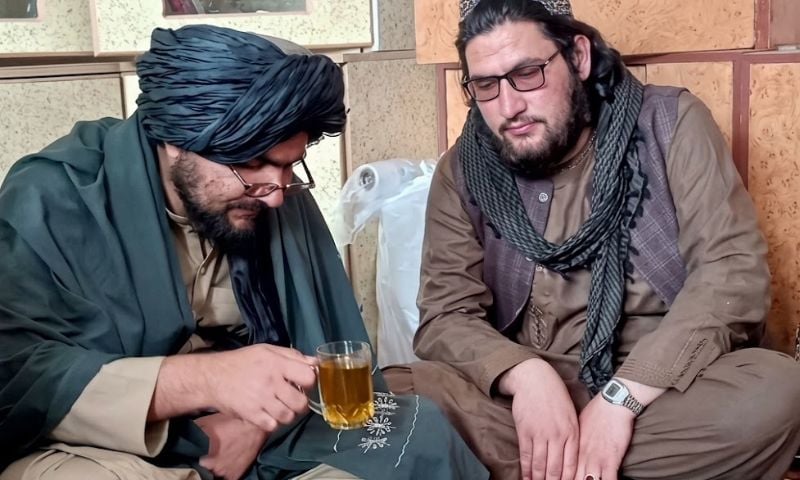
- A photograph shows Badri with Afghan cleric Abdul Hamid Hamasi
ISLAMABAD: The identification of an Afghan national among terrorists killed in a Pakistani security operation in Kurram has provided fresh evidence of the cross-border terrorist threat Pakistan has been highlighting, security sources said.
Dr Obaidullah Saeed Badri, son of Ghulam Ghous Salehi and a resident of Shahi Qala village in Afghanistan’s Logar Province, was identified as a terrorist directly linked to the banned Tehrik-i-Taliban Pakistan (TTP), the sources said.
Badri was among four terrorists killed by Pakistani security forces in Kurram District two days ago.
Pakistani security authorities have now established his nationality and direct association with the TTP terrorist network.
South Asia Terrorism Portal (SATP), an independent monitoring of security incidents, also recorded Badri’s identification as an Afghan national among those killed in the Kurram operation.
The latest identification is significant in the context of Pakistan’s longstanding position that the terrorists, including TTP, are using the bordering country’s territory to plan, prepare and launch attacks against Pakistan.
The TTP, which was driven out of pockets in Pakistan through successive military operations, has maintained its base and infrastructure across the border.
Afghan nationals in attacks against Pakistan
Security sources said Badri’s presence in the TTP network demonstrates the cross-border character of the terrorist organisation and the continuing movement of Afghan nationals through networks involved in terrorism against Pakistan.
A photograph provided in connection with the security information shows Badri sitting with Afghan cleric and Taliban mufti Abdul Hamid Hamasi. Security sources identified Hamasi as Badri’s ideological mentor, pointing to links between the terrorist and Afghan religious circles.
The development correlates with continuing terrorist attacks in Pakistan’s northwestern districts, particularly along the border. Kurram is part of Khyber Pakhtunkhwa and shares a strategically important border with Afghanistan.
Pakistan has repeatedly maintained that the Taliban authorities in Kabul must prevent their territory from being used by the TTP and other terrorist groups against Pakistan.
Islamabad has also maintained that the TTP receives refuge, support and facilitation not only from the interim government of the Taliban but also from India.
The identification of Badri as an Afghan national directly connected to the TTP adds a specific human link to Pakistan’s broader security position: that the terrorist threat confronting the country mainly comes from networks operating across the border.
READ ALSO: Afghan National Among Two Terrorists Killed in Khyber Pakhtunkhwa
Pakistan has also maintained that India provides support to terrorist proxies operating against Pakistan. Islamabad has linked the terrorist threat to coordinated external support for terrorist networks targeting Pakistani security forces and civilians.
The latest information therefore shifts the focus from the operation itself to the identity and background of one of the terrorists killed in it, highlighting the connections between the Taliban in Kabul and the TTP network operating against Pakistan as like-minded groups.
This latest evidence further strengthens Islamabad’s call for Kabul to uphold its international commitments and dismantle TTP sanctuaries operating on Afghan soil.
By allowing terrorist proxies to launch cross-border attacks with impunity, the interim Afghan administration risks deepening regional instability and severing diplomatic trust.
For Pakistan, the presence of foreign fighters directly targeting its border districts leaves no room for hesitation; it necessitates a firm, unyielding response to defend national sovereignty, eliminate external facilitation networks, and protect its citizens from relentless, foreign-sponsored aggression along the western border.