Key Points
- PM Sharif orders accelerated implementation of targeted petrol relief scheme.
- Eligible motorcycles and three-wheelers receive Rs100 per litre relief.
- Vehicles up to 800cc qualify for Rs100 per litre subsidy.
- Islamabad rollout begins September 15; nationwide rollout September 17.
- Over 600,000 Islamabad SMS applications received, 42,933 successfully registered.
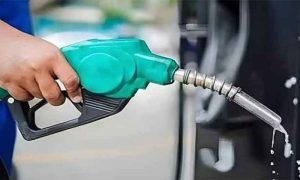
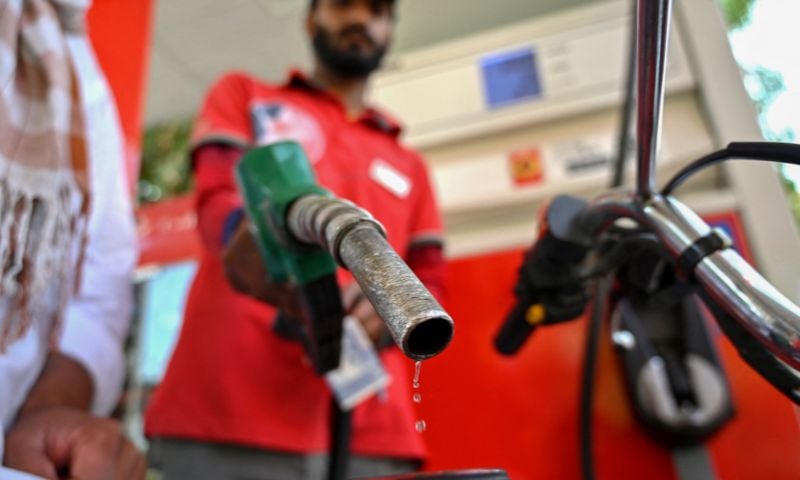
ISLAMABAD: Pakistan’s Prime Minister Shehbaz Sharif on Monday ordered accelerated implementation of the PM Special Relief Scheme to shield low-income and middle-class Pakistanis from the impact of sharply higher petrol prices amid continuing turmoil in the Gulf.
The targeted scheme provides Rs100 per litre relief on petrol to motorcycles, rickshaws, Qingqi and other two and three-wheelers for up to 20 litres a month, while owners of vehicles with engines of up to 800cc can receive the same relief on up to 30 litres.
The initiative means an eligible motorcycle or three-wheeler user can save up to Rs2,000 a month, while an eligible small-car owner can save up to Rs3,000 a month if the full monthly quota is used.
At the current petrol price of Rs375.82 per litre, the Rs100 relief effectively reduces the price paid by eligible consumers to Rs275.82 per litre for their subsidised monthly quota.
The Prime Minister chaired a high-level meeting in Islamabad on Monday to review progress on the scheme and directed authorities to ensure that deserving citizens face no difficulty in registration or obtaining the relief.
The government has opened registration through SMS and said the service required for registration would be made free of charge.
How to register?
The Prime Minister’s Office said only four basic pieces of information would be required for registration: Computerised National Identity Card (CNIC) number; vehicle number plate; province or territory of registration; and vehicle registration date.
According to the announced registration procedure, applicants should send an SMS beginning with “REG” to 9771, followed by their CNIC number, vehicle registration number, provincial or territorial code and vehicle registration date.
The provincial codes are: Islamabad (I), Azad Jammu and Kashmir (A), Gilgit-Baltistan (G), Sindh (S), Punjab (P), Khyber Pakhtunkhwa (K) and Balochistan (B).
Applicants also need a SIM registered in their own name, while vehicle details will be checked against the relevant provincial Excise Department records.
How to get subsidised petrol?
Registration alone is not the final step for obtaining the discounted fuel.
After successful registration and verification, eligible applicants need to send “TOK” to 9771 before visiting a petrol station. The response will contain a fuel-relief token that must be presented at the designated petrol station.
The token is intended to verify the registered vehicle and the quantity of petrol allowed under the monthly quota.
The government has directed officials and volunteers to guide citizens through both registration and the subsequent process.
The scheme will be introduced in phases.
For residents of Islamabad, the fuel relief scheme will start from the intervening night of September 14 and 15.
For the rest of Pakistan, including Azad Jammu and Kashmir and Gilgit-Baltistan, implementation will begin from the intervening night of September 16 and 17.
The phased rollout is intended to allow authorities to test and streamline the system before expanding it nationwide.
Early response
The government said the registration system had already attracted a substantial response in Islamabad.
According to the briefing presented to Monday’s meeting, more than 600,000 SMS messages had been received in the Islamabad region by Monday afternoon, with 42,933 applicants successfully registered for the PM Special Relief Scheme.
The Prime Minister directed the chief commissioner, inspector general of police and other Islamabad administration officials to remain available in the field to guide citizens.
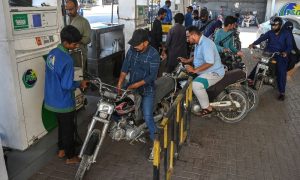
He also instructed the government to mobilise public representatives and volunteers to help people complete registration and other necessary formalities.
The Prime Minister ordered an extensive awareness campaign across print, electronic, digital and social media so that eligible citizens receive timely information about the programme.
Relief amid fuel shock
The scheme comes as Pakistan faces an unusually severe fuel-price shock linked to disruption in international energy markets.
Petrol currently costs Rs375.82 per litre while high-speed diesel is priced at Rs403.32 per litre following the latest increase announced on Friday. The latest increase came as Brent crude traded above $105 a barrel amid concerns about supply disruptions and shipping through strategic Middle Eastern waterways.
For Pakistan, which relies heavily on imported petroleum, international oil-price movements can quickly affect domestic fuel prices, transport costs and household budgets.
The targeted nature of the latest intervention reflects an attempt to direct limited fiscal support towards smaller vehicles and groups considered particularly vulnerable to higher fuel costs.
Avoiding fuel shortages
Meanwhile, Federal Minister for Petroleum Ali Pervaiz Malik said on Monday that the government was simultaneously working to prevent fuel shortages as the Gulf conflict continues to disrupt international supplies.
He said the government was trying to protect consumers from the full impact of the international price shock, particularly salaried and middle-class households.
Malik said the government was purchasing fuel at substantially higher international prices while attempting to keep the burden on domestic consumers under control through targeted relief.
He said the government was also working with private-sector refineries on the pricing mechanism for refined petroleum products and holding discussions with industry stakeholders to ensure adequate supplies in September and October.