
Key Points
- Brent gained about 8.7 per cent last week, while US West Texas Intermediate rose 9.4 per cent.
- Brent briefly climbed above $107 a barrel as attacks and shipping disruptions around the Strait of Hormuz intensified.
- President Donald Trump says oil prices could fall sharply after a US victory and the end of the Iran war, setting up a major market reversal if the conflict ends.
ISLAMABAD: Oil prices posted their strongest weekly rise in nearly two months, with Brent crude breaking decisively above $100 a barrel as the latest Iran-US exchange of strikes intensified pressure on oil supplies through the Strait of Hormuz.
Brent, the international benchmark, settled at $104.61 a barrel on Friday, down $3.02, or 2.81 per cent, on the day but still about 8.7 per cent higher over the week.
US West Texas Intermediate finished at $100.05, down $2.43, gaining about 9.4 per cent during the week.
The rally accelerated on Thursday when Brent jumped 6.3 per cent to $107.63, and WTI rose 6.7 per cent to $102.48, with both benchmarks reaching their highest levels since May.
READ ALSO: Global Oil Prices Jump to $106 a Barrel as Middle East Conflict Escalates
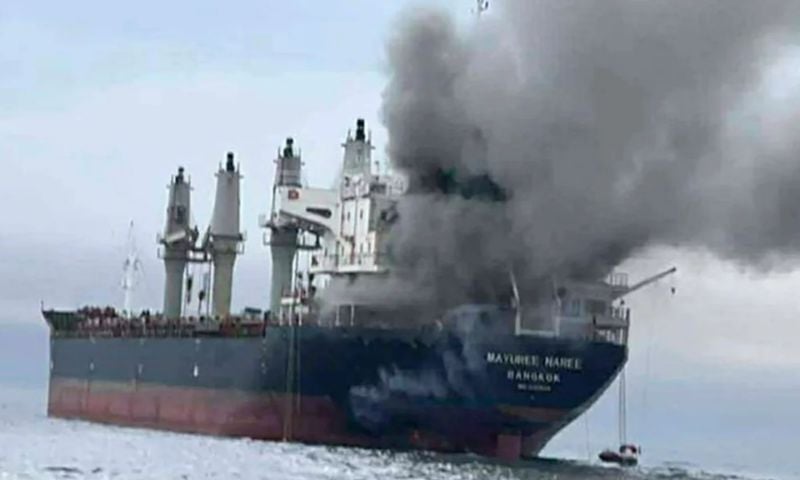
The Strait of Hormuz remained the dominant force in the market. Attacks on shipping, threats to vessels and disruption to regional energy infrastructure raised fears that a substantial volume of Middle Eastern crude and refined products could remain stranded.
Concerns over alternative oil supply routes
The market also faced concerns over alternative export routes, including infrastructure linked to the Middle East. These concerns increased the risk that prolonged disruption could restrict the region’s ability to move oil even outside the Strait.
Prices retreated on Friday as reports of possible diplomatic contacts with Iran raised hopes that shipping through Hormuz could eventually resume. However, Brent remained above $100, reflecting the geopolitical risk.
Against that backdrop, US President Donald Trump’s latest prediction introduces a potentially dramatic counterpoint to the bullish oil narrative.
He has said oil prices would fall sharply once the United States secures victory over Iran and the war ends. He has also suggested that US gasoline prices could fall substantially after the conflict.
The prediction is significant because it points to the possibility of a large geopolitical premium being removed almost as quickly as it was created.
If Hormuz shipping resumes, damaged infrastructure is restored and Middle Eastern production returns to the market, traders could rapidly unwind the supply-risk premium that has lifted Brent above $100.
But the timing remains uncertain. Trump has more recently indicated that the war could continue until after the November midterm elections. The dichotomy of overtures keeps the market volatile and short of capacity to absorb elevated prices for several more weeks or months before his projected decline can materialise.
The central question for the coming weeks is therefore whether the oil market is approaching a temporary price peak or entering a prolonged supply shock.
The International Energy Agency has warned that the global oil supply deficit could widen if the restoration of normal Gulf flows is delayed.
At the same time, the economic damage caused by the conflict is weakening oil demand, creating an unusual combination of supply disruption and demand destruction.
The US Energy Information Administration has also raised its 2026 oil-price forecasts, citing rapidly declining global inventories. It estimates global oil stocks have fallen by about 400 million barrels this year, while Middle Eastern production shut-ins reached 6.7 million barrels per day in August.
Rising US production remains an important counterweight. The US Energy Information Administration expects American crude output to average a record 13.8 million barrels per day in 2026.
Yet additional US production cannot quickly replace Middle Eastern barrels stranded by a prolonged disruption because of transportation, infrastructure and refining constraints.
The oil market therefore enters the new week with two sharply opposing scenarios. Further escalation around Hormuz could push Brent towards $110 or higher. A credible ceasefire or diplomatic breakthrough could instead trigger a rapid correction as traders price in the return of disrupted barrels.