Key Points
- Pakistan targets exports above $100bn by 2035
- Export growth seen as vital for economic independence
- Agriculture offers major potential for high-value exports
ISLAMABAD: Pakistan must make exports the engine of economic growth and raise the annual target beyond $100 billion by 2035 to achieve the government’s ambition of becoming a trillion-dollar economy.
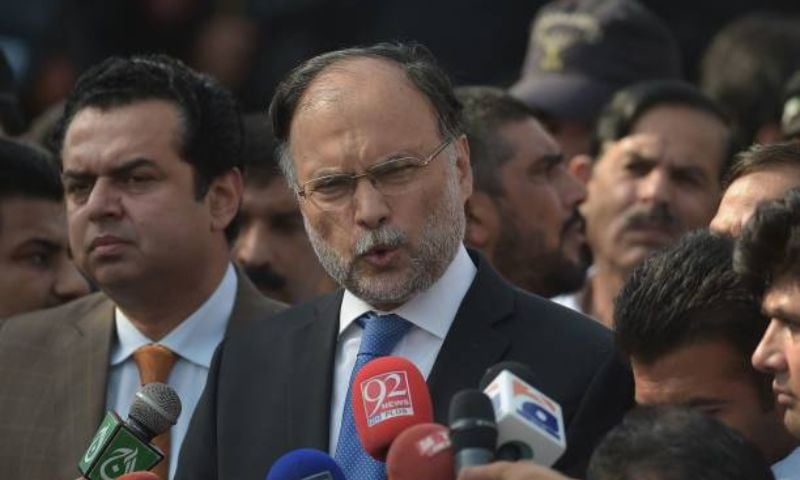
Addressing a roundtable conference on “Unlocking Pakistan’s High-Value Agriculture Export Potential: Threats and Opportunities,” Planning Minister Ahsan Iqbal said extraordinary growth in exports was essential to sustain higher economic growth and reduce the country’s dependence on external borrowing.
He said borrowing from international markets and repeatedly seeking financial support from the International Monetary Fund (IMF) and friendly countries could only provide temporary relief.
A sustainable solution, he added, was to strengthen Pakistan’s capacity to generate foreign exchange through exports.
Exports at centre of economic strategy
Iqbal said Pakistan needed to achieve annual economic growth of 6 to 8 per cent to fully harness the potential of its young population and turn the demographic profile into an economic dividend.
He stressed that economic policies required at least a decade of continuity to deliver structural transformation, arguing that political instability and frequent policy disruptions had constrained investment, productivity and export performance.
Agriculture needs shift to value addition
Describing agriculture as the backbone of Pakistan’s economy, he said the sector had yet to realise its full export potential.
Pakistan continues to spend billions of dollars on agricultural imports despite possessing significant capacity to earn foreign exchange from food and agricultural products.
He called for a shift from commodity-based agriculture towards value-added production, particularly in agro-food, horticulture, livestock and processed food.
He identified halal meat as another area with substantial export potential, particularly in Middle Eastern markets. However, he said expansion would require modernising livestock production, strengthening disease control and ensuring compliance with international standards.
Processing and technology
Iqbal called for greater investment in food processing and the completion of agricultural value chains to reduce post-harvest losses and increase export margins.
Products such as fruit pulp, dried fruits and processed foods, he said, could generate significantly greater value than the export of raw commodities.
READ ALSO: Pakistan to Build Two New Arms Production Plants to Increase Defence Exports
He also stressed the need for modern cold-chain, storage and processing infrastructure to address seasonal production imbalances and allow exporters to access more international markets.
Climate change, he added, made agricultural modernisation increasingly urgent. Pakistan would need to adopt smart farming technologies and climate-resilient and weather-resistant seed varieties to protect productivity.
The minister highlighted growing agricultural cooperation with China, saying Pakistan had sent 1,000 agriculture-sector experts to China last year to learn modern technologies. Another 1,000 people associated with the agriculture sector would be sent this year, he added.
Private sector key to transformation
Iqbal said greater private-sector participation could accelerate agricultural transformation, citing the maize sector as a successful example that could be replicated across other agricultural value chains.
He also called for modern cooperative models to address fragmentation in agriculture, saying they could create economies of scale, facilitate investment and enable small farmers to adopt modern technologies and farming practices.
Unlocking Pakistan’s high-value agricultural export potential would ultimately require coordinated reforms across production, processing, research, infrastructure and market access, he said.
The minister said stronger value chains, international quality standards and climate-resilient production would be critical for transforming agriculture into a major source of export earnings. It would also be essential to support Pakistan’s ambition of sustained, export-led economic growth.