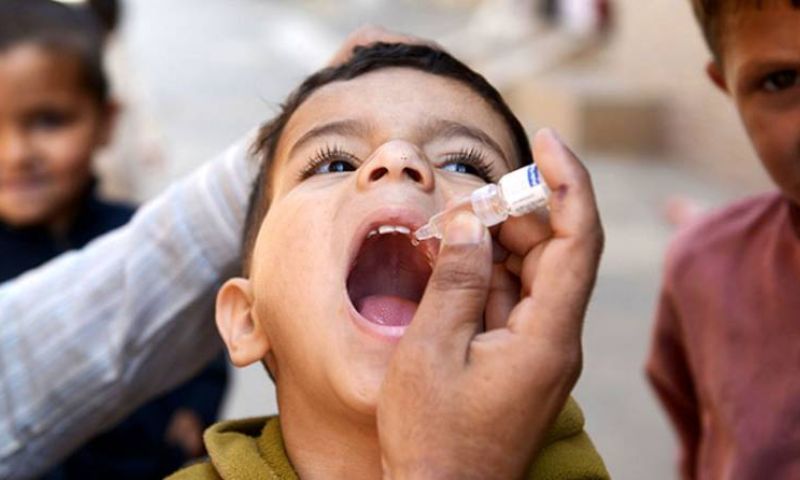
ISLAMABAD: Pakistan has launched a five-day anti-polio vaccination campaign in five districts of south-western Balochistan, with health authorities aiming to administer polio drops to more than 300,000 children as the country steps up efforts to eliminate the crippling disease.
The special campaign, which began on Monday, is being conducted in Quetta, Chaman, Killa Abdullah, Pishin and Barshore. Around 1,200 vaccination teams have been deployed across the five districts to reach children under the age of 10, state broadcaster Radio Pakistan reported.
The drive comes as Pakistan continues its fight against wild poliovirus, with the country and neighbouring Afghanistan remaining the only two countries where the virus is still endemic.
Pakistan has made considerable progress since launching its polio eradication programme in 1994. According to the national polio eradication programme, the number of reported cases has fallen by 99.8 per cent from an estimated 20,000 annually in the early 1990s to 31 cases in 2025.
So far this year, Pakistan has reported three polio cases, according to official data. Two of the cases were detected in Khyber Pakhtunkhwa, while one was reported from Sindh.
The latest campaign is part of a series of nationwide and targeted vaccination drives being conducted to interrupt the remaining transmission of wild poliovirus.
Earlier this year, more than 45 million children under the age of five were targeted during each of two nationwide vaccination campaigns, reflecting the scale of Pakistan’s continuing eradication efforts.
READ ALSO: Pakistan to Vaccinate Over 45 Million Children in Nationwide Polio Drive
However, persistent challenges remain, particularly in areas affected by terrorism and insecurity. Polio vaccination campaigns in Balochistan and Khyber Pakhtunkhwa have repeatedly faced resistance stemming from misinformation, vaccine refusals and security threats.
Vaccination workers and police personnel providing security to them have also come under attack in the past, making access to vulnerable communities more difficult and disrupting eradication efforts.
Health authorities and international organisations have repeatedly rejected misinformation alleging that polio vaccines are part of a Western conspiracy to sterilise Muslim children or cause infertility.
Officials have stressed that vaccination remains essential to protecting children from poliovirus and preventing its spread.
With the latest campaign, authorities are seeking to close remaining immunisation gaps and reach children who may have missed previous rounds of vaccination, particularly in high-risk areas.
The continued detection of cases, despite the sharp decline recorded over the past three decades, underscores the need for sustained vaccination, surveillance and community engagement until transmission of the virus is completely halted.