Key Points
- UK and Pakistan plan deeper strategic cooperation across multiple sectors.
- Dar says Pakistan’s British diaspora is a major bilateral asset.
- Pakistan’s economy has achieved macroeconomic stability.
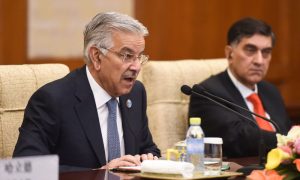
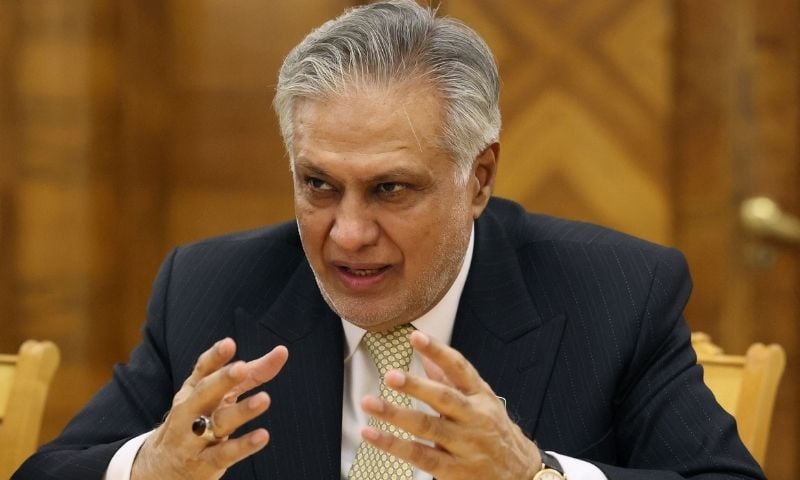
LONDON: Pakistan will treat India’s suspension of the Indus Waters Treaty as an “act of war”, Deputy Prime Minister and Foreign Minister Mohammad Ishaq Dar said, while warning that lasting peace in South Asia would remain elusive unless the Jammu and Kashmir dispute is resolved.
Responding to a question during a press conference in London, Dar said India had held the treaty “in abeyance” following another conflict between the two countries last year, describing the move as a violation of international law.
“This is unacceptable,” Dar said, adding that it was Pakistan’s decision to regard India’s action as an act of war.
The foreign minister said the Kashmir dispute remained central to regional peace, arguing that durable peace in South Asia could not be established without resolving the issue.
Deputy Prime Minister and Foreign Minister Ishaq Dar, speaking to journalists in London, calls his UK visit “extremely useful,” highlighting comprehensive talks with the UK Foreign Secretary on bilateral ties and counter-terrorism cooperation. Deputy PM Dar says discussions with… pic.twitter.com/OdE5CxZ3pD
— Pakistan TV (@PakTVGlobal) August 28, 2026
Pakistan-UK partnership
Dar said Pakistan and the United Kingdom had agreed to take their strategic cooperation to the “next level” following comprehensive discussions with British Foreign Secretary Ed Milliband.
“My meeting with my counterpart Milliband was comprehensive. Everything under the sun was discussed,” Dar said.
He said the discussions went beyond traditional areas such as counterterrorism and counter-narcotics, focusing on expanding cooperation in the economy, investment, fintech, artificial intelligence and information technology.
Dar said the two foreign ministers would jointly lead efforts to strengthen cooperation across these sectors.
He also highlighted the large Pakistani diaspora in Britain, describing it as an asset for both countries and a potential bridge for stronger economic and investment ties.
According to Dar, 94 per cent of Pakistani products exported to England have special treatment status, underscoring the importance of the British market for Pakistan.
He said Milliband was “totally committed” to working with Pakistan to take bilateral strategic cooperation to the next level.
Security cooperation
Dar said he also met Britain’s National Security Adviser, who praised the role played by Prime Minister Shehbaz Sharif, Field Marshal Syed Asim Munir and Pakistan’s Foreign Office leadership in mediation efforts during the Iran-US conflict.
The discussions in London, he said, reflected a broader relationship between Pakistan and Britain that increasingly extends beyond conventional security cooperation.
Dar also described his discussions with Pakistani-origin British parliamentarians as “very positive”.
Pak-Afghan tensions
On Afghanistan, Dar said he had conveyed to British leaders that Pakistan wanted a peaceful and stable Afghanistan.
“Our only demand from Afghanistan is that its soil should not be used for terrorism against any country, particularly Pakistan,” he said.
Dar linked the closure of the Pakistan-Afghanistan border to attacks in Pakistan originating from Afghan territory.
Despite the border closure, he said Pakistan had allowed about 1,000 containers stranded on the Pakistan side to proceed on humanitarian grounds following a request from the United Nations.
He said Pakistan’s position was focused on preventing terrorism while continuing to facilitate humanitarian assistance.
Economic recovery
Turning to Pakistan’s economy, Dar said the country had moved away from the immediate threat of default and achieved macroeconomic stability after what he described as two difficult years for the government.
“Pakistan is now economically better,” he said, adding that the government’s focus had shifted from stabilisation to economic growth, job creation and increasing per-capita income.
“Inflation, which had risen to as high as 30 per cent is now around single digits, while the policy rate had fallen from 22 per cent to 11.5 per cent.
He also said export refinancing costs had declined significantly, describing the overall economic situation as one of macroeconomic stability.
Dar contrasted the current situation with Pakistan’s economic position in 2017.
He said inflation stood at 3.5 per cent, GDP growth was 6.3 per cent, foreign exchange reserves were at their highest level at the time, export refinancing was 3.5 per cent and the policy rate was 5.25 per cent.
Pakistan, he added, had risen to become the world’s 24th-largest economy in 2017 but fell to 47th place over the following four years.
Dar attributed the deterioration to the removal of the government in 2017, which he described as the result of a “conspiracy”.
Commonwealth engagement
Dar said he also held a “meaningful” meeting with the Commonwealth secretary-general during his London visit.
He said Pakistan had been invited to participate in the Commonwealth meeting scheduled to take place in Barbados this year. The invitation, he said, was still under consideration by Prime Minister Shehbaz Sharif and a final decision had not yet been taken.
ALSO READ: UK Lauds Pakistan’s Role in Promoting Middle East Peace
However, Dar said Pakistan would “definitely” participate.
The discussions with the Commonwealth leadership covered issues including organisational reforms, youth and disaster management.
Dar said he had offered Pakistan’s expertise in disaster management, noting that although Pakistan accounts for less than 1 per cent of global carbon emissions, it remains among the world’s 10 most climate-vulnerable countries.