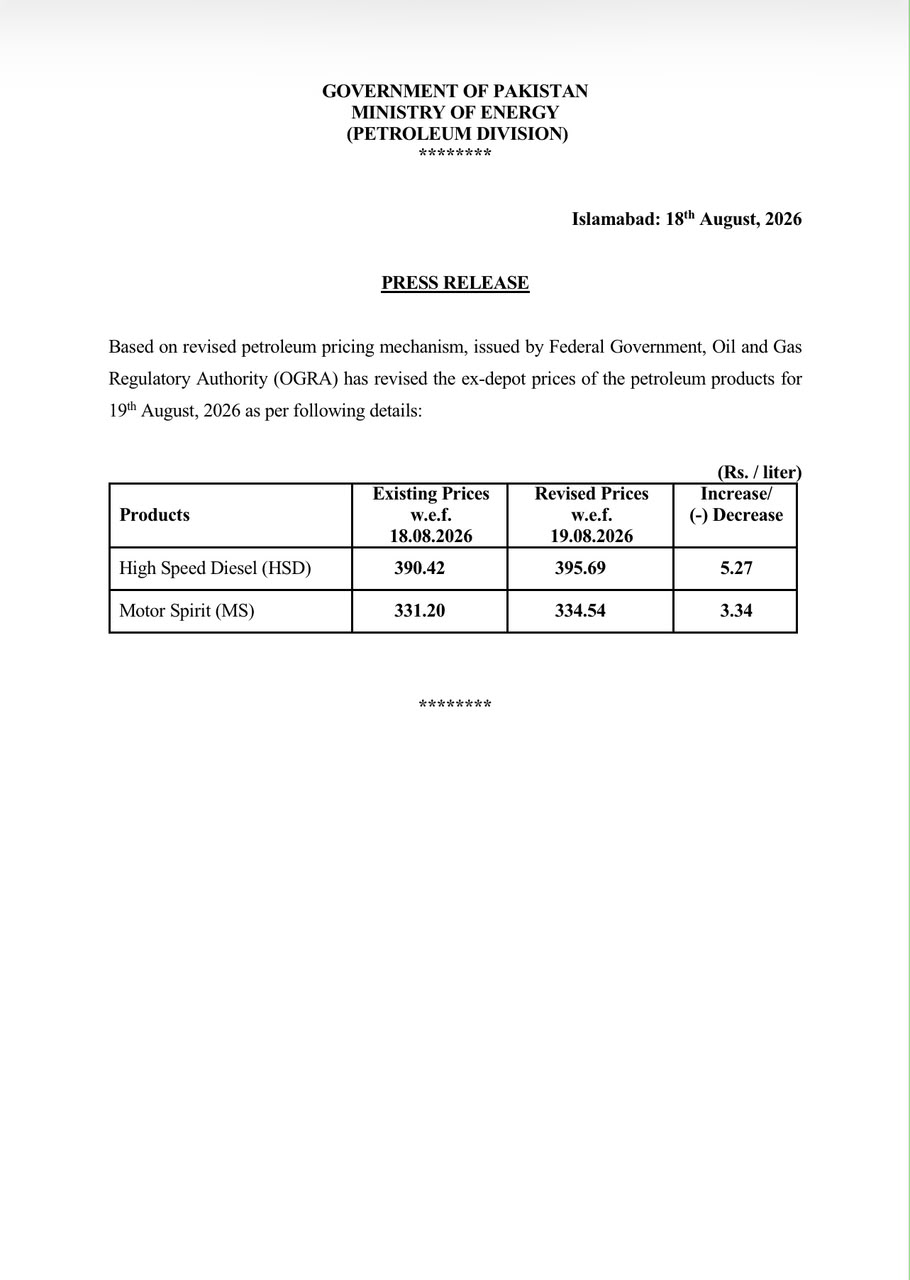
ISLAMABAD: Pakistan’s Oil and Gas Regulatory Authority (OGRA) on Tuesday increased the prices of petrol and high-speed diesel (HSD) by Rs3.34 and Rs5.27 per litre under a new price mechanism.
Following the revision, petrol will be available at Rs334.54 per litre, while the price of high-speed diesel rises to Rs395.69 per litre.
According to a notification issued by the Petroleum Division, the revised prices will take effect from August 19.
Pakistan’s Petroleum Minister Ali Pervaiz Malik had said the daily pricing mechanism is based on a seven-day average of international market prices, aligning Pakistan’s fuel pricing system with international standards.
Pakistan daily fuel price review mechanism
The government of Pakistan shifted to a daily fuel price review mechanism amid heightened volatility in global oil markets triggered by renewed tensions in the Middle East. The move is aimed at ensuring that changes in international oil prices are reflected more quickly in domestic fuel rates.
The government had earlier replaced the fortnightly pricing system with weekly reviews following the outbreak of the Middle East conflict.
Fuel prices have been revised upward once again.
Petrol: Rs. 331.20 → Rs. 334.54 per litre
Diesel: Rs. 390.42 → Rs. 395.69 per litreNew prices take effect from 19 August 2026. pic.twitter.com/iCuhtssNZ8
— PakWheels.com (@PakWheels) August 18, 2026
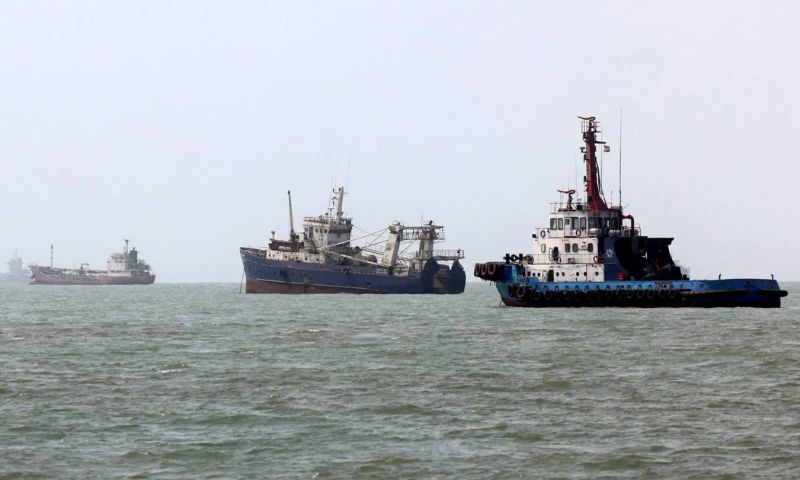
The latest escalation in regional tensions and concerns over disruptions to energy supplies through the Strait of Hormuz prompted authorities to adopt daily price revisions.
Petrol is mainly used in private transport, small vehicles, rickshaws and two-wheelers, and changes in its price affect the middle and lower-middle classes.
Similarly, changes in diesel prices also impact the public at large, as it is mainly used in the heavy transport sector, power plants and large generators.
Oil Jumps Past $91
Meanwhile, oil prices climbed above $91 a barrel on Tuesday as fading hopes for a US-Iran peace deal and continued disruption to shipping through the Strait of Hormuz revived fears of tighter global supplies.
Brent crude futures rose 62 cents, or 0.7 per cent, to $91.49 a barrel, after gaining more than $2 in the previous session. US West Texas Intermediate (WTI) crude rose 75 cents to $85.25. Brent had already settled at $90.87 on Monday, its highest level since July 30.
Also Read: Oil Jumps Past $91 as Iran War Keeps Hormuz Flows in Limbo
The latest rise reflects a growing belief among traders that the conflict may persist. The traders’ sentiment indicates that one of the world’s most important energy chokepoints is effectively trapped between military confrontation and stalled diplomacy.
The 60-day period attached to the June US-Iran interim agreement expired on Monday without a breakthrough.
Washington has ruled out extending the temporary ceasefire, and Iran has warned that it could adopt a fully offensive military posture if negotiations fail.