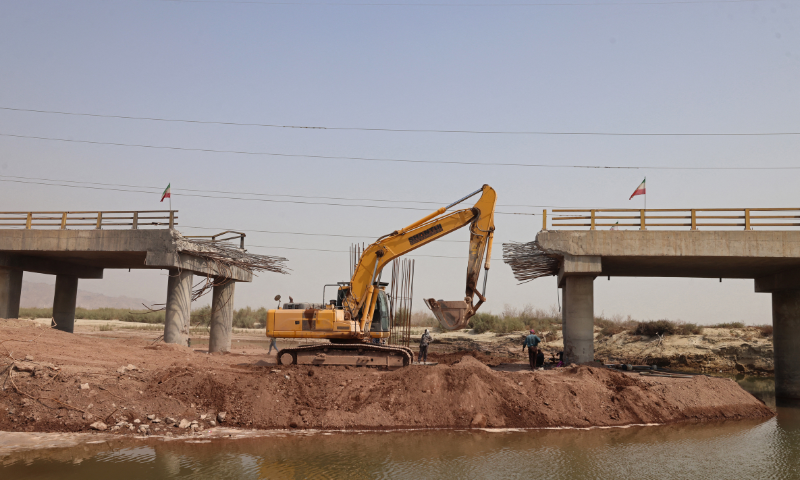
TEHRAN: Iran lost around 100 aircraft during what it described as a US-Israeli war of aggression, while attacks also caused extensive damage to civilian infrastructure across the country, Iranian Minister of Roads and Urban Development Farzaneh Sadeq said late Monday.
Speaking at a press conference, Sadeq said Iranian authorities had worked throughout the conflict to keep transport networks and essential services operational despite attacks on airports and critical infrastructure.
“During the war, we lost 100 aircraft,” she said, according to Iran’s Tasnim news agency. Despite the losses, Sadeq said Iran’s national carrier, Iran Air, continued to operate flights during the conflict, including services for pilgrims travelling for the Hajj. She said the airline managed to operate Hajj flights using eight aircraft during the period.
The minister said the attacks extended beyond aviation infrastructure, with airports, electricity facilities and water installations among the targets.
She described the strikes as part of efforts to weaken the resilience of the Iranian population and disrupt essential services.
READ ALSO: Trump Says Iran Should ‘Put Up the White Flag of Surrender’
According to Sadeq, the country’s rail, road and port networks nevertheless remained operational throughout the conflict. She said the ministry took measures to maintain passenger and freight services and ensure the continued movement of essential commodities.
Sadeq further claimed that US and Israeli forces had carried out attacks on around 400 cities across 25 Iranian provinces. The attacks, she said, damaged approximately 100,000 commercial and residential units, underlining the scale of destruction caused during what she referred to as the second and third wars of aggression against Iran.
The minister said the government was now focused on restoring damaged transport infrastructure and maintaining essential services as reconstruction efforts continued.
Her remarks offered an assessment from the Iranian side of the conflict’s impact on the country’s aviation and broader transport infrastructure.
The US-Iran war began on February 28, 2026, when the United States and Israel launched military strikes against Iran. The conflict has since involved direct attacks, missile and drone strikes, and wider regional tensions.
After weeks of fighting, diplomatic efforts led to a temporary reduction in hostilities, with Pakistan playing a key role in bringing the two sides towards negotiations.
Ceasefire Deal Expires
A memorandum of understanding signed on June 17 established a 60-day framework for negotiations aimed at reaching a longer-term settlement. The arrangement expired on Monday, August 17, without a final agreement.
The talks became increasingly difficult over several issues, including the future of Iran’s nuclear programme, sanctions and the status of the Strait of Hormuz.
Both sides have accused the other of failing to honour commitments under the interim arrangement, while US President Donald Trump has ruled out extending the agreement. Iran has warned that it could adopt a more offensive military posture if diplomacy fails.
Strait Of Hormuz At The Centre Of Dispute
The strategic Strait of Hormuz has become one of the most important flashpoints in the conflict. The waterway normally carries a significant share of the world’s oil and liquefied natural gas shipments, but maritime traffic has fallen sharply amid the confrontation.
Disagreements over reopening the waterway and US naval restrictions have become a major obstacle to negotiations. Any prolonged disruption could have wider consequences for global energy markets and international shipping.
The conflict has already affected energy markets, shipping and financial markets. Oil prices rose further after the ceasefire expired, with Brent crude trading above $91 a barrel on Tuesday as concerns about supply disruptions increased.
The expiration of the agreement has therefore left the region facing renewed uncertainty, with diplomatic efforts still possible but the risk of further military escalation rising.