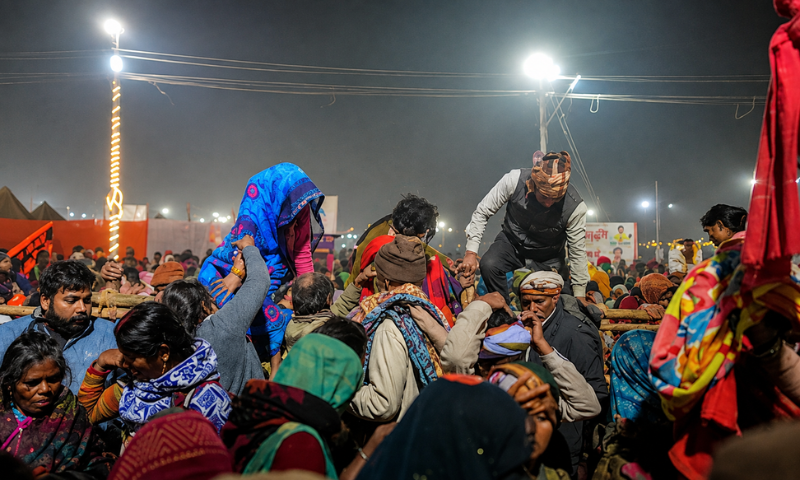
NEW DELHI: At least seven women were killed and several others injured after a stampede broke out at a Hindu temple in India’s eastern Bihar state early on Monday, officials said.
The incident occurred at the Ashok Dham Temple in Lakhisarai district, where a large number of devotees had gathered.
Poor crowd management is often a major factor behind deadly stampedes in India. Large gatherings become dangerous when organisers and authorities fail to properly control entry and exit points, establish clear movement routes, deploy adequate security personnel or respond quickly to sudden surges in the crowd.
Seven dead in stampede in Bihar’s Ashok Dham temple
An eyewitness said that two trains full of devotees had reached Lakhisarai railway station, and the devotees, mostly women, rushed to offer sacred water to Lord Shiva pic.twitter.com/vzdsQ911FR— Shakeel Yasar Ullah (@yasarullah) August 17, 2026
According to senior civil official Shailendra Kumar, an electricity pole fell at the temple, prompting a rumour among devotees that a live electrical wire had fallen on people in the crowd.
The rumour sparked panic and triggered a sudden rush in the queue reserved for women, causing several devotees to lose their balance and fall on top of one another.
“An electricity pole fell and a rumour spread that a live wire had fallen on the devotees. This triggered pressure on the women’s queue and women fell on top of each other,” Kumar said.
Seven devotees were confirmed dead, while authorities were working to establish the exact number of injured, he added.
Emergency teams and local authorities responded to the incident, while the injured were being taken for medical treatment. Officials were also assessing the situation at the temple and working to determine the circumstances that led to the crowd surge.
READ ALSO: Indian Temple Stampede Kills Nine, Injures Dozens
Bihar Chief Minister Samrat Choudhary said on X that the administration had been instructed to ensure that the injured received proper and prompt medical treatment.
The incident comes amid recurring concerns over crowd management and safety arrangements at major religious gatherings in India, where large numbers of worshippers can gather in confined spaces.
Several factors can increase the risk of a stampede, including severe overcrowding, narrow entrances and exits, inadequate barricades and poor crowd management. Sudden panic, triggered by rumours, falls, slippery ground or a rush towards a religious figure or public personality, can quickly turn a densely packed crowd into a deadly crush.
Weak safety planning, limited emergency access and insufficient coordination between organisers and authorities can further increase the risk, particularly when crowds exceed the safe capacity of a venue.