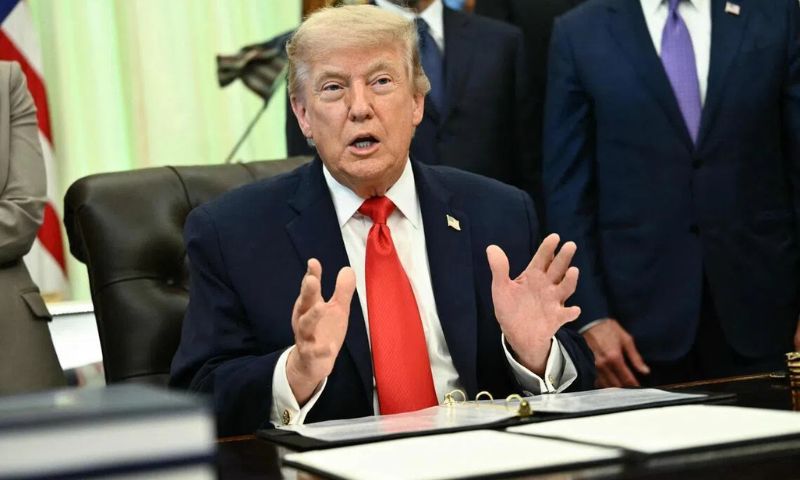
WASHINGTON: US President Donald Trump has welcomed the signing of a joint defence agreement between Pakistan, Saudi Arabia and Turkiye, describing it as an important development towards strengthening security cooperation in the Middle East.
In a message posted on his Truth Social platform, Trump said the agreement demonstrated that countries across the region were increasingly moving towards closer security cooperation and greater capacity to protect themselves.
— Rapid Response 47 (@RapidResponse47) August 16, 2026
“THIS IS A BIG, BOLD, AND IMPORTANT FIRST STEP — WOW!” Trump said, while congratulating the leaders of Pakistan, Saudi Arabia and Turkiye on the agreement.
The Makkah Joint Defence Agreement brings the three countries closer together in defence and security matters at a time when regional powers are seeking to develop stronger mechanisms for collective security.
Trump said the emerging cooperation could enable countries in the region to defend themselves “in a more meaningful way”, suggesting that stronger regional security arrangements could contribute to a greater burden-sharing role among US partners and allies.
The agreement also reflects the growing importance of Pakistan, Saudi Arabia and Turkiye in shaping the regional security landscape. The three countries maintain significant military capabilities and have increasingly sought closer coordination on issues affecting regional stability.
READ ALSO: Saudi Arabia, Pakistan and Turkiye Sign Landmark Makkah Joint Defence Agreement
Saudi Arabia, Pakistan and Türkiye signed the landmark Makkah Joint Defence Agreement earlier this month, seeking to strengthen collective security and expand military cooperation amid growing regional instability.
The agreement was signed during the Makkah Al-Mukarramah Summit for Joint Defence at Al-Safa Palace in Makkah, hosted by Saudi Crown Prince and Prime Minister Mohammed bin Salman.
Turkish President Recep Tayyip Erdogan and Pakistani Prime Minister Shehbaz Sharif attended the summit, where the three leaders reviewed bilateral and trilateral relations and discussed regional and international developments of mutual interest.