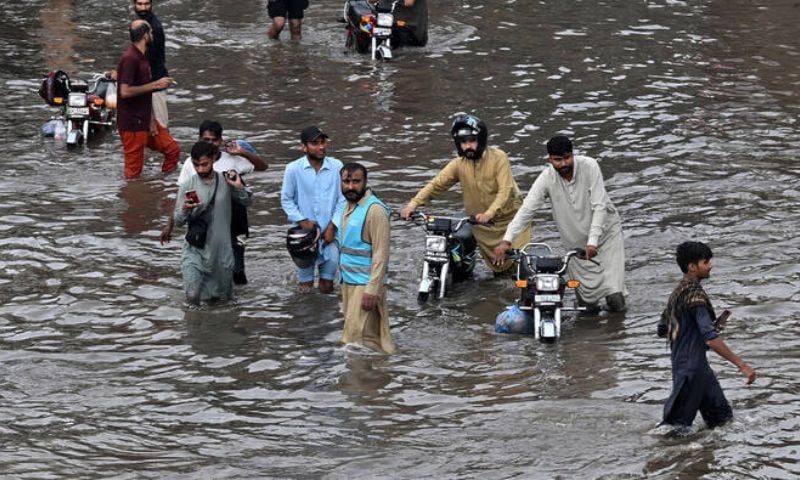
ISLAMABAD: Pakistan’s catastrophic monsoon season continues to claim lives and devastate communities as the death toll from the fourth spell of heavy rains has surged to 136, with 418 people injured, while the National Disaster Management Authority (NDMA) has issued urgent warnings of escalating flood dangers across multiple river systems until August 4.
The relentless downpours have unleashed chaos across the country, with authorities now on high alert as riverine, flash-flood and urban flooding risks intensify in Punjab, Sindh, Khyber Pakhtunkhwa and Balochistan.
PMD Weather Warning | 03– 04 August 2026
The public is advised to avoid unnecessary travel during intense rainfall, stay away from low-lying areas and follow instructions from local authorities.#WeatherAlert #HeavyRain #UrbanFlooding #FlashFlood #LandslideAlert #PMD #StaySafe pic.twitter.com/XAbH0eHvrc
— Pak Met Department محکمہ موسمیات (@pmdgov) August 3, 2026
The NDMA has confirmed high-level flooding in the Lehri River at Head Gogi, while Nullah Palkhu at Wazirabad is experiencing medium-level flooding. Low-level flooding continues to threaten communities at Kalabagh, Chashma, Guddu and Sukkur along the Indus River, as well as at Head Nari on the Nari River.
River systems under threat
The NDMA has warned of a deteriorating situation on multiple river systems, with high-level flows expected at Marala on the Chenab River, while Khanki and Qadirabad could see low- to medium-level flows. Water levels are also likely to rise in the Jhelum, Ravi and Kabul rivers and their tributaries in the coming days.
Read Also: Pakistan Braces for Major Monsoon Spell as Heavy Rains Predicted from July 29 to August 5
Streams linked to the Jhelum, Chenab and Ravi may run at medium to high flows, while conditions in the Ravi and Sutlej will depend on releases from Indian reservoirs, according to the authority.
Residents living near these waterways have been advised to remain vigilant and follow evacuation orders should conditions worsen.
Glacier Lake Monitoring Update: Maximum Air Temperatures Observed Across Glaciated Valleys on August 03, 2026.#PMD #GLOFMonitoring #GlacierLakeMonitoring #PakistanWeather #AirTemperatureUpdate #GlaciatedValleys #GilgitBaltistan #KhyberPakhtunkhwa #NorthernPakistan #GlacierMelt pic.twitter.com/MHQzZsDDUR
— Pak Met Department محکمہ موسمیات (@pmdgov) August 3, 2026
Flash flood and urban flooding alerts
The NDMA has also warned of possible flash floods in the hill torrents of Dera Ghazi Khan and Rajanpur, as well as seasonal streams in central and southern Khyber Pakhtunkhwa and northern Balochistan.
Low-lying urban areas in Rawalpindi, Jhelum, Gujranwala, Lahore, Faisalabad, Peshawar, Mardan, Nowshera, Hyderabad, Badin, Thatta and other parts of Sindh face the risk of significant water accumulation and urban flooding.
Read Also: Pakistan Braces for More Flooding and Landslides as 113 Die in Monsoon Deluge
The authority has urged citizens to avoid unnecessary travel to flood-prone and flood-hit areas, strictly refrain from crossing floodwaters on foot or by vehicle, and check weather forecasts and road conditions before setting out.
The public has also been advised to follow directions from local authorities and use the Pak NDMA Disaster Alert mobile application for real-time weather warnings and emergency information.
🌾 FARMER’S WEATHER ADVISORY: Monsoon Rain & Heavy Downpour Alert for Punjab, KP, Potohar & Gilgit-Baltistan (Aug 4 – Aug 6) Official agricultural weather forecast from Pakistan Meteorological Department (PMD weatherTV). Farmers across Punjab, Khyber Pakhtunkhwa, Potohar .. pic.twitter.com/AeDmW04n9C
— Pak Met Department محکمہ موسمیات (@pmdgov) August 3, 2026
Government on high alert
In a separate development, the Emergency Response Committee established by the Prime Minister convened its 10th daily review meeting on the monsoon situation, directing all relevant agencies to maintain maximum preparedness and accelerate relief and rehabilitation work.
The meeting was chaired by Planning Minister Professor Ahsan Iqbal via video link from the National Emergencies Operation Centre, with representatives of federal ministries, provincial governments, chief secretaries, provincial disaster management authorities and other response agencies in attendance.
Read Also: Pakistan on High Alert as India Releases Water from Salal Dam for 11th Consecutive Time
Officials were briefed on the latest weather outlook, casualty figures, infrastructure damage and ongoing rescue and relief operations.
The committee was informed that deputy commissioners in all vulnerable districts had already been alerted for timely preparedness and emergency response, while coordinated operations were continuing at federal, provincial and district levels in areas affected by recent rainfall.
Weekly Weather Outlook (03– 09 August, 2026).#PMD #weatherforecast #Monsoon2026 #HeavyRain #FlashFlood #rain #LandslideAlert #PakistanWeather #WeatherUpdate #StayAlert pic.twitter.com/ddgeFx5XoS
— Pak Met Department محکمہ موسمیات (@pmdgov) August 3, 2026
Nationwide impact
The fourth monsoon spell has caused widespread devastation, with homes destroyed, roads washed away and crops damaged across vast swathes of the country. Rescue teams have been working around the clock to evacuate stranded families and provide emergency shelter to those displaced by the floods.
🌧️Daily Flood Bulletin | 03 Aug 2026
⚠️ Low to Medium flooding is expected in River Chenab. Flash flooding is possible in KP streams, DG Khan hill torrents, River Kabul tributaries & northern Balochistan. Urban flooding may occur in parts of Punjab. Stay updated.#PMD pic.twitter.com/6Sask3cAxO— Pak Met Department محکمہ موسمیات (@pmdgov) August 3, 2026
The NDMA continues to monitor the situation closely and has urged citizens to remain alert and follow safety guidelines as the country braces for further rainfall.