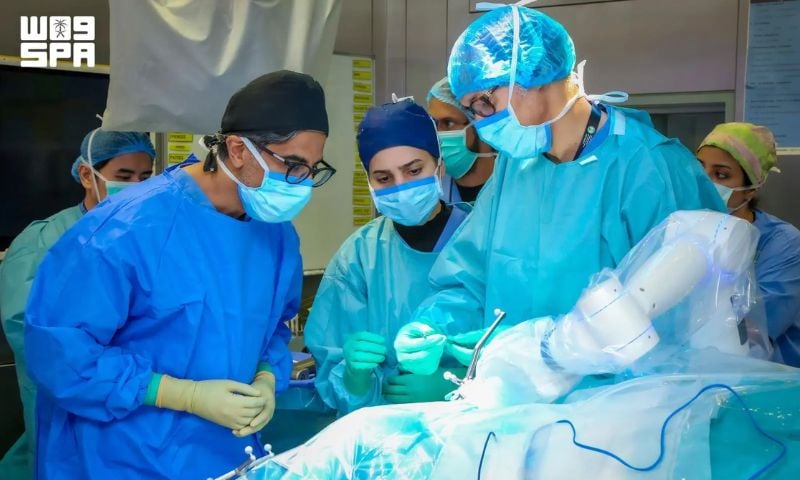
RIYADH: Saudi Arabia’s King Faisal Specialist Hospital and Research Centre (KFSH) has successfully performed the Kingdom’s first Laser Interstitial Thermal Therapy (LITT) procedure, marking a significant milestone in the treatment of selected patients with drug-resistant focal epilepsy and certain brain tumours.
The minimally invasive technique provides an alternative to conventional open brain surgery in suitable cases, the Saudi Press Agency (SPA) reported on Monday.
It involves inserting thin laser fibres through a small opening in the skull and guiding them to the targeted area. Using real-time MRI guidance, surgeons can precisely monitor the position of the fibres and heat distribution, allowing controlled thermal energy to destroy abnormal tissue while minimising damage to surrounding healthy brain tissue.
Patient discharged within 24 hours
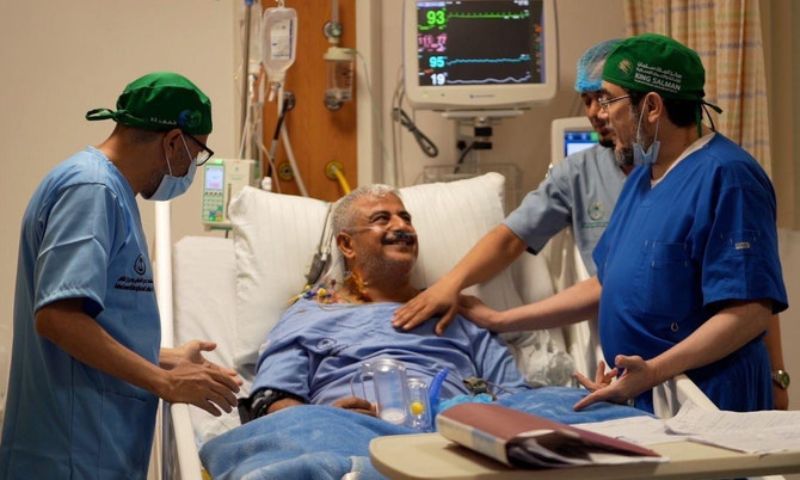
The first patient who underwent the procedure was discharged within 24 hours without any reported complications, highlighting the technique’s potential to reduce hospital stays, accelerate recovery and enable patients to resume their normal activities sooner than with traditional surgery.
Dr Faisal Alotaibi, Functional and Epilepsy Surgery Consultant at KFSH in Riyadh, said the patient was selected after a comprehensive multidisciplinary evaluation involving neurosurgeons, radiologists and epilepsy specialists to determine the suitability of the treatment.
He noted that LITT allows doctors to treat carefully selected cases that were previously considered high risk because of their proximity to critical areas of the brain. KFSH is also working to expand the use of the procedure by training additional clinical teams and gradually increasing the number of eligible patients.
Compared with conventional open brain surgery, which requires a larger incision and opening of the skull, LITT is significantly less invasive and may reduce the extent of surgery, shorten hospitalisation and support faster recovery in appropriate cases.
The introduction of the technology further strengthens the capabilities of KFSH’s Neuroscience Centre of Excellence, which specialises in diagnosing and treating complex neurological disorders through advanced neuroimaging, multidisciplinary expertise and minimally invasive surgical techniques tailored to each patient.
For epilepsy patients, treatment eligibility is determined through an extensive evaluation that includes stereoelectroencephalography (SEEG), advanced neuroimaging and multidisciplinary clinical assessments to accurately identify the source of seizures before considering LITT as a treatment option.
King Faisal Specialist Hospital and Research Centre was ranked first in the Middle East and Africa and 12th globally among the world’s top 250 academic medical centres for 2026.
Saudi health system secures four accreditations and 27 global awards in 2026
Earlier this month, Saudi Arabia’s health system secured four global accreditations, 27 international awards, and more than 17 certificates since the beginning of 2026.
The achievements reflect improvements in institutional efficiency, service quality, and adherence to global healthcare standards, the Saudi Press Agency reported.
Also Read: Saudi Health System Secures Four Accreditations and 27 Global Awards in 2026
They are part of the Health Sector Transformation Programme under Saudi Vision 2030, which aims to enhance the efficiency and competitiveness of the healthcare system through advanced operational and regulatory frameworks.
The developments also highlight ongoing efforts to strengthen Saudi Arabia’s standing in international health indicators and forums, and to position the Kingdom among leading countries in the global healthcare sector.