



Key Points
- Pakistan hosts the largest arid-climate mangrove forest
- Ecosystems are increasingly threatened by climate change
- Restoration efforts are gaining international recognition
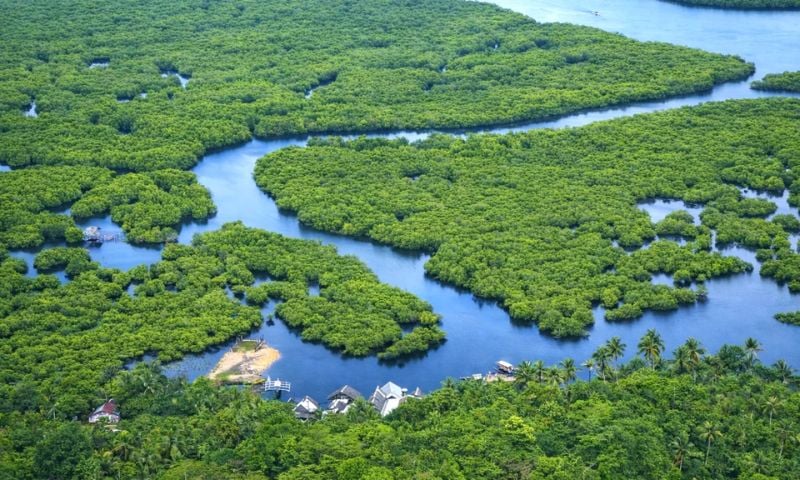
ISLAMABAD: Stretching across the muddy creeks of the Indus Delta, Pakistan’s mangrove forests, one of South Asia’s vital natural assets, serve as a frontline defence against climate change, sustain fisheries and offer new opportunities in the rapidly expanding blue economy.
Observed annually on July 26, World Mangrove Day has brought renewed attention to the country’s coastal ecosystems. Pakistan is among the world’s most climate-vulnerable nations despite contributing less than even a percentile of global greenhouse gas emissions.
Pakistan is home to the world’s largest arid-climate mangrove forest, spread primarily across the Indus Delta in Sindh province. There are also smaller but ecologically significant patches along the Balochistan coast.
According to the latest estimates from the Sindh Forest Department and international conservation bodies, the country’s mangrove cover exceeds 230,000 hectares, placing Pakistan among the top ten nations globally for mangrove area.
The forests form a critical ecological buffer along the Arabian Sea coast, absorbing the impact of cyclones, storm surges and coastal erosion.
ALSO READ: Mangrove Planting in Pakistan Yields Return
Scientists estimate that a healthy belt of mangroves can reduce wave energy by up to 60 per cent, significantly lowering the risk to coastal settlements, ports and infrastructure.
Their importance has become increasingly evident as climate change intensifies weather extremes across the region.
The Arabian Sea has witnessed a rise in the frequency and intensity of severe cyclonic storms over the past two decades, posing growing risks to Karachi, Gwadar and surrounding coastal communities.
Beyond Pakistan’s coastal protection
Beyond coastal protection, mangroves are indispensable to Pakistan’s fishing industry. The Indus Delta serves as a nursery for commercially important species, including shrimp, crabs and dozens of fish varieties.
Experts estimate that nearly 90 per cent of marine fish species spend part of their life cycle in mangrove-associated habitats, directly supporting the livelihoods of hundreds of thousands of people in Sindh and Balochistan.
Ecosystems facing degradation
However, these ecosystems have faced decades of degradation. Reduced freshwater flows from the Indus River, industrial pollution, urban encroachment and the conversion of coastal land have led to significant losses since the 1960s.
Environmental researchers note that the delta receives only a fraction of the freshwater historically needed to maintain its ecological balance, increasing salinity and threatening biodiversity.
Restoration campaign
In recent years, Pakistan has undertaken one of the region’s largest mangrove restoration campaigns.
Provincial authorities, the Karachi Port Trust, local communities and international partners, including the International Union for Conservation of Nature (IUCN) and the World Bank, have collectively planted millions of saplings across the Indus Delta.
The restoration efforts are increasingly attracting global attention not only for their environmental impact but also for their economic potential.
Natural carbon sinks
Mangroves are among the planet’s most efficient carbon sinks, capable of storing up to four times as much carbon per hectare as many terrestrial forests.
Analysts estimate Pakistan’s emerging “blue carbon” market could generate tens of millions of dollars annually through carbon credits if supported by robust monitoring and international certification mechanisms.
Balochistan’s coastal belt, including areas around Miani Hor, Kalmat Khor and Jiwani, is also being viewed as a promising frontier for future conservation and carbon finance initiatives.
Yet experts caution that long-term success will depend on addressing underlying challenges. They particularly emphasise the need to ensure adequate environmental flows downstream of the Indus River.
They also find it equally important to strengthen protections against illegal encroachment and pollution.
As countries worldwide seek nature-based solutions to climate change, Pakistan’s mangroves stand out as a rare environmental success story. It also demonstrates how ecological restoration can simultaneously advance climate resilience, food security and sustainable economic development.
For Pakistan, safeguarding these forests is not merely an environmental imperative; it is an investment in the future of its coastline and the millions of people whose lives remain tied to the waters of the Arabian Sea.