
Key points
- Asian shares sink amid renewed inflation concerns
- New US tariffs add to global market uncertainty
ISLAMABAD: Asian stock markets fell sharply on Friday as investors grappled with a convergence of risks, including an escalating Middle East conflict, surging oil prices, AI boom sustainability concerns and a fresh round of US tariffs on dozens of trading partners.
The latest selloff followed steep losses on Wall Street overnight. Major technology stocks led declines after disappointing investor sentiment surrounding AI-related spending plans.
Global markets were facing an unusually complex environment in which geopolitical tensions, inflationary pressures and questions over corporate profitability are all weighing simultaneously on risk appetite.
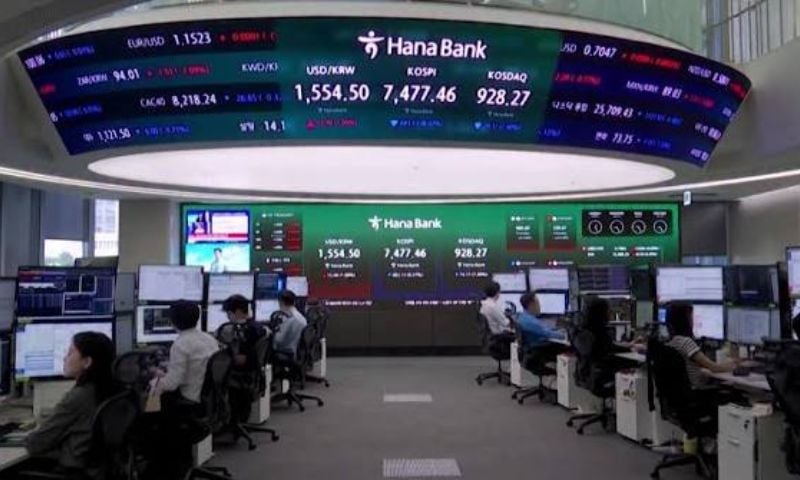
Japan’s Nikkei index fell more than three per cent in early trading. South Korea’s benchmark KOSPI dropped as much as 3.7 per cent. The index was dragged lower by semiconductor heavyweights Samsung Electronics and SK hynix, which each lost more than seven per cent at one stage.
Hong Kong, Shanghai, Sydney, Singapore, Taipei and Manila also traded firmly in negative territory.
The MSCI Asia Pacific Index declined about one per cent, extending losses after the S&P 500 registered its biggest one-day drop in a month and the Nasdaq 100 shed nearly two per cent overnight.
Market strategists noted that investors were increasingly questioning whether the hundreds of billions of dollars being committed to AI infrastructure would translate into meaningful returns.
Alphabet, Google’s parent company, fell almost seven per cent after increasing its projected 2026 capital expenditure to as much as $205 billion, significantly above previous guidance.
Tesla plunged more than 14 per cent after reporting negative free cash flow, with investors expressing concern over its spending on autonomous driving, robotics and manufacturing expansion.
Together, the so-called “Magnificent Seven” technology companies recorded their worst single trading session since the tariff-driven market turmoil of April 2025, wiping out an estimated $800 billion in market capitalisation.
Microsoft, Meta and Amazon are expected to report earnings next week, with investors likely to focus closely on AI spending commitments and profit outlooks.
“A relatively small number of companies have driven a disproportionate share of returns in recent years,” Angelina Lai, chief investment officer at St. James’s Place Asia and Middle East, said in a market note.
“As expectations rise and markets become more selective, future outcomes are likely to depend less on exposure to a theme and more on which businesses can translate investment into sustainable earnings growth.”
ALSO READ: Asian Stocks Extend Gains as Chipmakers Lead Recovery
Compounding concerns over the technology sector was a renewed spike in energy prices.
Brent crude surged seven per cent on Thursday to briefly touch $102 a barrel before settling around $100.85 on Friday, after attacks by Yemen’s Houthi movement on Saudi oil tankers in the Red Sea intensified fears of supply disruptions.
The latest escalation comes weeks after the collapse of a US-Iran truce, with Washington and Tehran exchanging threats and military action.
Analysts warned that disruptions to both the Strait of Hormuz and Red Sea shipping lanes could remove millions of barrels of oil from global markets. The situation could potentially reignite inflation just as central banks had begun signalling a pause in monetary tightening.
United Nations Secretary-General Antonio Guterres warned that the conflict was “teetering on the edge of the unimaginable”, highlighting growing international concern that the crisis could spread across the region.
The jump in oil prices has also reverberated through bond and currency markets. The yield on long-dated US Treasuries climbed to multi-year highs, while the US dollar strengthened broadly.
Japan’s yen hovered near 40-year lows against the greenback, prompting renewed warnings from US officials about excessive currency volatility.
Adding to investor unease, the United States announced new tariffs ranging from 10 per cent to 12.5 per cent on imports from 60 trading partners over concerns about forced labour.
The measures, which take effect on Friday, are the latest effort by President Donald Trump’s administration to preserve elements of its trade policy after a Supreme Court ruling earlier this year struck down several previous tariffs.
Market participants are now turning their attention to upcoming earnings reports from major technology companies, US economic data releases and developments in the Middle East.
All of these factors are expected to determine whether the current selloff marks a temporary correction or the beginning of a more prolonged period of market volatility.
For now, investors appear to be preparing for a difficult period in which three of the market’s biggest drivers—energy, geopolitics and technology—are moving in the wrong direction simultaneously.