
MELBOURNE: Australian Prime Minister Anthony Albanese and Indian Prime Minister Narendra Modi on Thursday finalised a long-awaited mechanism to facilitate Australian uranium exports to India, hailing the agreement as a milestone for clean energy cooperation.
The deal, however, has reignited criticism from environmental organisations, anti-nuclear campaigners and non-proliferation experts, who warn it could undermine decades of global efforts to curb the spread of nuclear weapons and complicate South Asia’s strategic balance.
The export arrangement, concluded during Modi’s three-day visit to Australia, operationalises a bilateral nuclear cooperation agreement signed in 2015 and clears the way for long-term Australian uranium supplies to India’s civilian nuclear programme under safeguards administered by the International Atomic Energy Agency (IAEA).
While Canberra says the uranium will be used exclusively for peaceful purposes, critics argue the agreement carries broader strategic implications that extend well beyond energy cooperation.
Critics Warn of Blow to Non-Proliferation Regime
The strongest criticism centres on India’s status outside the Treaty on the Non-Proliferation of Nuclear Weapons (NPT), the cornerstone of the global nuclear non-proliferation regime.
Unlike the five recognised nuclear-weapon states under the treaty, India has never joined the NPT and maintains both civilian and military nuclear programmes. Under its safeguards agreement with the IAEA, only designated civilian facilities are subject to international inspections, while strategic military facilities remain outside the agency’s oversight.

Non-proliferation advocates argue that supplying uranium to a state outside the NPT weakens the credibility of the international rules-based nuclear order by granting exceptional treatment to a country that developed nuclear weapons without joining the treaty.
They also warn that such arrangements could encourage demands for similar exceptions by other non-NPT states, potentially eroding the integrity of the global export control system.
Legacy of the 1974 Nuclear Test
Critics also point to India’s first nuclear test in 1974, code-named Smiling Buddha, as a defining moment in global non-proliferation history.
The test used plutonium produced in the Canadian-supplied CIRUS research reactor, which had been provided for peaceful purposes, with heavy water supplied by the United States. The explosion prompted widespread international concern that civilian nuclear cooperation had contributed to a weapons programme.
The fallout from the test led directly to the establishment of the Nuclear Suppliers Group (NSG) in 1975, a consortium created to tighten international controls on exports of nuclear materials, equipment and technology.
For many non-proliferation experts, that history continues to shape concerns over expanding nuclear cooperation with India.
Concerns Over Civilian-Military Separation
Although Australia insists its uranium exports will be used solely in safeguarded civilian reactors, critics argue that the arrangement cannot entirely eliminate proliferation risks.
This isn’t India, it’s Australia.
Just look at the crowd that turned up to ask PM Modi to go back. Simply unbelievable…
You can’t deny the fact that he is the first Indian PM facing such embarrassing moments outside India. https://t.co/tZcda0VHL4 pic.twitter.com/7nkmw7sfgh
— D (@Deb_livnletliv) July 9, 2026
They contend that imported uranium supplied for civilian energy production could indirectly free India’s domestically mined uranium for use in unsafeguarded strategic facilities, potentially increasing the resources available for its nuclear weapons programme.
Because civilian and military nuclear fuel cycles operate within the same national infrastructure, advocacy groups argue that verifying indirect effects remains difficult despite international safeguards.
Strategic Stability in South Asia
Security analysts say the agreement also carries implications for the strategic balance in South Asia.
India and Pakistan, both nuclear-armed neighbours, have maintained a fragile deterrence relationship for decades.
“You Will Not Replace Us!”
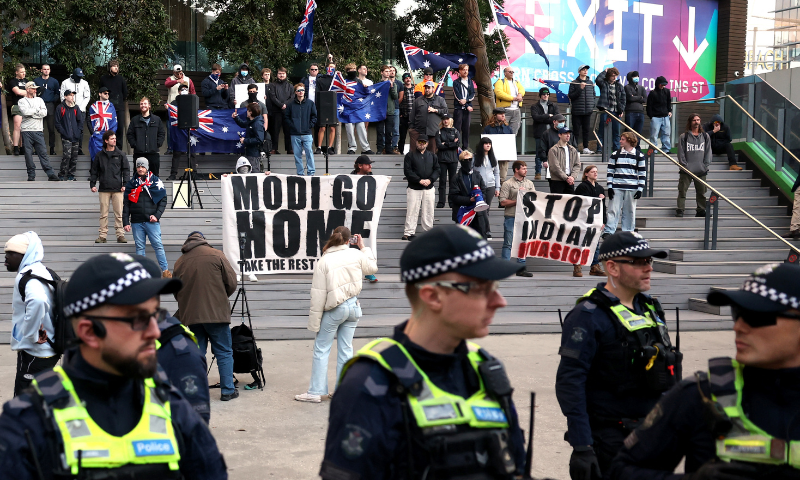
Australian activist Hugo Lennon (@aus_pill) organises anti-immigration protest against Narendra Modi’s visit to Melbourne. The previous visit in 2023 had been to sign a migration deal. pic.twitter.com/wTCfMOnCXf
— desni3_7 (@desni3_7) July 9, 2026
Critics argue that expanding India’s access to imported uranium could alter long-term strategic calculations by allowing greater flexibility in managing domestic nuclear resources, potentially fuelling an arms competition in the region.
Pakistan has repeatedly opposed country-specific nuclear exemptions granted to India, arguing that such arrangements undermine strategic stability and create an uneven application of international non-proliferation norms.
Environmental Groups Oppose Uranium Expansion
Environmental organisations have also criticised the agreement, arguing that expanding uranium mining and exports poses ecological risks while diverting attention and investment from renewable energy.
Anti-nuclear campaigners say Australia should prioritise clean energy technologies rather than increasing exports of uranium, which they contend carries long-term environmental, safety and waste management challenges.
Australia Defends Agreement
Australian and Indian leaders defended the agreement as an important step in strengthening bilateral cooperation and supporting low-carbon energy development.
Modi said the arrangement would “pave the way for uranium supplies from Australia to India and give our clean energy objectives fresh momentum.”
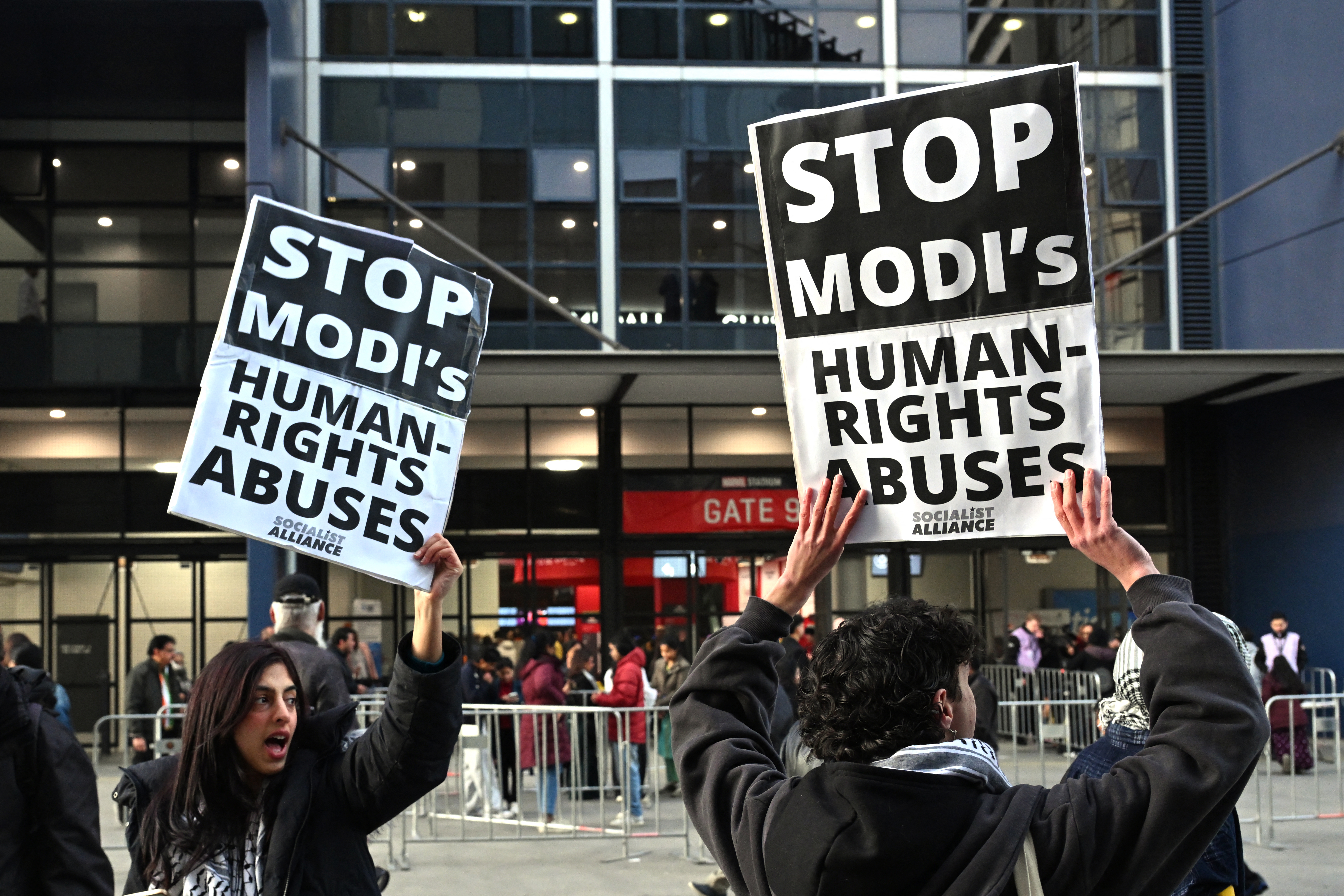
Left protestors in Melbourne took out a rally against “human right abuses” in India yesterday as PM Modi visits the Victorian capital.
While realising India’s strategic value to Australia, some left-wing supporters of @AustralianLabor have criticised Albanese for not raising…
— Dhairya Maheshwari (@dhairyam14) July 10, 2026
Albanese said the exports would help India increase the share of non-fossil fuel electricity generation while remaining subject to IAEA safeguards and limited to peaceful purposes.
The uranium agreement forms part of a broader expansion in Australia-India ties that includes deeper cooperation in defence, critical minerals, space technology and regional security.
Hindu Nationalism at Home
Despite those ambitions, the deal continues to divide opinion among non-proliferation advocates, who argue that balancing climate objectives with international nuclear safeguards remains one of the most challenging questions facing global nuclear governance.
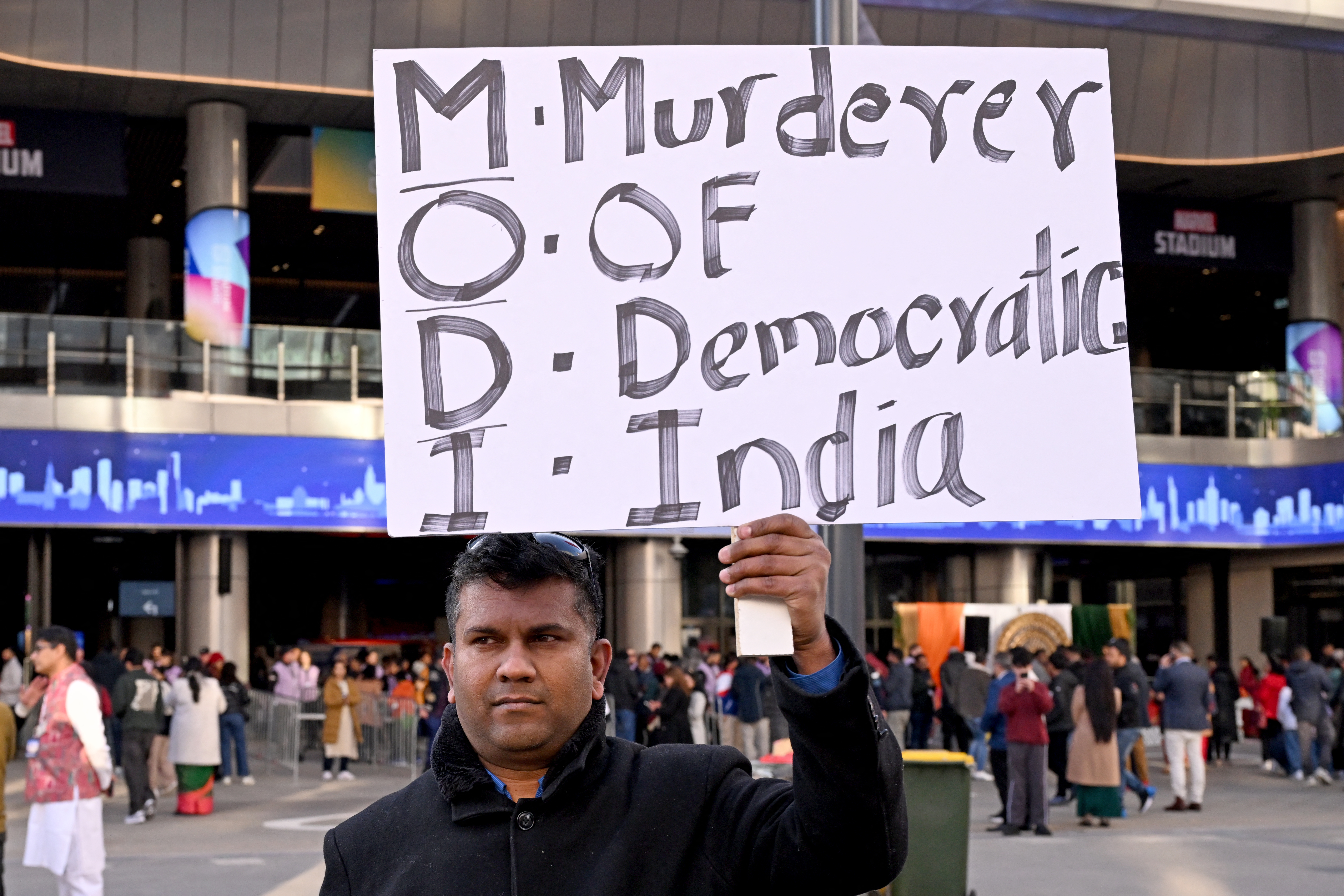
Modi’s visit stirred up opposition, too, including criticism that he has fostered a dangerous brand of Hindu nationalism at home.
Australia’s Alliance Against Islamophobia called for a protest outside the stadium event, drawing attention to what it said was the persecution of minority groups in India.
Anti-immigration protesters also gathered ahead of the rally, holding placards calling to “put Australians first”.