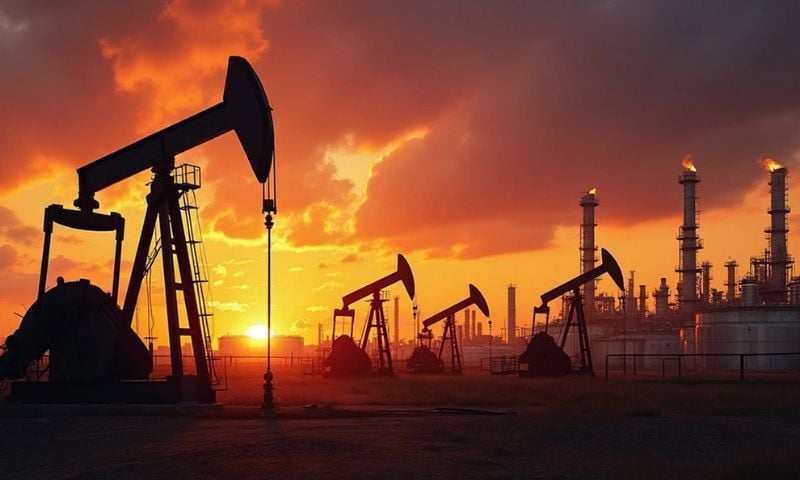
LONDON/SINGAPORE: Oil prices rose for a second straight session on Thursday while investors remained focused on escalating tensions between the United States and Iran after fresh US military strikes renewed concerns over global energy supplies and inflation.
Brent crude futures climbed 78 cents, or about one per cent, to $78.80 a barrel in early trading, while US West Texas Intermediate (WTI) crude gained 74 cents to $74.26 a barrel after both benchmarks had surged nearly five per cent in the previous session.
The latest gains followed fresh US strikes on Iranian targets after President Donald Trump declared that an interim peace arrangement with Tehran was “over” and warned of further military action.
The renewed hostilities have heightened concerns over shipping through the Strait of Hormuz, a vital waterway that normally handles around one-fifth of the world’s seaborne oil trade.
Although the strait remains open, shipping companies and marine insurers are reassessing risks after Iran launched retaliatory attacks on US military facilities in Bahrain and Kuwait, and commercial vessels came under renewed threat in Gulf waters.
Higher oil prices revived fears that a prolonged Middle East conflict could disrupt global energy supplies, fuel inflation and complicate the outlook for major central banks that had been expected to continue easing monetary policy later this year.
Global financial markets
Global financial markets reacted cautiously to the geopolitical escalation. On Wall Street, the Dow Jones Industrial Average fell 1.1 per cent on Wednesday, while the S&P 500 slipped 0.3 per cent.
The technology-heavy Nasdaq Composite, however, recovered from early losses to finish 0.2 per cent higher, supported by gains in semiconductor shares.
Asian equities rebounded on Thursday despite the geopolitical uncertainty. Japan’s Nikkei and South Korea’s Kospi advanced as technology stocks recovered from recent heavy selling, although gains were capped by the sharp rise in oil prices and continued concerns over developments in the Gulf.
Gold prices edge lower
Gold prices edged lower after falling to a one-week low as surging oil prices strengthened expectations that higher energy costs could keep inflation elevated and delay interest-rate cuts by major central banks.
The stronger US dollar also reduced demand for the precious metal, traditionally viewed as a safe-haven asset.
Markets are likely to remain highly sensitive
Analysts said markets are likely to remain highly sensitive to developments in the Middle East, with investors closely watching whether hostilities spread further or disrupt commercial shipping through the Strait of Hormuz.
Any sustained interruption to energy exports from the region could tighten global crude supplies and trigger another sharp increase in oil prices.
Key market snapshot (early Thursday):
Brent crude: $78.80 per barrel
WTI crude: $74.26 per barrel
Dow Jones: -1.1%
S&P 500: -0.3%
Nasdaq Composite: +0.2%
Gold: Lower as higher oil prices boosted inflation expectations.