ISLAMABAD: The FIFA World Cup 2026 Round of 16 has delivered its verdict, and the footballing world is buzzing with talking points. From European dominance to South American heartbreak, from Golden Boot battles to controversial refereeing decisions, the knockout stage has been nothing short of spectacular.
With six UEFA teams advancing to the quarterfinals alongside Argentina and Morocco, WE News English examines the five biggest takeaways from a weekend that reshaped the World Cup narrative.
Quarter-finals:
🇪🇺 6 European teams
🌍 1 African team
🌎 1 South American team pic.twitter.com/66dOTD2QQj
— AlmarssadPro (@ProsMarocains) July 7, 2026
1. UEFA dominance: Six European teams stand tall
The most striking statistic from the Round of 16 is the overwhelming presence of European teams. Six UEFA nations, France, Spain, Belgium, Norway, England, and Switzerland, have booked their quarterfinal spots, leaving Argentina and Morocco as the only non-European representatives. Portugal was the sole European casualty, falling to Spain in an all-Iberian clash.
This dominance reflects the depth and quality of European football, with teams from the continent showcasing tactical discipline, physical resilience, and individual brilliance. The quarterfinal lineup is a testament to UEFA’s strength, but Argentina and Morocco’s presence ensures the tournament retains its global flavour.
🇪🇺 Europe is dominating the World Cup.
Morocco 🇲🇦 and Argentina 🇦🇷 are the only non-European teams still alive.
Six of the eight quarterfinalists are from Europe.
That tells you everything about where the highest level of football is right now. 🌍🏆 pic.twitter.com/wePzqgNITH
— NextMex (@NextMexOficial) July 7, 2026
2. Argentina and Morocco: The non-European hope
While Europe flexed its collective muscle, Argentina and Morocco emerged as the standard-bearers for their respective continents.
Argentina survived a massive scare against Egypt, coming from behind to win 3-2 in a match that exposed defensive vulnerabilities but also showcased champion DNA. Lionel Messi, despite having a penalty saved, scored a dramatic 83rd-minute equalizer—his eighth goal of the tournament and record 21st of his World Cup career. The Albiceleste’s resilience keeps South American hopes alive, though questions remain about their defensive solidity and over-reliance on their captain.
Morocco, meanwhile, cruised past Canada with a commanding 3-0 victory, becoming the first African nation to reach back-to-back World Cup quarterfinals. The Atlas Lions absorbed everything Canada could throw at them before finding openings in the second half. Soufiane Rahimi’s emergence provides a valuable alternative to the injured Ismael Saibari, as Morocco aims to replicate their historic 2022 semi-final run.
The adidas Golden Boot race continues…#FIFAWorldCup pic.twitter.com/tnz3pZuLpv
— FIFA World Cup (@FIFAWorldCup) July 8, 2026
3. Golden Boot Race: Messi, Mbappe, Haaland, and Kane battle for glory
The race for the Golden Boot has become a four-way battle between the tournament’s biggest stars:
- Lionel Messi (Argentina)— 8 goals, including a record 21st World Cup career goal
- Kylian Mbappe (France)— 7 goals, converting a penalty against Paraguay
- Erling Haaland (Norway)— 7 goals, with a clinical brace against Brazil
- Harry Kane (England)— 6 goals, converting a penalty against Mexico
Each striker has delivered when it matters most, and their individual duels add an extra layer of intrigue to the quarterfinals. Messi’s penalty miss against Egypt was a rare blemish, but his overall tournament performance continues to defy age and logic. Mbappe remains the tournament’s most dangerous attacker, while Haaland’s two goals against Brazil announced Norway as genuine contenders.
Brazil’s 24 year World Cup drought is due to a cultural collapse. The street pitches where Pelé and Ronaldo learned the game have been paved over for real estate…and it’s no longer free – 80% of youth academies now require cash
Today Brazil has more cell phones than people and… pic.twitter.com/39YMsSeexB
— Frank Michael Smith (@frankmikesmith) July 7, 2026
4. Brazil’s nightmare and South American struggles
Five-time champions Brazil crashed out in the Round of 16 for the first time since 1990, falling 2-1 to Norway. The Selecao’s dismal record against Norway continued, they have now never defeated the Scandinavians in five meetings.
Bruno Guimaraes missed a penalty, Endrick misfired on a breakaway, and despite Neymar converting a stoppage-time spot kick, it was too little, too late. Neymar’s goal may have been his last World Cup touch, his ninth in four tournaments, but Brazil’s elimination raises serious questions about the team’s direction.
Other South American teams also faltered:
- Colombia failed to find the target, scoring just one goal in their last three matches
- Paraguay stuck to their pesky identity but couldn’t shake France
- Egypt had Argentina on the ropes but fell victim to questionable refereeing calls
South American football, traditionally a World Cup powerhouse, faces an uncertain future after this tournament.
🚨 𝗡𝗘𝗪: Thierry Henry on the VAR controversy in Argentina vs Egypt:
🗣️ “Let’s explain this calmly, because everyone is shouting, but not everyone is looking at the same incident.”
“I’ve watched the replay several times, and I understand why Egypt feel frustrated. I also… pic.twitter.com/mSnRSotls5
— WhatsThePoint (@thehouseoffootb) July 7, 2026
5. Controversy, Karma, and the dark arts of football
The Round of 16 was not without its share of drama and controversy:
USA vs. Belgium: The USA successfully appealed to FIFA to overturn Folarin Balogun’s red card, but sporting karma intervened as Belgium exposed their limitations with a 4-1 thrashing. Thibaut Courtois’s long balls, Dodi Lukebakio’s wing play, and Charles De Ketelaere’s two goals highlighted Belgium’s superiority. Romelu Lukaku even added a Trump-inspired dance celebration to rub salt in the wound.
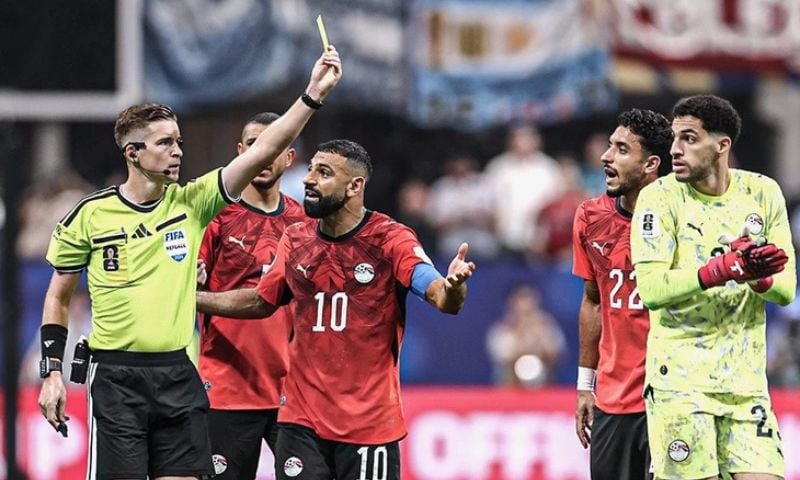
Egypt vs. Argentina: Egypt coach Hossam Hassan accused officials of favoring Argentina after his team’s 3-2 defeat. Hassan was not the first to make such claims, and the controversy adds to the debate about refereeing standards in the tournament.
Paraguay vs. France: Paraguay employed ultra-defensive tactics and “dark arts” reminiscent of their 1998 encounter with France. It took a VAR review and a penalty for Les Bleus to secure a 1-0 victory, testing their composure and confidence.
USA and Canada’s Pressing Problem: Both North American sides relied heavily on high-pressing tactics but struggled to adapt when it didn’t work. Canada’s coach Jesse Marsch, a former USA midfielder, saw his team overwhelmed by Morocco’s composure. The lesson is clear: all-out, all-the-time pressing doesn’t always work against superior opposition.
Also Read: Key Takeaways from a Thrilling FIFA World Cup Round of 32
Quarterfinal implications
The Round of 16 has set up a mouthwatering quarterfinal lineup:
- France vs. Morocco— A rematch of the 2022 semi-final
- Spain vs. Belgium— Battle of ball control vs. counter-attacking
- Norway vs. England— The Haaland factor meets England’s golden generation
- Argentina vs. Switzerland— Champions face the ultimate spoilers
The winners will advance to the semi-finals, scheduled for July 14 and 15, with the final on July 19. For the remaining eight teams, the margin for error has vanished.