Escalating tensions in Afghanistan’s northeastern Badakhshan province are no longer merely an internal Taliban dispute. Conflict began when Kandahar-based Taliban regime leadership seized control of Badakhshan’s mountains, gold mines and other mineral resources while excluding local communities from decision-making and resource ownership.
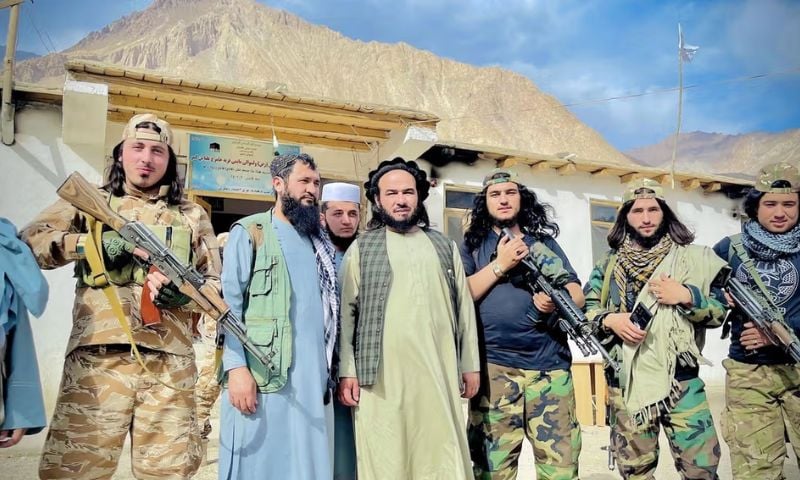
Dissident Taliban regime commander Juma Khan Fateh has distributed AK-47 rifles to supporters and ordered them into the mountains, while the Taliban regime has deployed reinforcements to the region.
Local sources said Juma Khan Fateh has established round-the-clock checkpoints in areas under his control.
The dissident Taliban commander has also publicly opposed the presence of foreign terrorist groups in Afghanistan. Fateh said he had opposed the activities of terrorist groups from the first day and continued to stand by that position.
Badakhshan province is no longer a battlefield over personalities. It has become a struggle over political power, mineral wealth and rights of local communities against Kandahar’s centralised rule.
The root of conflict lies in the Taliban regime’s takeover of Badakhshan’s gold mines and natural resources without meaningful participation or consent of local communities, who have long depended on these resources.
Local communities pointed out that the Kandahar-appointed Taliban Regime is exploiting Badakhshan province’s mineral wealth while leaving local populations politically marginalised, economically excluded and increasingly impoverished.
Arrests, beatings, intimidation and suppression of dissent reveal the Taliban regime’s preferred model of governance. Resource extraction backed by coercion instead of consent.
Juma Khan Fateh’s decision to arm supporters and prepare for confrontation reflects growing resistance against Kandahar’s monopoly over political authority, economic resources and local administration.
Fateh, in a statement, said that the Darwaz region and strategic mines of Badakhshan remained fully under the control of his fighters. He warned that his group would not allow any encroachment on Darwaz or Badakhshan.
“Until our last breath, we will not allow anyone to encroach on Darwaz and Badakhshan,” he said.
Also Read: Dissident Commander Opposes Taliban For Hosting Terrorist Groups in Afghanistan
The Taliban regime’s emergency deployment of fighters to Nusai and appointment of new officials demonstrate that Kandahar increasingly governs Badakhshan province through military force rather than public legitimacy.
Taliban regime’s interim Defence Minister Mullah Mohammad Yaqoob Mujahid personally travelled to Badakhshan but failed to reconcile with Juma Khan Fateh, exposing growing limits of Kandahar’s authority over its own commanders.
Reports that Juma Khan Fateh enjoys support among local ethnic communities illustrate a widening disconnect between Kandahar’s leadership and Badakhshan’s population. If accurate, such support reflects political alienation rather than isolated dissent.
Continued operations by the Taliban regime’s General Directorate of Intelligence (GDI) alongside systematic targeting of former Afghan security officials demonstrate that the Taliban responds to every political challenge with surveillance, intimidation, arrests and violence instead of dialogue.
Badakhshan has become a mirror of Taliban rule. Centralised Pashtun domination, control of natural resources, exclusion of minorities, political repression and growing internal resistance are exposing structural weaknesses that military deployments alone cannot resolve.