Key Points
- The confirmation follows announcements by US President Donald Trump and Pakistani Prime Minister Shehbaz Sharif
- “Enforceable commitments” must back any deal, Iran insists
- Agreement expected to help restore stability in the Strait of Hormuz and the wider region
ISLAMABAD: Following announcements by US President Donald Trump and Pakistani Prime Minister Shehbaz Sharif, who has played a mediating role in the peace diplomacy, Iran has confirmed that an immediate and permanent end to the war on various fronts, including Lebanon, will take effect from Monday night.
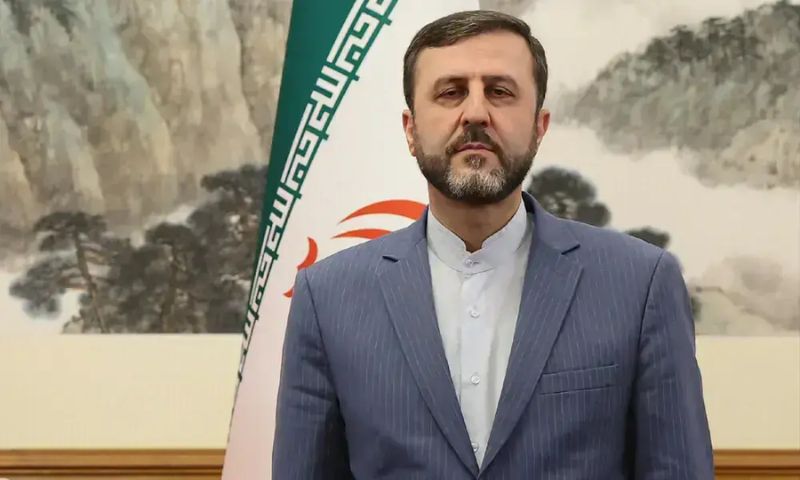
Iran’s Deputy Foreign Minister Kazem Gharibabadi told state television that hostilities would cease immediately as Tehran and Washington move towards formalising a peace arrangement aimed at ending weeks of regional conflict and military escalation.
He said negotiations for a final agreement would be held during 60 days, adding that Iran would take its own measures in the event of any breach by the other side.
The Iranian confirmation came after Trump announced that a peace agreement had been reached between Washington and Tehran.
Prime Minister Shehbaz Sharif said the two sides had agreed to the immediate and permanent cessation of military operations across multiple fronts.
As part of the understanding, both countries are expected to continue diplomatic engagement on unresolved issues, including sanctions relief, implementation mechanisms and other matters to be addressed during the negotiation period.
Iranian parliament speaker Bagher Ghalibaf reflected Tehran’s cautious approach, saying that any understanding with Washington must be accompanied by “enforceable commitments” rather than political assurances alone.
According to reports, the United States is also expected to participate in de-mining operations in the Strait of Hormuz once the agreement is formally concluded, a move intended to restore normal maritime traffic through one of the world’s most strategically important energy corridors.
The Strait of Hormuz has remained at the centre of the conflict, with tensions disrupting shipping routes and raising concerns in global energy markets.
Despite progress towards a settlement, reports indicated that incidents of violence continued in the waterway as negotiators worked to finalise the agreement.
The emerging accord represents the most significant diplomatic breakthrough since the outbreak of hostilities and has raised hopes of a de-escalation across the Middle East.
However, analysts say the agreement’s durability will depend on the successful implementation of initial commitments and the outcome of negotiations scheduled over the next two months.