GENEVA: The ongoing conflict in the Middle East is pushing millions of people closer to hunger, the UN World Food Programme (WFP) warned on Friday, as rising fuel and transport costs push up food prices and funding shortfalls force aid agencies to scale back assistance.
The crisis escalated following joint US-Israeli strikes on Iran in February, which triggered a regional conflict spanning the Gulf and Lebanon. The attacks disrupted key shipping routes, including the Strait of Hormuz, forcing vessels to take longer routes and sharply constraining global energy flows and supply chains.
In March, the WFP warned that up to 45 million people could fall into acute food insecurity if oil prices remained near $100 per barrel through June. That scenario is now unfolding, the agency said, with benchmark crude prices consistently above that level since early March.
Households in Afghanistan, Somalia, and Sri Lanka are among the hardest hit, facing rising fuel costs, soaring food prices, income losses, and disrupted trade, which together are increasing the risk of widespread hunger.
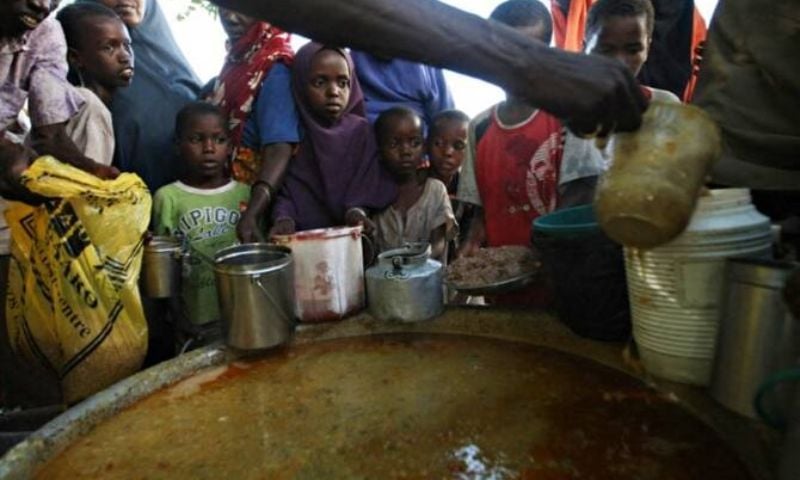
In Somalia, an estimated 6.5 million people — about one-third of the population — are expected to face severe hunger in 2026, while Afghanistan could see 17.4 million people affected, according to the WFP.
⚠️ A new report shows the global fallout from the Middle East crisis is pushing millions more people deeper into hunger.
🔴 +2.5M in Somalia
🔴 +2.3M in Afghanistan
🔴 +1.3M in Sri LankaThe impacts are expected to intensify in the coming months, even if the crisis… pic.twitter.com/WNGvjHBspY
— World Food Programme (@WFP) June 5, 2026
The situation is projected to worsen, with a further 2.5 million Somalis and 2.3 million Afghans at risk of falling into food insecurity if current disruptions continue. Both countries are heavily reliant on imported food and energy.
The crisis comes amid a significant funding shortfall for aid agencies. The WFP said it anticipates serving 1.5 million fewer people globally in 2026, with that figure rising by an additional 9 million if conditions persist for six months.
In Afghanistan, surging fuel costs have pushed aid transport expenses up to five times higher, while delivery times have increased dramatically — from around 10 days to as long as 75 days — as trucks are forced to use alternative routes, the agency added.
In Somalia, soaring jet fuel prices are leading to higher operational costs for the United Nations Humanitarian Air Service — the only means to safely access hard-to-reach areas, the WFP said.