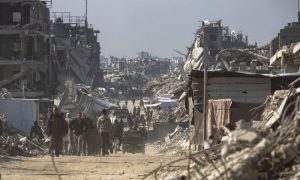
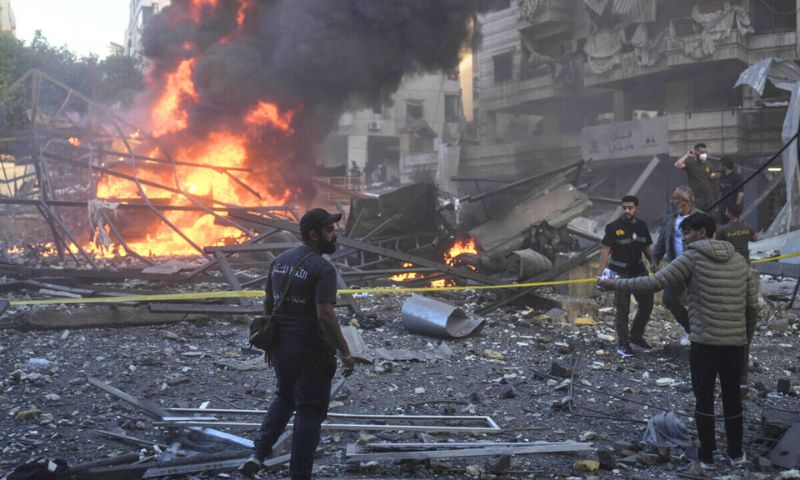



BEIRUT/WASHINGTON: Israeli strikes across southern Lebanon killed five people, including a child, and wounded dozens on Tuesday, according to Lebanon’s health ministry, as fighting between Israel and Hezbollah intensified despite ongoing US-backed talks in Washington aimed at securing a ceasefire.
Those wounded in the strikes across the south included “a doctor and five employees of Tebnine Governmental Hospital, which sustained damage in yet another episode of the series of attacks carried out by the Israeli enemy against hospitals and health centres”, the ministry said in a statement.
Lebanon’s state-run National News Agency reported Israeli strikes, some of them deadly, on around 30 locations across the south on Tuesday.
Near Sidon, in southern Lebanon, rescuers recovered the bodies of six members of the same family following an Israeli strike.
Further south in the historic city of Tyre, the Jabal Amel hospital resumed operations after being severely damaged on Monday.
Fighting Continues Despite Diplomacy
Israel and Hezbollah exchanged fire on Tuesday while Lebanese and Israeli envoys met in Washington for direct talks.
The fighting came after US President Donald Trump declared Monday that he had brokered a deal which the Lebanese embassy in Washington said would at first only cover Israeli attacks on Beirut and Hezbollah attacks on Israeli territory, before expanding in scope.
Neither side has publicly accepted Trump’s deal, with senior Hezbollah official Mahmud Qomati telling AFP in a written statement the group “will not accept a partial ceasefire”.
Hezbollah said it had attacked Israeli troops in the southern Lebanese lands they occupy, but had not claimed attacks in Israel.
The Israeli military said it intercepted two projectiles from Lebanon, without reporting any injuries.
The fighting took place as Israeli and Lebanese diplomats met in Washington for a fourth round of direct talks since the start of the current war.
“Israel and Lebanon can do a peace deal tomorrow,” Rubio told a hearing of the US Senate’s Foreign Relations Committee.
State Department spokesman Tommy Pigott said on X that “progress continues on the political and security tracks” after the first day of talks ended. Another round is scheduled for Wednesday.
Lebanese Prime Minister Nawaf Salam called the talks, which are strongly opposed by Hezbollah, “the least costly choice for Lebanon”.
Regional Tensions Escalate
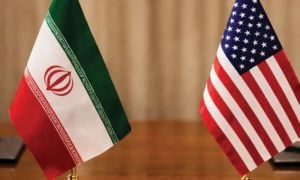
Rubio said Washington wanted the talks to remain independent of those with Iran to end the wider Middle East war launched by the US and Israel against Tehran on February 28.
Tehran has repeatedly linked the two conflicts and on Monday said that Israel’s expanding campaign in Lebanon risked ending the US-Iran ceasefire in place since April 8.
Recent days have seen a dramatic escalation in fighting and bombardment as Israeli troops staged their deepest ground offensive into Lebanon in two decades.
Citing what he called Hezbollah’s “repeated violations” of a ceasefire officially in place since April 17 but never respected by either side, Israel’s Prime Minister Benjamin Netanyahu ordered strikes on Beirut’s southern suburbs, a densely populated Hezbollah stronghold.
According to the US site Axios, however, Trump pressured Netanyahu to back down, calling him “crazy” in a phone call and accusing him of putting peace talks with Iran at risk.
Israeli Defence Minister Israel Katz subsequently said that Israel had established “a new equation” backed by Washington that his country would hit the Beirut suburbs if Hezbollah continued firing at Israel.
In the southern suburbs, which many residents had fled the day before, many shops were closed on Tuesday, while a military drone flew over the area at low altitude.
Casualties Mount
Citing Israel’s actions in Lebanon, Iran’s Tasnim news agency reported on Monday that Iran was suspending peace talks with Washington.
Trump on Tuesday denied the report, however, insisting that the US and Iran were speaking “continuously”, including “one day ago and today”.
Lebanon’s health ministry said that Israeli attacks had killed more than 3,465 people since March 2.
At least 26 Israeli soldiers and one civilian contractor have been killed in the same period.