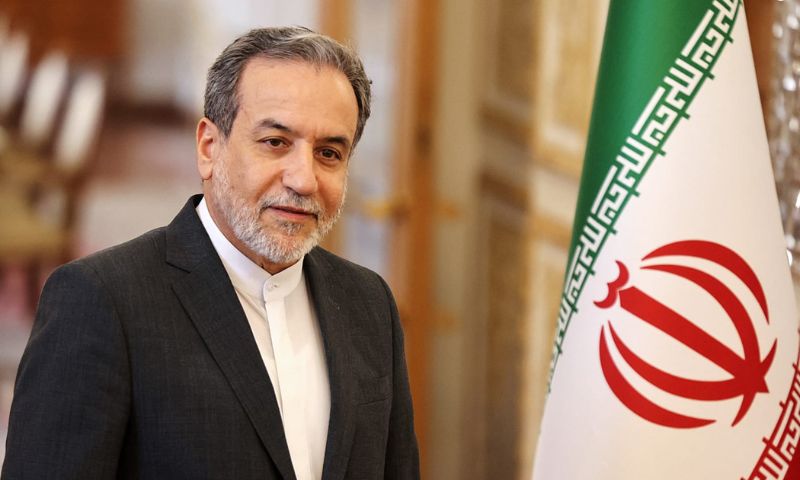



TEHRAN, Iran: Iranian Foreign Minister Abbas Araqchi said on Sunday that talks and message exchanges with the United States are ongoing as Pakistan-led diplomatic efforts continue to permanently end the Middle East conflict through dialogue and diplomacy.
Araqchi cautioned against speculation on the status of talks. “We should not give importance to speculation, and we cannot judge the talks until we get to a clear result,” he was quoted as saying by state media.
The Iranian foreign minister’s comments suggest that communication channels remain open.
Meanwhile, mediator Pakistan has continued diplomatic efforts to revive stalled direct negotiations between Washington and Tehran to secure a permanent end to the conflict.
Earlier on Sunday, Iran’s parliament speaker and chief negotiator Mohammad Bagher Ghalibaf said Tehran would not accept any agreement with Washington unless it guarantees “the rights of the Iranian people,” according to Iran’s state broadcaster IRIB.
“Our only criterion is to achieve tangible results before we fulfil our commitments in return,” Ghalibaf said during a virtual parliamentary session after being re-elected as speaker.
قالیباف: اطمینان دارم که از این جنگ بزرگ با پیروزی خارج خواهیم شد
تا اطمینان پیدا نکنیم که حقوق ملت ایران را گرفته ایم، هیچ توافقی را تأیید نخواهیم کرد.
سربازان میدان مبارزه دیپلماسی، هیچ اعتمادی به حرفها و وعدههای دشمن ندارند و ملاک برای ما دستاوردهای عینی است. pic.twitter.com/xIqzghqwpN
— خبرگزاری فارس (@FarsNews_Agency) May 31, 2026
Trump claims ‘close to a very good deal’
On Saturday, US President Donald Trump claimed that Iran has agreed to guarantee it will not develop nuclear weapons.
“We are close to a very good deal,” the President said.
“The one guarantee that I have to have is that there will be no nuclear weapons. They’ve agreed to that, and it was very interesting,” Trump said during an interview with Fox News.
"The one guarantee that I have to have is that there will be no nuclear weapons, they've agreed to that."
President Donald J. Trump talks Iran, ballroom construction and more in a wide ranging interview with Lara Trump. 🇺🇸 pic.twitter.com/MPpXsbf5ej
— The White House (@WhiteHouse) May 31, 2026
The remarks mark Trump’s latest assessment of negotiations with Tehran, which have continued since a temporary ceasefire was reached in April after months of hostilities and diplomatic efforts mainly led by Pakistan and backed by regional and international actors.
According to Iranian media reports, Tehran has demanded the release of about $12 billion in frozen assets before entering substantive negotiations on matters such as its nuclear programme.
Trump adopted a less urgent tone regarding the negotiations during the interview, indicating that Washington was prepared to continue pursuing diplomacy but retained other options if talks failed.
“I’m in no hurry,” he said. “Slowly but surely we’re getting, I think, what we want and if we don’t get what we want, we’re going to end, in a different way.”
Diplomatic engagement has continued amid growing international concern over disruptions to shipping and energy supplies through the Strait of Hormuz, one of the world’s most important oil transit routes.
The waterway has emerged as a central issue in the negotiations as competing restrictions imposed by Washington and Tehran have contributed to uncertainty in global energy markets and raised concerns about supply disruptions.
Trump recently stated on social media that Iran would impose “no tolls” on ships passing through the strait once restrictions were lifted under any future agreement.