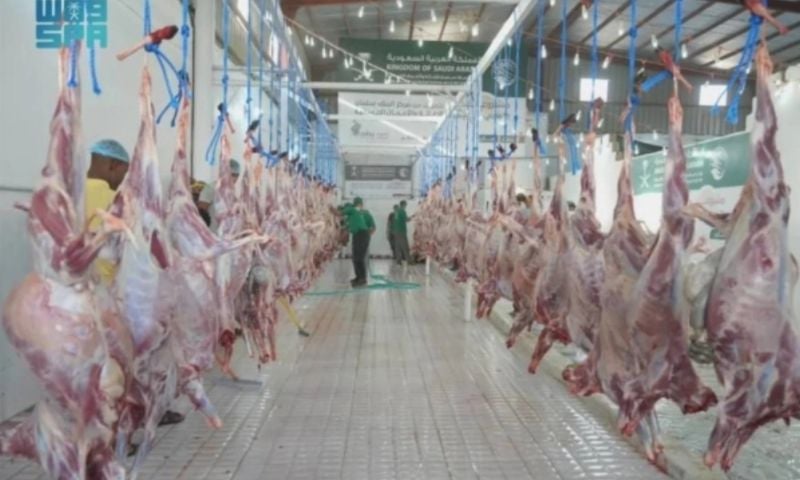
RIYADH: Saudi Arabia has launched its first model livestock city project in Makkah, introducing an advanced slaughterhouse system designed to process animal carcasses and organic waste generated during the Hajj season with a target of achieving 100 per cent landfill diversion, the National Center for Waste Management announced.
The initiative, developed by the National Center for Waste Management in collaboration with private-sector partner Oclean, marks a major step towards integrating environmental sustainability with large-scale religious and seasonal operations in the Kingdom, according to Saudi Press Agency (SPA).
The facility uses advanced rendering technology and an integrated processing system that includes specialised units for handling blood, fat and offal, bone grinding and automated odour control. It is capable of processing up to 2,500 tonnes of solid and liquid waste annually.
Officials said the model slaughterhouse is designed to convert approximately 45 per cent of slaughtered animal mass into value-added products, including organic fertilisers, protein powders and animal feed components, supporting the development of a scalable circular economy model that could be replicated across the country.
The project aims to eliminate landfill waste entirely by ensuring full reuse and recycling of organic material generated during slaughtering operations, particularly during peak demand periods such as Hajj and Eid Al-Adha.
The Ministry of Environment, Water and Agriculture emphasised the importance of using supervised and authorised slaughterhouses during the Hajj season, noting that regulated facilities are essential for maintaining meat safety standards, protecting the environment and safeguarding public health.
According to the ministry, designated slaughterhouses across the Kingdom are equipped with modern technologies and staffed by specialised veterinary teams to ensure meat quality and prevent the spread of livestock-related diseases.
It added that all approved facilities operate under strict regulatory oversight and comply with both local and international veterinary standards as part of broader efforts to enhance environmental management and public health protection.
Earlier, the ministry stated that Saudi Arabia’s livestock sector is fully prepared to meet rising demand during the Hajj season, supported by strong national production capacity. The Kingdom currently maintains a national livestock inventory of more than 22 million sheep, 7.6 million goats, 2.2 million camels and 510,000 cattle, reflecting the sector’s strength in ensuring food security, self-sufficiency and disease control.
Officials further confirmed that markets and slaughterhouses in Makkah have been fully prepared to accommodate pilgrims’ needs, supported by intensified inspections, health monitoring and regulatory enforcement to ensure safe and high-quality meat supply throughout the pilgrimage period.