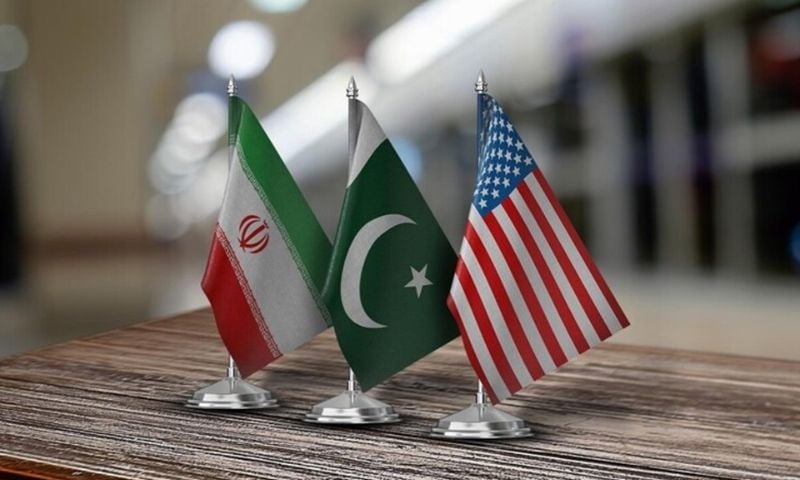



TEHRAN, Iran: Iran said on Monday it had responded to the latest United States proposal aimed at ending the conflict between the two countries as diplomatic exchanges continued through Pakistani mediation.
Iranian Foreign Ministry spokesperson Esmaeil Baqaei said Tehran had conveyed its latest response to Washington through Pakistan, which has been facilitating communication between the two countries.
“As we announced yesterday, our concerns were conveyed to the American side,” Baqaei told a weekly news briefing in Tehran.
The spokesperson added that diplomatic exchanges were “continuing through the Pakistani mediator”.
سخنگوی وزارت امور خارجه: گفتگوها با آمریکا از طریق میانجیگری پاکستان ادامه دارد
در مورد غنیسازی و مواد اورانیوم گمانهزنیهایی مطرح کردند که ما اعلام کردیم مبنایی ندارد
آمریکاییها پیشنهادهایی دادند و ما هم نظرات خود را ارائه کردیم
— خبرگزاری تسنیم – خبر فوری (@Tasnimbrk) May 18, 2026
The development came as Pakistan continued diplomatic efforts to preserve the ceasefire brokered on April 8 following weeks of military confrontation involving the United States, Israel and Iran.
Baqaei defended Tehran’s key demands in the negotiations, including the lifting of sanctions, the release of frozen Iranian assets abroad and compensation for war-related damages.
“The points raised are Iranian demands that have been firmly defended by the Iranian negotiating team in every round of negotiations,” the spokesperson said.
US and Iranian demands
On Sunday, Iran’s semi-official Fars News Agency reported on Sunday that the US has outlined five key conditions for reaching a deal with Iran, including allowing only one Iranian nuclear facility to remain operational.
The Fars news agency report said Washington’s other demands include refusing to provide any compensation for war-related damages, requiring Iran to transfer 400 kilograms of uranium to the United States, withholding the release of even 25 percent of Tehran’s frozen assets, and linking any permanent halt to hostilities across the region to the outcome of negotiations.
جزئیاتی از درخواستهای آمریکا از ایران در مذاکرات
براساس شنیدههای فارس از پاسخ آمریکا به پیشنهادهای ایران، ۵ شرط اصلی واشنگتن به این شرح اعلام شده است:
۱/۵— خبرگزاری فارس (@FarsNews_Agency) May 17, 2026
In response, Iran has presented its own conditions for any agreement, including a complete end to fighting on all fronts, the lifting of sanctions, the release of frozen Iranian assets, compensation for war damages, and recognition of Iran’s sovereignty over the Strait of Hormuz.
Iran’s Tasnim News Agency reported that Tehran had submitted a proposal through Pakistan.
According to Tasnim, Iran’s proposal focused on ending the war, building trust, lifting sanctions, releasing frozen assets and securing recognition of Iran’s sovereignty over the Strait of Hormuz.
Iranian media also reported that Tehran sought a complete end to fighting across all fronts before any broader political settlement could be finalised.
Limited civilian nuclear activities
According to Reuters news agency, citing a source, the United States was willing to allow limited civilian nuclear activities under the supervision of the International Atomic Energy Agency (IAEA).
However, the source, cited by Reuters, said Washington had so far agreed to release only one quarter of Iran’s frozen assets under a phased timetable.
The source added that Iran’s latest proposal focused on ending the war, reopening the Strait of Hormuz and lifting maritime sanctions.
Tasnim also reported that the United States had agreed to waive sanctions on Iranian oil exports during the negotiation period, although Tehran has not officially confirmed the claim.
Trump increases pressure on Tehran
US President Donald Trump intensified pressure on Tehran over the weekend, warning Iran to move quickly towards an agreement.
In a post on Truth Social on Sunday, Trump said: “The clock is ticking.”
“They better get moving, FAST, or there won’t be anything left of them,” he wrote, adding that “TIME IS OF THE ESSENCE”.
Meanwhile, in an interview with French broadcaster BFMTV on Saturday, Trump said Iran had “an interest in reaching an agreement” with Washington but admitted uncertainty over whether negotiations would soon produce a final breakthrough.
“I have no idea. If they don’t, they’re going to have a very bad time,” Trump said.
Iranian Foreign Minister Abbas Araghchi said Tehran had meanwhile received messages from the Trump administration indicating willingness to resume negotiations.
Pakistan stresses sustained engagement
Meanwhile, Pakistan’s Deputy Prime Minister and Foreign Minister Ishaq Dar stressed the importance of sustained engagement for regional peace.
The Deputy PM was addressing the closing session of the Regional Envoys’ Conference held from May 14-18 in the Pakistani capital to review regional and global developments as well as its bilateral relations with brotherly countries, a Foreign Office statement said.
Ishaq Dar also highlighted Pakistan’s constructive and facilitative role in promoting regional peace and stability, and stressed the importance of sustained engagement.
Deputy Prime Minister/Foreign Minister Senator Mohammad Ishaq Dar @MIshaqDar50 chaired the closing session of the Regional Envoys’ Conference held in Islamabad from 14–18 May, 2026.
DPM/FM took stock of the comprehensive deliberations and key recommendations emerging over the… pic.twitter.com/AMN0m77eCI
— Ministry of Foreign Affairs – Pakistan (@ForeignOfficePk) May 18, 2026
Pakistan continues mediation efforts
Pakistan, as mediator, has continued diplomatic engagement with both Washington and Tehran in an effort to secure a permanent settlement to the conflict through dialogue and diplomacy.
Pakistan brokered the ceasefire on April 8 after weeks of escalating hostilities involving Iran, the United States and Israel.
Three days later, Islamabad hosted direct negotiations between American and Iranian negotiators on April 11 and 12.
Although the talks ended without a final agreement, however, the Islamabad Talks paved the way for further negotiations to permanently end the conflict.
US Vice President JD Vance, who led the American delegation during the Islamabad talks, said earlier this week that progress was being made.
“I think that we are making progress. The fundamental question is, do we make enough progress that we satisfy the president’s red line?” Vance told reporters at the White House.
The Iranian delegation was led by Mohammad Bagher Ghalibaf.
Pakistan’s Deputy Prime Minister and Foreign Minister Ishaq Dar has repeatedly reaffirmed Islamabad’s commitment to “proactive diplomacy and sustained regional engagement”.
Pakistani minister visits Tehran
Meanwhile, Pakistan’s Interior Minister Mohsin Naqvi met Iranian President Masoud Pezeshkian in Tehran on Sunday to discuss mediation efforts and regional security.
Iran’s state-run IRNA news agency reported that the meeting at the Presidential Palace lasted around 90 minutes and focused on bilateral ties and Pakistan’s diplomatic efforts to promote regional stability.
Iranian Foreign Minister Araghchi and Interior Minister Eskandar Momeni also attended the meeting, according to IRNA.
Earlier, Naqvi held talks with Iranian Parliament Speaker Ghalibaf, with both sides discussing regional peace and stability.
Naqvi arrived in Tehran on Saturday on a diplomatic visit linked to Pakistan’s ongoing shuttle diplomacy between Washington and Tehran.