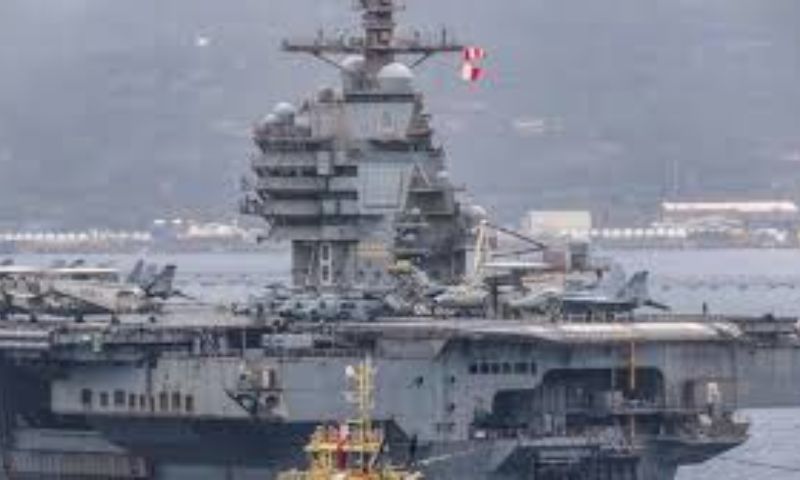
WASHINGTON: The US Navy’s nuclear-powered aircraft carrier USS Gerald R Ford has returned to its home port after completing a record-setting deployment lasting more than 300 days, marking the longest post-Vietnam mission undertaken by an American aircraft carrier.
The world’s largest and most advanced warship arrived back at Naval Station Norfolk in Virginia following an 11-month deployment that saw it operate across multiple strategic regions, including the Mediterranean Sea, the Caribbean and the Middle East.
The carrier, which departed the United States in June last year, played a central role in a range of military operations linked to the conflict involving Iran, while also supporting American missions connected to Venezuela.
According to reports, the deployment exceeded 320 days at sea, surpassing previous post-Vietnam deployment records held by other US aircraft carriers.
The USS Gerald R. Ford returned home after a record-setting deployment of more than 300 days that included operations in the war against Iran and the capture of Venezuelan leader Nicolás Maduro.
The carrier set the record for the longest post-Vietnam War deployment by a U.S.… pic.twitter.com/fLpuAv1eYS
— Fox News (@FoxNews) May 16, 2026
Military officials described the mission as one of the most demanding in recent decades due to the rapidly evolving global security situation.
During its extended deployment, the USS Gerald R Ford was repeatedly repositioned to respond to escalating tensions in various regions, particularly in the Middle East amid heightened hostilities involving Iran.
The vessel also supported operations in the Caribbean linked to developments in Venezuela.
US defence officials praised the carrier’s crew for maintaining operational readiness throughout the lengthy mission despite mounting pressure on personnel and equipment.
The strike group accompanying the carrier also received recognition for its performance during combat-related operations.
The prolonged deployment, however, has also sparked debate in the United States over the growing strain placed on naval crews and military hardware during extended overseas operations.
Analysts and lawmakers have expressed concern about the impact on sailors’ wellbeing, morale and long-term fleet readiness.
Reports during the mission highlighted several technical and maintenance challenges aboard the carrier, including a fire incident and equipment-related issues that required repairs while deployed overseas. Despite these setbacks, the vessel remained operational throughout its assignment.