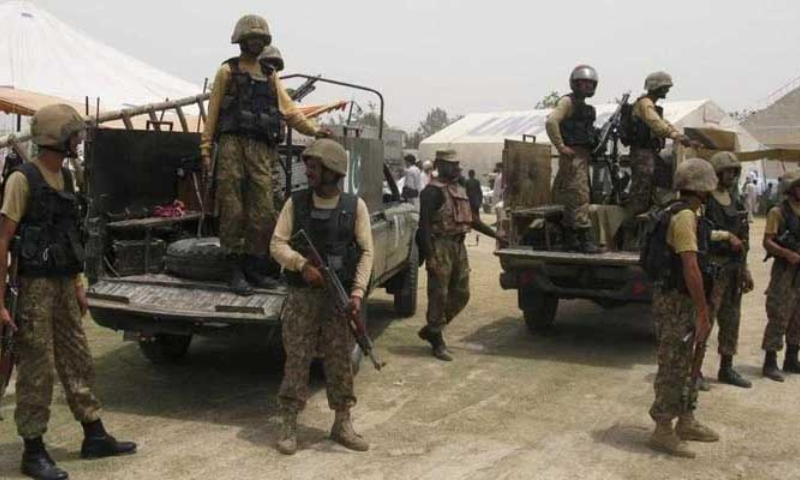



ISLAMABAD: Pakistani security forces have killed more than 45 terrorists during recent operations in Balochistan as part of an intensified counterterrorism campaign across the province, security officials said.
Officials said that on January 31, Indian-sponsored Fitna al Hindustan (FAH) launched a campaign titled “Herof 2.0” aimed at projecting the impression that terrorists had gained control in parts of Balochistan.
However, the operation failed, resulting in the killing of 344 FAH terrorists and injuries to hundreds of others in the past several months.
Following the failure of “Herof 2.0,” terrorist groups shifted toward hit-and-run tactics, exploiting Balochistan’s vast territory, sparse population and lengthy road networks.
Officials said terrorists move disguised among civilians and shepherds, use remote routes and carry out small-scale attacks before amplifying them on social media to create an exaggerated perception of operational success.
Security officials said state institutions are fully aware of these tactics and have taken concrete measures to counter them through expanded intelligence-based operations (IBOs) across the province.
According to officials, more than 200 intelligence-based operations are now being conducted daily in different parts of Balochistan.
Security officials further said that more than 600 FAH terrorists have been killed over the last five months, including several senior commanders.
Those killed include Saqib Marri alias Sheeda on February 2, Naeem alias Doctor on March 5, Sohail Baloch alias Gurg Baloch on March 17, Mehran Lashari on April 25 and Sangat Salal alias Major Noora on May 2.
Officials said the capacity-building process of the former Levies force, now integrated into the Balochistan Police, is progressing rapidly, while technical surveillance and intelligence capabilities have also been significantly enhanced.
Security officials said terrorist groups, after suffering setbacks in direct confrontations with security forces, have increasingly shifted toward softer civilian targets, including goods transport vehicles, civilian banks and labourers.
Officials added that terrorist groups, which previously avoided targeting Baloch civilians, have now started abducting residents as well, citing the recent abduction of the vice chancellor of Gwadar University as an example of what they described as growing frustration among terrorist networks.
According to security officials, anti-civilian and anti-development activities by Indian-sponsored terrorist groups have damaged their standing among local communities.
Moreover, Pakistan’s enhanced diplomatic stature has also rattled Pakistan’s enemies, led by the Zionist- Hindutva duo.
The recent media tirade against Pakistan is clear proof. While on one end, this evil alliance wants to discredit Pakistan’s credibility, on the other, it wants to embroil Pakistan domestically through paid proxies like FAH and FAK.
Officials pointed to increasing public participation in state engagement programmes, BSDI initiatives and pro-Pakistan rallies as evidence that local populations are rejecting terrorist violence.
Pakistan’s growing diplomatic profile has unsettled hostile actors seeking to undermine the country through propaganda campaigns and support for proxy groups operating domestically.
Officials maintained that Pakistani security forces are fully aware of the evolving threat environment and remain prepared to eliminate terrorist networks operating in the country.