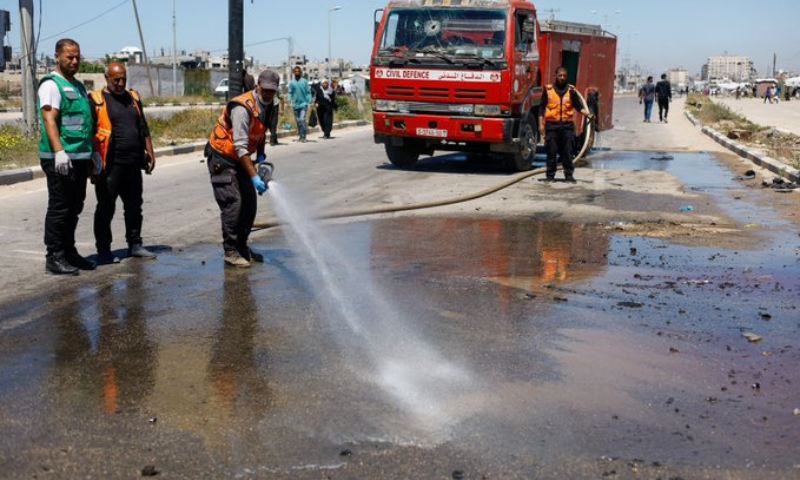
GAZA: Palestinians in Gaza have begun repurposing war debris to repair damaged roads, as the territory struggles to recover from widespread destruction and delays in large-scale rebuilding efforts.
Under a project led by the United Nations Development Programme (UNDP), workers are crushing concrete and metal from destroyed buildings to create material for paving streets and restoring basic infrastructure.
The initiative comes as broader reconstruction plans remain stalled, leaving local communities to rely on limited resources to rebuild essential services.
Palestinians are using war rubble to repave streets destroyed during Israel’s two-year assault on Gaza, crushing concrete and metal into pavement under a UN-run project they hope will mark a first step toward rehabilitating their flattened cities https://t.co/nYtuUPc9cA pic.twitter.com/k4h5Inov75
— Reuters (@Reuters) April 27, 2026
Officials say Gaza faces an immense challenge, with an estimated 61 million tonnes of rubble scattered across the enclave, blocking access to key facilities such as hospitals and water wells.
“Beyond the collection [of rubble], we have started sorting, we have started crushing, and, as such, reusing it,” said Alessandro Mrakic, head of UNDP’s Gaza office.
He added that the recycled material is being used “to rehabilitate roads and pave areas for shelter and community kitchens”.
Despite these efforts, progress remains slow due to significant risks, including unexploded ordnance buried beneath debris, which must be cleared before work can proceed.
Daily risks and limited resources
For workers on the ground, the dangers are constant. “I can’t find any other source of income, that is why I do this work. [You] could get hurt,” said Ibrahim al-Sarsawi, a labourer involved in the effort.
The recovery process is expected to take years, with officials warning that rubble clearance alone could last up to seven years under current conditions.
UNDP has so far removed only a fraction of the debris, described as just the “tip of the iceberg”, underscoring the scale of the crisis.
“The war is over, but [this] is the beginning of a new war,” said displaced resident Sobhi Dawoud, referring to the struggle to rebuild homes and infrastructure.