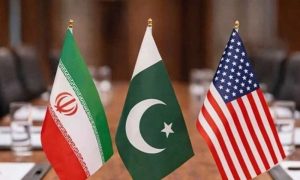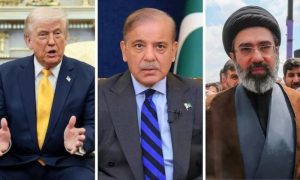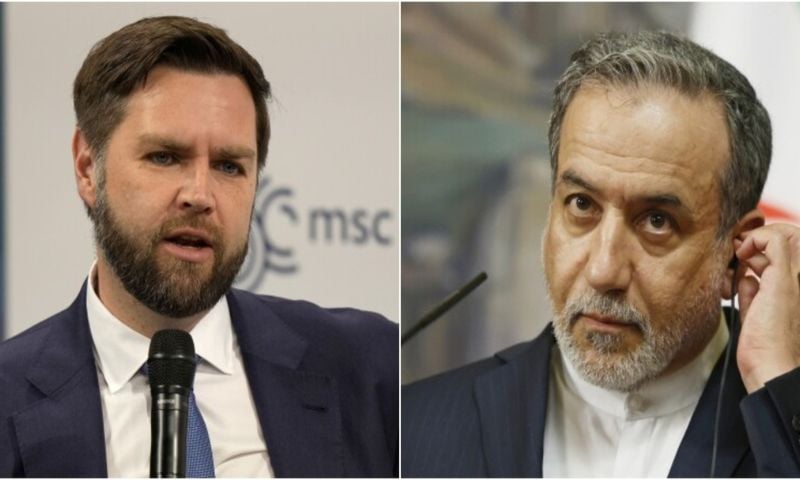



MOSCOW: Iran is considering a request from US President Donald Trump for negotiations, Foreign Minister Abbas Araghchi said on Monday, as Pakistan-led diplomatic efforts raise optimism for a peace deal between Washington and Tehran.
Speaking to reporters in Russia after meeting President Vladimir Putin, Araghchi said Tehran was considering the US President’s proposal.
“The US has not achieved a single goal. That’s why President Trump is asking for negotiations, and we’re considering it,” Araghchi said, according to Russian state media.
Meanwhile, the White House declined to comment directly on the substance of any potential talks.
“These are sensitive diplomatic discussions and the US will not negotiate through the press,” Assistant White House Press Secretary Olivia Wales told CBS News.
“As the President has said, the United States holds the cards and will only make a deal that puts the American people first, never allowing Iran to have a nuclear weapon,” Olivia Wales added.
Rubio says Iran ‘serious’ about making a deal
Meanwhile, US Secretary of State Marco Rubio said that Iran is “serious” about reaching a deal with the US, adding that any agreement must prevent it from developing a nuclear weapon.
“I think they are serious about getting themselves out of the mess that they’re in,” Rubio tells Fox News in an interview.
He points to Iran’s worsening economic conditions, including inflation, difficulties paying wages, as well as ongoing sanctions, saying: “All the problems that Iran had before the start of this conflict are still in place, and most of them are worse.
“We have to ensure that any deal that is made … definitively prevents them from sprinting towards a nuclear weapon at any point,” he adds.
Trump discusses Iran’s proposal with security team
Meanwhile, White House Press Secretary Karoline Leavitt said that President Trump has discussed a proposal sent by Iran with his national security team.
“The president’s red lines, with respect to Iran, have been made very, very clear, not just to the American public but to them as well,” she tells reporters during a press briefing.
“I wouldn’t say they’re considering it, I would just say that there was a discussion this morning that I don’t want to get ahead of,” she adds, noting that Trump would address the topic “very soon”.
Russia backs diplomatic efforts
During a meeting with the Iranian Foreign Minister in Saint Petersburg, Putin said Moscow would support efforts to secure peace in the Middle East.
“For our part, we will do everything that serves your interests, the interests of all the people of the region, so that peace can be achieved as soon as possible,” Russian state media quoted Putin as saying during a meeting with Araghchi.
📷 Iran’s FM @araghchi met and held talks with Russian President Vladimir Putin. #Iran #Russia #Diplomacy https://t.co/z07qrcJPeM pic.twitter.com/ybsdc7yVhJ
— Government of the Islamic Republic of Iran (@Iran_GOV) April 27, 2026
Pakistan-led diplomacy continues
Meanwhile, Pakistan has intensified diplomatic efforts to resume the peace talks between the US and Iran and secure regional peace.
Earlier this month, Pakistan hosted the first round of high-stakes US-Iran talks in Islamabad which concluded without an agreement but paved the way for diplomacy to resolve the conflict through negotiations.
On Monday, Pakistan’s Deputy Prime Minister and Foreign Minister Ishaq Dar chaired a meeting with senior officials, including Foreign Secretary Amna Baloch, to review the latest regional situation, Pakistan’s Foreign Office said.
Dar reiterated Pakistan’s commitment to playing a constructive role through dialogue and diplomacy to promote regional peace and stability.
DPM/ FM Senator Mohammad Ishaq Dar @MIshaqDar50 chaired a meeting with Foreign Secretary Amna Baloch @AmnaBaloch4 and senior officials of the Ministry of Foreign Affairs to review the latest regional developments.
The DPM/FM reiterated Pakistan’s commitment to continue playing… pic.twitter.com/uVJM2LjNiq
— Ministry of Foreign Affairs – Pakistan (@ForeignOfficePk) April 27, 2026
Meanwhile, Egypt’s Foreign Minister Badr Abdelatty briefed Deputy PM Dar on Cairo’s outreach with regional and international partners regarding the US-Iran peace process, the Foreign Office said.
The Egyptian minister appreciated Pakistan’s continued efforts to advance dialogue, while both sides stressed the importance of sustained engagement to support peace and stability in the region and beyond.
DPM/FM Senator Mohammad Ishaq Dar @MIshaqDar50 spoke this evening with Egyptian Foreign Minister Badr Abdelatty @MFAEgOfficial, to exchange views on latest developments in the regional situation.
The Egyptian FM appreciated DPM/FM’s efforts and Pakistan’s continued role in… pic.twitter.com/On1DmlZ4m4
— Ministry of Foreign Affairs – Pakistan (@ForeignOfficePk) April 27, 2026
Britain’s Foreign Secretary Yvette Cooper also spoke to Dar, commending Pakistan’s facilitation role and emphasising the need for continued diplomatic engagement, according to the Foreign Office.
The UK Foreign Secretary appreciated Pakistan’s facilitation and continued efforts to promote dialogue and diplomacy.
Pakistan and the UK underscored the importance of sustained engagement for peace and stability in the region and beyond.
DPM/FM Senator Mohammad Ishaq Dar @MIshaqDar50 spoke this evening with UK Foreign Secretary Yvette Cooper @YvetteCooperMP.
They discussed latest developments in the regional situation.
The UK Foreign Secretary appreciated Pakistan’s facilitation and continued efforts to… pic.twitter.com/dDyv4f1GtF
— Ministry of Foreign Affairs – Pakistan (@ForeignOfficePk) April 27, 2026
Earlier today, Deputy Prime Minister Dar also held a telephonic conversation with Canadian Foreign Minister Anita Anand during which the two leaders discussed ongoing peace efforts to end the US-Iran conflict.
“They discussed the latest developments in the region and ongoing efforts to promote peace and stability,” the Foreign Office said.
Ishaq Dar reiterated Pakistan’s continued commitment to dialogue and diplomacy.
Deputy Prime Minister/Foreign Minister Senator Mohammad Ishaq Dar @MIshaqDar50 spoke with Canadian Foreign Minister Anita Anand @AnitaAnandMP.
They discussed the latest developments in the region and ongoing efforts to promote peace and stability. DPM/FM reiterated Pakistan’s… pic.twitter.com/EbbKY5rkdz
— Ministry of Foreign Affairs – Pakistan (@ForeignOfficePk) April 27, 2026
Diplomacy remains active
The Iranian Foreign Minister’s visit to Russia follows trips to Pakistan, where mediators have been working to facilitate dialogue and reduce tensions in the region.
Iranian officials say Foreign Minister Araghchi’s regional outreach is part of a broader effort to transform ongoing contacts into a more structured dialogue.
Messages exchanged through intermediaries have outlined Tehran’s positions on core issues, including maritime security and nuclear policy, signalling that communication channels remain active.
Syed Mohammad Ali, an independent political analyst in Pakistan, said indirect talks between the US and Iran were continuing to move forward, despite President Trump’s decision not to send envoys to discussions that had been scheduled to begin this weekend.
“The delay in the second round of Islamabad talks must not be seen as a setback to ceasefire negotiations and peace efforts, which remain on track,” Ali told The Associated Press on Sunday.
Ali noted that longstanding tensions between Washington and Tehran cannot be resolved overnight, emphasising that the negotiation process “requires wisdom and patience from both sides.”
“This is a sensitive and complicated process, and there will be ups and downs, which are normal in such matters. But the good thing is that the ceasefire is holding, and both sides have a desire to end the conflict in a way that does not backfire at home,” Ali said.
Trump has also indicated openness to continued engagement, suggesting that talks could proceed through direct or indirect channels.
Discussions have additionally focused on safeguarding key global trade routes, particularly the Strait of Hormuz, underscoring the shared interest in regional stability and economic continuity.