
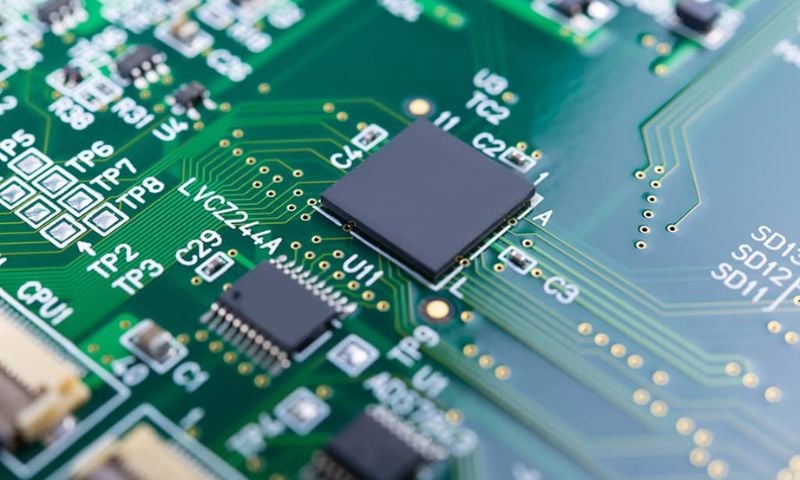
SEOUL, South Korea: The ongoing conflict in the Middle East has choked off supplies of essential raw materials and driven up the prices of printed circuit boards (PCBs), a key component in nearly all electronic devices, including smartphones, computers, and AI servers.
This disruption deals another heavy blow to electronics manufacturers, who were already facing skyrocketing memory chip costs. It also underscores the widening ripple effects of the Middle East war, which has severely disrupted supply chains, plastics, and oil shipments, Reuters reported.
Critical resin production halted
The Middle East conflict forced a shutdown in the production of high-purity polyphenylene ether (PPE) resin in early April, an essential base material used to manufacture PCB laminates.
Officials told Reuters that SABIC, which produces roughly 70% of the world’s high-purity PPE and operates a key facility on the Gulf coast, has yet to restart production.
This has led to a severe global shortage of the material. Shipping routes in and out of the Gulf have also been heavily disrupted by the war.
PCB prices jump 40% in one month
PCB prices had already been rising since late last year due to strong demand for AI servers. But since March, demand has accelerated sharply as manufacturers rush to stockpile raw materials and cushion themselves against spiraling costs, three industry sources told Reuters.
Goldman Sachs analysts noted in a recent report that PCB prices surged as much as 40% in April alone compared to March. Cloud service providers are willing to absorb further price hikes, expecting demand to outstrip supply for years to come, they added.
Market outlook and manufacturer response
The global PCB market is projected to grow 12.5% to $95.8 billion in 2026, according to a recent Prismark report.
Daeduck Electronics, a South Korean PCB manufacturer supplying Samsung Electronics, SK Hynix, and AMD, has started price increase talks with its customers, a senior executive told Reuters. The executive, speaking anonymously due to the sensitive nature of the issue, said his main concern has now shifted from meeting customer needs to securing supplier materials.
Waiting times for chemicals like epoxy resin have ballooned from three weeks to 15 weeks.
Shortages spreading to glass fibre and copper foil
Shortages of glass fibre and copper foil are adding to the sharp rise in PCB prices. Copper foil prices have jumped as much as 30% so far this year, with the rally accelerating in March.
Copper accounts for about 60% of total raw material costs in PCB manufacturing, according to Victory Giant Technology, a major Chinese PCB supplier for Nvidia. Earlier this month, the Chinese firm warned that the Middle East conflict could drive up prices for resin, copper, and other key materials.
Multi-layer PCBs currently cost around 1,394 yuan ($204) per square metre, while high-end models designed for AI servers can reach about 13,475 yuan, according to Victory Giant.