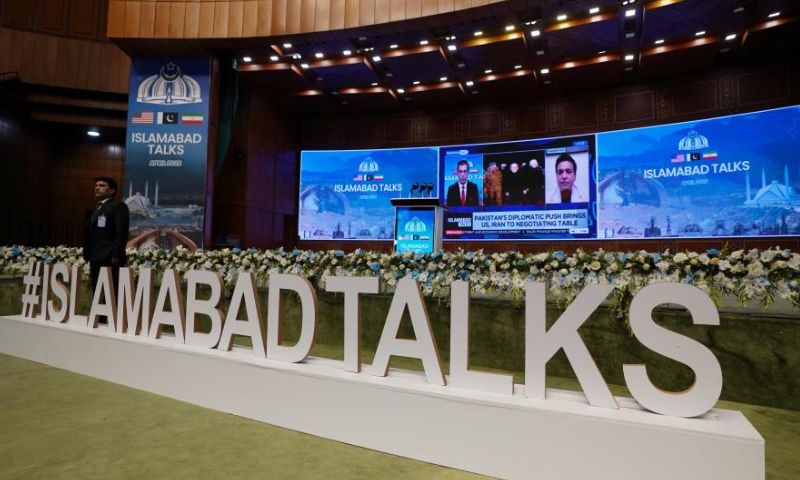
ISLAMABAD: Convoys moved through sealed roads. Security tightened to an unusual degree. Inside the Jinnah Convention Centre, hundreds of journalists from across the world worked out of a sprawling media hub — fast internet, constant speculation, but no official briefings.
For a few days, Islamabad stopped being a quiet capital and became the centre of global attention.
The real diplomacy, however, was unfolding elsewhere — behind closed doors.
That contrast defined the moment: intense visibility outside, deliberate silence within.
And inside those rooms, something significant was unfolding.
After more than 21 hours of indirect, high-stakes negotiations, US-Iran talks concluded without a final agreement. But to interpret that as a breakdown is to misread both the purpose and the outcome of this round.
This was never designed to produce a deal in one sitting.
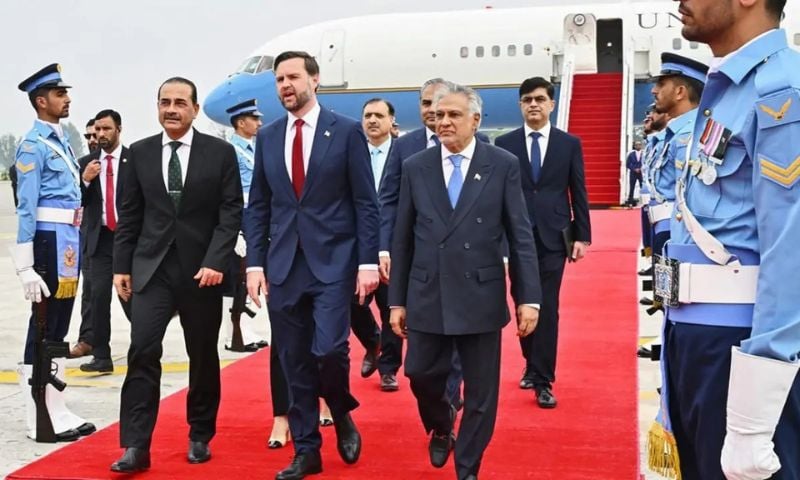
It was about stopping momentum towards war — and restoring a channel of communication that had effectively collapsed.
On both counts, Islamabad delivered.
At a time when the conflict between the United States and Iran had escalated sharply — drawing in regional actors, disrupting energy flows, and unsettling global markets — Pakistan stepped in as a facilitator. The immediate priority was de-escalation.
A ceasefire was secured.
Days later, it is still holding.
That alone has altered the trajectory of the crisis.
Because in conflicts like this, time is strategic. And what the ceasefire has created is space — space for diplomacy to function before escalation becomes irreversible.
Since the talks ended, that space has not been wasted.
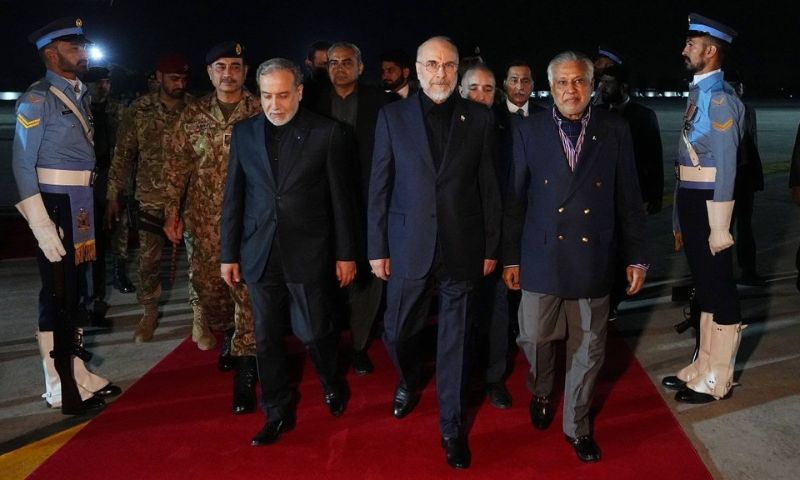
Pakistan has intensified its diplomatic engagement, maintaining active contact with both Washington and Tehran. Multiple signals from officials on both sides suggest that a second round of negotiations is now approaching — potentially before the end of the week or early next week.
That is where the real significance lies.
The first round was never the endpoint. It was the reopening of a process.
And that process matters because the structural disagreements remain substantial — sanctions, nuclear commitments, sequencing, and above all, decades of mistrust. These are not issues that collapse into agreement overnight.
They never have.
The 2015 nuclear deal took years of sustained negotiation and repeated political risk. What matters in diplomacy is not speed, but continuity.
And that continuity has now been restored.
From the ground, what stands out is how this was achieved.
Pakistan did not try to force outcomes or impose timelines. It focused on keeping both sides engaged — managing sensitivities, sustaining communication, and ensuring that neither delegation walked away.
That is the essence of mediation.
Not resolution — but preservation of dialogue.
Even US Vice President JD Vance acknowledged Pakistan’s role, crediting its leadership in helping bring both sides to the table. At the same time, Washington has signalled that its position remains firm, with what it describes as a final offer now awaiting Iran’s response.
So the situation stands at a delicate but meaningful point: no agreement yet, but an active process, a holding ceasefire, and a second round within reach.
That combination, in itself, is progress.
Because history offers a clear warning about the alternative path.
There is a line from the Vietnam War that has echoed through decades: “We had to destroy the village in order to save it.”
It reflects a persistent belief — that force can produce order.
From Vietnam to Afghanistan, from Iraq to Libya, that belief has been tested repeatedly. Each time, the result has been the same: instability, fragmentation, and consequences that extend far beyond the battlefield.
Wars launched to impose stability have instead undermined it.
Iran presents an even more complex case — a state with institutional depth, regional reach, and strategic resilience. The idea that pressure alone can reshape such a system ignores the lessons of recent history.
If anything, escalation tends to harden positions rather than resolve them.
That is why the current diplomatic opening matters.
US President Donald Trump has said the war is “close to over”, expressing confidence that negotiations may deliver results.
“I think it’s close to over, yeah. I mean, I view it as very close to over,” he said.
He added: “I think they want to make a deal very badly.”
At the same time, his remarks acknowledge the uncertainty that still defines the situation:
“You know what, if I pulled up stakes right now, it would take them 20 years to rebuild that country, and we’re not finished. We’ll see what happens.”
That tension — between pressure and diplomacy — defines the current phase.
But if the past half-century has demonstrated anything, it is this: stability cannot be imposed through destruction.
It has to be negotiated.
For Pakistan, this moment is not just about hosting talks. It is about demonstrating a capacity to influence outcomes through diplomacy — by providing access, building trust, and managing timing at a critical juncture.
The first round in Islamabad did not produce a deal.
But it produced something just as important: momentum.
And in diplomacy, momentum is what turns possibility into outcome.
The ceasefire is holding. The channel is open. The next round is approaching.
For now, that is enough to shift the trajectory away from escalation — and back towards negotiation.
Because the lesson is no longer theoretical — it is proven:
You cannot save a country by destroying it.
But you can begin to stabilise a crisis by talking.
And for now, that conversation is alive again.