ISLAMABAD: The United States and Iran are weighing a second round of peace negotiations, with Tehran considering a temporary pause in shipments through the Strait of Hormuz to ease tensions and support diplomatic efforts, Bloomberg reported on Tuesday.
Pakistan, which mediated the first round of high-stakes US-Iran talks in Islamabad last weekend, has intensified diplomatic efforts to sustain dialogue and prevent further escalation.
Iranian officials are exploring a short-term halt to shipments via the vital energy corridor to avoid testing a US naval blockade and to create space and resume peace talks, according to Bloomberg.
The US and Iran are weighing a second round of peace negotiations, with Tehran considering a pause in shipments through the Strait of Hormuz. Listen to that and the latest stories on Bloomberg News Now. https://t.co/KRLLBsRU1A
— Bloomberg (@business) April 14, 2026
According to Bloomberg, Washington and Tehran are considering holding another round of negotiations before the two-week Pakistan-brokered ceasefire agreed on April 7 expires next week.
One option under discussion is to return to Islamabad, which hosted the first round of talks, though other venues are also being considered, Bloomberg reported.
Iran is considering a short-term pause to shipments through the Strait of Hormuz to avoid testing a US blockade and scuppering a fresh round of peace talks, according to a person familiar with the Tehran’s deliberations. https://t.co/IerJJw5XLe
— Bloomberg (@business) April 14, 2026
Meanwhile, the Associated Press, citing US officials and a diplomat from a mediating country, reported that talks could resume as early as Thursday, with both sides agreeing in principle to continue engagement.
According to reports, Pakistan remains central to diplomatic efforts, having facilitated direct talks between US and Iranian delegations in Islamabad last weekend.
Meanwhile, Pakistan’s Prime Minister Shehbaz Sharif is set to visit Saudi Arabia, Qatar and Turkiye this week, with discussions expected to focus on regional stability, energy cooperation and economic ties.
Pakistan’s diplomatic efforts for peace
The earlier round of talks in Islamabad marked one of the highest-level engagements between the US and Iran in decades.
While no final agreement was reached, both Washington and Tehran described the Islamabad Talks as constructive and signalled willingness to continue the peace process to end the conflict.
According to Reuters, communication between the parties has remained active, with Pakistan continuing to exchange messages between the two sides to maintain momentum.
A senior Pakistani official said Islamabad had received a “positive response” from Iran regarding a second round of talks, though no firm date has been confirmed.
Negotiating teams from the US and Iran could return to Islamabad later this week for another round of peace talks, Reuters and other credible international media outlets reported on Tuesday, citing sources.
Reuters reported that no firm date has yet been decided, but both sides could return as early as the end of this week.
“No firm date has been set, with the delegations keeping Friday through Sunday open,” a senior Iranian source, cited by Reuters, said.
A proposal has already been circulated to both Washington and Tehran, suggesting that delegations reconvene in Islamabad to continue talks, according to reports.
Two Pakistani sources familiar with the matter said Islamabad has been actively communicating with both sides regarding the timing of the next round of talks, and that a weekend meeting remains the most likely option if negotiations proceed.
Optimism after Islamabad Talks
Meanwhile, US Vice President JD Vance said “significant progress” had been made during the Islamabad Talks, rejecting suggestions that the negotiations had failed.
“We did make some progress in the negotiation,” Vance told Fox News, adding that there were “good conversations” and movement on key issues.
He said the next steps depend on Tehran. “The ball is very much in their court,” he added.
Vance said discussions helped narrow differences, particularly on US priorities such as reopening the Strait of Hormuz, but noted that Iranian negotiators needed to consult leadership in Tehran before committing to any agreement.
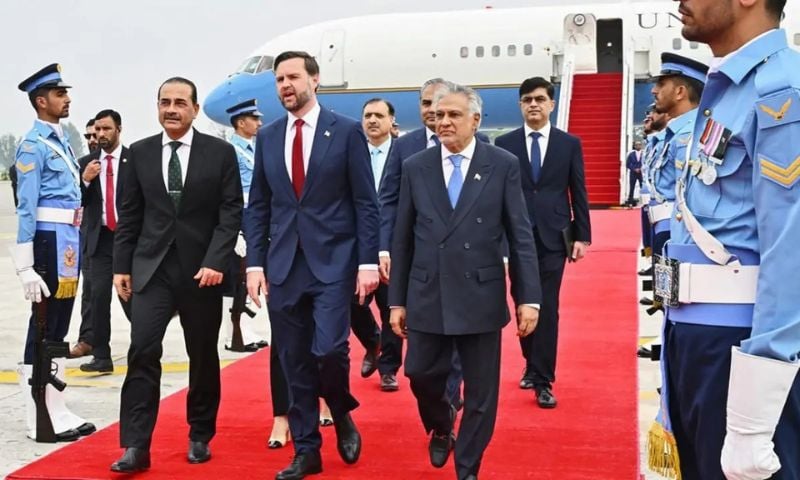
During the first round of talks in Islamabad, the US negotiation team was led by US Vice President JD Vance and the Iranian delegation was led by Iranian Parliamentary Speaker Mohammad Baqer Qalibaf.
Strait of Hormuz at centre of tensions
The Strait of Hormuz, through which around one-fifth of global oil and liquefied natural gas supplies pass, has become a focal point of the crisis.
US President Donald Trump has ordered a naval blockade aimed at curbing Iran’s oil exports.
US forces have begun intercepting or diverting vessels linked to Iranian ports, while allowing neutral ships to transit under monitoring, according to US Central Command.
Trump said on Monday that Washington had been approached for negotiations. “They want to work a deal,” he told reporters at the White House.
He also warned Iran against challenging the blockade, saying vessels approaching it could be “immediately eliminated.”
Meanwhile, Iran’s ambassador to Pakistan Reza Amiri Moghadam, in a statement posted on X, criticised the US naval blockade, describing it as an “unlawful, provocative and non-constructive” move that could escalate tensions.
He said the step risked justifying further military action and warned of “dire consequences” for regional stability.
The Iranian ambassador accused Washington of undermining global peace and economic security.
A vicious circle of redundant words to reckless act and back again!
The unlawful, provocative & non-constructive act of establishing a naval blockade is a reckless misstep meant possibly for a dignified exit and face saving.It's meant to gain credibility by creating this…
— Reza Amiri Moghadam (@IranAmbPak) April 14, 2026
Iran signals engagement
Iran has criticised the blockade as provocative.
In a statement posted on X, Reza Amiri Moghadam described the move as “unlawful” and a “reckless misstep,” accusing Washington of escalating tensions and endangering global stability.
Meanwhile, Iranian President Masoud Pezeshkian has said Tehran is willing to continue talks within a framework of international law, according to official statements.
The conflict, which began on February 28 with US and Israeli strikes on Iran, has disrupted global energy flows and rattled financial markets.
Oil prices have surged in recent weeks, though Brent crude fell slightly on Tuesday amid hopes of renewed diplomacy. Global benchmark indices also showed modest gains.
According to the International Energy Agency, rising fuel costs are already weighing on consumers, with the potential for the first annual decline in global oil demand since 2020.
Major aviation hubs across the Middle East have faced closures or restrictions, while shipping through the Strait of Hormuz has been curtailed, further straining supply chains.