


KABUL: The killing of at least 11 civilians in an attack near Injil district in Afghanistan’s Herat province has triggered a powerful wave of public anger, exposing deep cracks in the Taliban’s security narrative.
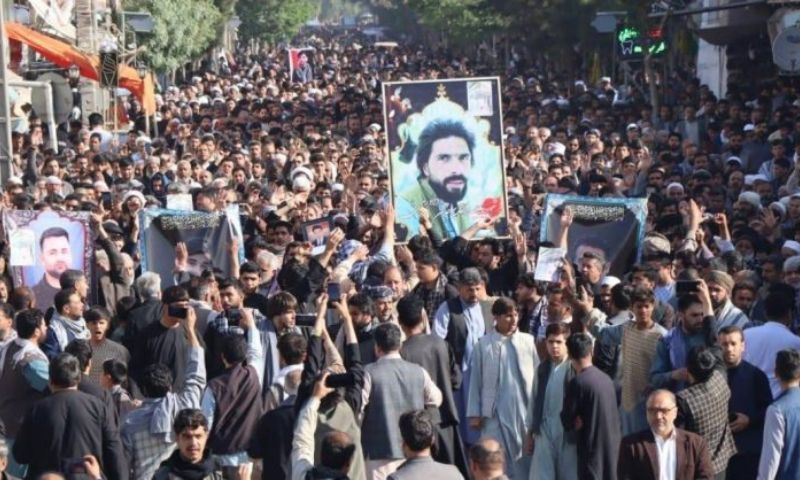
As large crowds gathered for funeral processions, many openly defied restrictions imposed by authorities, turning moments of mourning into visible acts of protest.
The scale of participation reflected not only grief but a deepening frustration over repeated attacks and a growing loss of confidence in the Taliban’s ability to ensure safety.
During the processions, the Taliban governor’s reported opposition to anti-terror slogans—particularly “Death to terrorism”—drew sharp criticism, as citizens continued to voice their anger regardless.
The public’s defiance despite restrictions signals an erosion of fear and an emerging readiness to challenge authority.
The attack carried out by gunmen targeting Shia civilians near a shrine highlights the persistent vulnerability of minority communities.
اعتراض به کشتار شیعیان با وجود مخالفت والی طالبان در هرات با شعار «مرگ بر تروریزم»
با وجود مخالفت والی طالبان برای هرات جهت راهاندازی اعتراضات مردمی، امروز سهشنبه موج بزرگی از شهروندان هرات با راهپیمایی در مراسم خاکسپاری قربانیان تیراندازی عصر جمعه شرکت کردند.
چهار مرد مسلح… pic.twitter.com/yhO2YwHusa
— Aamaj News (@aamajnews_24) April 14, 2026
The fact that the violence occurred in broad daylight, resulting in multiple casualties, underscores significant gaps in local security and intelligence mechanisms.
Instead of focusing on bringing the perpetrators to justice, the Taliban’s response appears largely directed at managing public expression and limiting dissent.
Taken together, the incident and its aftermath point to a troubling pattern: continued sectarian violence, weakened public trust, and a perception that militant elements are operating without sufficient restraint.
This stands in stark contrast to official claims of stability, raising critical questions about both the effectiveness and priorities of the current security framework.
The transformation of protests into openly anti-terror expressions reflects a growing public realisation that the Taliban are either unable or unwilling to effectively confront extremist elements.
The incident further reinforces the perception of Afghanistan as an environment where militant activity persists with relative freedom, leaving civilians vulnerable while authorities focus on controlling the narrative.
This mounting public backlash points to a deepening legitimacy crisis, as failures in ensuring security increasingly clash with efforts to suppress dissent on the ground.