ISLAMABAD: Pakistan-mediated talks between the United States and Iran concluded in Islamabad on Sunday without an agreement after more than 21 hours of intensive negotiations, with all sides signalling that diplomatic engagement will continue.
US Vice President JD Vance said the discussions were substantive but fell short of a breakthrough, while indicating that Washington has put forward what it described as a final proposal.
“We’ve made very clear what our red lines are, what things we’re willing to accommodate them on, and what things we’re not willing to accommodate them on… and they have chosen not to accept our terms.”
Despite the lack of agreement, Vance signalled that diplomacy was still in motion, confirming that a proposal had been left on the table for Tehran to consider.
“We leave here with a very simple proposal — a method of understanding that is our final and best offer. We’ll see if the Iranians accept it.”
A SECOND ROUND OF TALKS IS EXPECTED SOON: LISTEN TO REMARKS AT THE END pic.twitter.com/voeO4TkDk5
— Sajjad Tarakzai (@SajjadTarakzai) April 12, 2026
He stressed that the core US objective remains ensuring that Iran does not develop nuclear weapons or the capability to rapidly acquire them.
“We need to see an affirmative commitment that they will not seek a nuclear weapon… not just now, but for the long term. We haven’t seen that yet. We hope that we will.”
Vance added that while discussions covered a wide range of issues — including Iran’s nuclear programme and frozen assets — the two sides were unable, for now, to bridge key differences.
“We talked about all those issues… but we just could not get to a situation where the Iranians were willing to accept our terms.”
He maintained that the US delegation had engaged in good faith and remained flexible during the negotiations, which involved continuous coordination with President Donald Trump and the broader national security team.
Iran: No Expectation of Immediate Deal
On the Iranian side, the Foreign Ministry spokesperson reaffirmed Tehran’s commitment to diplomacy, stressing that engagement remains ongoing despite recent developments.
According to the Islamic Republic News Agency, spokesperson Esmaeil Baghaei dismissed suggestions that diplomatic efforts had come to an end, stating that “diplomacy never ends”.
Earlier, Baqaei said it was unrealistic to expect an agreement in a single round of talks, particularly given the recent conflict and prevailing mistrust.
“Naturally, from the beginning, we should not have expected to reach an agreement in a single session. No one had such an expectation,” he said.
JUST IN 🇮🇷🇺🇸: Iran’s FIRST INTERVIEW After Peace Talks with U.S. FAIL in Pakistan
Speaker is Esmail Baghaei, Iran’s Spokesperson for the Ministry of Foreign Affairs
A lot of great details from the past 24 Hours of Negotiations. https://t.co/4sQKQkqTTO pic.twitter.com/5ynpLjze10
— Ryan Rozbiani (@RyanRozbiani) April 12, 2026
He added that discussions were extensive and covered key strategic issues.
“In the past 24 hours, discussions were held on various dimensions… including the Strait of Hormuz, the nuclear issue, war reparations, lifting of sanctions, and the complete end to the war against Iran and in the region.”
Baqaei maintained that progress depends on “seriousness and good faith”, urging the opposing side to avoid “excessive demands and unlawful requests” while recognising Iran’s “legitimate rights and interests”.
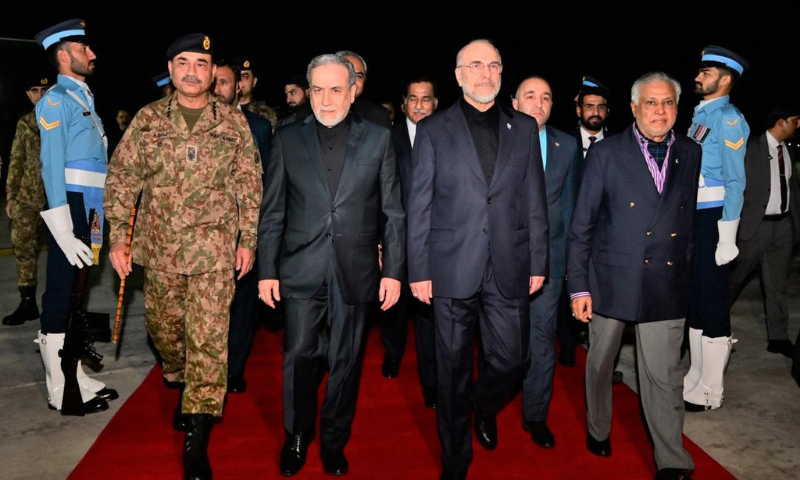
Iran also signalled that diplomatic engagement would continue, expressing confidence that contacts — including with Pakistan — would remain active.
Iran said no one had held any expectation that talks with the United States could have reached an agreement within one session after the negotiations in Islamabad stalled on Sunday.
“Naturally, from the beginning, we should not have expected to reach an agreement in a single session. No one had such an expectation,” Baqaei said, according to state broadcaster IRIB.
Pakistan Pushes for Continuity of Dialogue
Pakistan, which hosted and facilitated the talks, struck a forward-looking tone, emphasising the need to sustain engagement and preserve the ceasefire.
LIVE: Pakistan’s Deputy Prime Minister and Foreign Minister Ishaq Dar’s statement on Islamabad Talks https://t.co/zOYXDntEUA
— Pakistan TV Digital (@PakistanTVcom) April 12, 2026
Foreign Minister and Deputy Prime Minister Ishaq Dar said the absence of an agreement should not derail the diplomatic process.
“We hope that the two sides continue with the positive spirit to achieve durable peace and prosperity for the entire region and beyond.”
He underscored the importance of maintaining stability on the ground.
“It is imperative that the parties continue to uphold their commitment to ceasefire.”
Reaffirming Islamabad’s role, Dar said Pakistan would remain engaged in facilitating future negotiations.
“Pakistan has been and will continue to play its role to facilitate engagement and dialogue between the Islamic Republic of Iran and the United States of America in the days to come.”
He also thanked both sides for accepting Pakistan’s invitation and acknowledged their appreciation of Islamabad’s mediating efforts.
A Process, Not a One-Off Event
The talks were held during a two-week ceasefire in the US–Israeli war against Iran, brokered by Pakistan earlier this month, and are widely seen as an initial step in a longer diplomatic process.
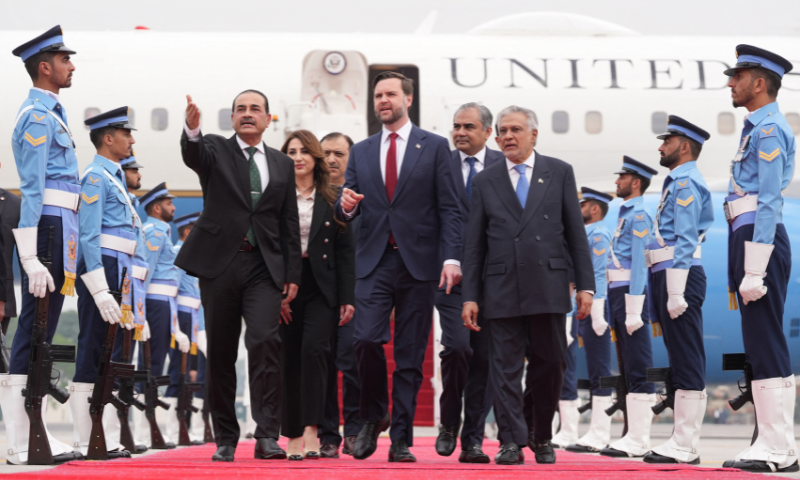
Despite sharp differences — particularly over Iran’s nuclear programme — the continued engagement by both sides, along with Pakistan’s active facilitation, suggests that negotiations remain ongoing rather than concluded.
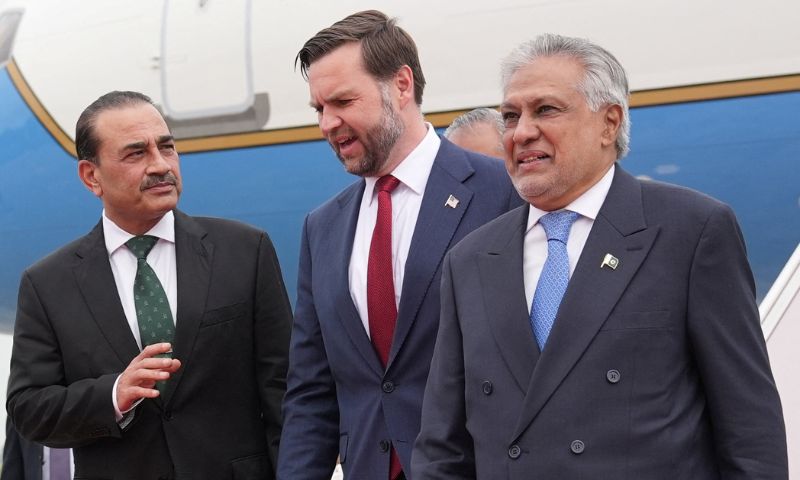
The US delegation was led by Vice President JD Vance and included Jared Kushner and special envoy Steve Witkoff, while the Iranian delegation was headed by Parliament Speaker Mohammad Bagher Ghalibaf and Foreign Minister Abbas Araghchi.
The talks took place during a two-week ceasefire in the US–Israeli war against Iran, which began with attacks on February 28.
The conflict, which spread across the Middle East and sent shockwaves through global economies, was paused after Pakistan brokered a temporary ceasefire on April 8.