ISLAMABAD: Following the latest round of Pakistan-mediated negotiations in Islamabad, both the United States and Iran have agreed to continue talks after a brief pause, signalling cautious progress.
“At Pakistan’s proposal and with the agreement of the negotiating teams of Iran and the U.S., talks mediated by Pakistan will continue for another round after a pause on Sunday,” the Government of the Islamic Republic of Iran said in a tweet.
Breaking | At Pakistan’s proposal and with the agreement of the negotiating teams of #Iran and the U.S., talks mediated by Pakistan will continue for another round after a pause on Sunday.#IslamabadTalks https://t.co/iWjWDjdjZb
— Government of the Islamic Republic of Iran (@Iran_GOV) April 11, 2026
Teams of technical experts from Iran and the United States exchanged written proposals on Saturday after holding several hours of face-to-face discussions in Islamabad, as negotiations continued during a pause in the Middle East conflict.
The discussions moved into the expert-level stage, involving specialised groups working on economic, military, legal and nuclear matters to address key technical aspects of the talks.
#IslamabadTalks continue.
Despite some differences between the Iranian and U.S. delegations during negotiations mediated by #Pakistan, the process is ongoing, and a new round of trilateral talks began minutes ago in the Pakistani capital. https://t.co/jkre9D4MkQ— Government of the Islamic Republic of Iran (@Iran_GOV) April 11, 2026
We Make a Deal or Not, No Difference to Me : Trump
Earlier, before boarding his plane to Florida, US President Donald Trump said Saturday he was not bothered about the outcome of US-Iran talks in Pakistan, insisting that the United States had come out ahead from the war.
“Whether we make a deal or not makes no difference to me. The reason is because we’ve won,” Trump told reporters.
.@POTUS on talks in Islamabad: “They’ve been meeting for many hours… We’ll see what happens. Regardless, we win… Maybe they make a deal; maybe they don’t. It doesn’t matter. From the standpoint of America, we win.” pic.twitter.com/z8R4xAX5bv
— Rapid Response 47 (@RapidResponse47) April 11, 2026
“We’re in very deep negotiations with Iran. We win regardless. We’ve defeated them militarily,” Trump said.
Trump was speaking as Vice President JD Vance was leading the US delegation in the Pakistani capital Islamabad, with discussions with Iran heading into a second day.
Trump also repeated the US military’s statement that US Navy warships on Saturday transited through the Strait of Hormuz, the vital gateway to the oil-rich Gulf, to begin clearing it of Iranian mines.
The account was denied by Iran, which has exerted power over the narrow waterway and with it the world’s oil supply in retaliation for the attack launched on February 28 by the United States and Israel.
“We have minesweepers out there. We’re sweeping the strait,” Trump said.
“We’ll open up the strait even though we don’t use it, because we have a lot of other countries in the world that do use it that are either afraid or weak or cheap,” Trump said.
Diplomacy is Not An Event, It’s a Process
Former Pakistani diplomat to the US Maleeha Lodhi says expectations from the Islamabad talks between the US and Iran should be realistic, stressing that “we should recognise that diplomacy is not an event, it’s a process, it takes time,” Al Jazeera quoted her saying.
Negotiations between the United States and Iran in Islamabad are continuing, reflecting ongoing momentum in Pakistan-mediated efforts to secure a lasting agreement. The continued presence of both delegations indicates a shared commitment to dialogue and progress despite earlier speculation.
4 a.m. update: no update.
Many of you are asking about Iran and some international media outlets saying talks are over. All I can tell you is that the White House press corps has not been told anything like that and negotiators are still at Serena Hotel.
— Caitlin Doornbos (@CaitlinDoornbos) April 11, 2026
The high-level negotiations are seen as a critical step towards de-escalation, with Islamabad playing a central role in facilitating dialogue between the two sides.
The US delegation is led by Vice President JD Vance and includes President Donald Trump’s son-in-law Jared Kushner as well as Middle East envoy Steve Witkoff.
The Iranian side is headed by Parliament Speaker Mohammad Bagher Ghalibaf, with Foreign Minister Abbas Araghchi and other senior officials also part of the delegation.
اسلام آباد میں تاریخی امن مذاکرات، ایران اور امریکا ایک میز پر!
اسلام آباد میں ایران اور امریکا کے درمیان تاریخ ساز امن مذاکرات کا آغاز ہو گیا ہے، جہاں دونوں فریقین کشیدگی کے بعد پہلی بار براہِ راست ایک میز پر بیٹھے ہیں۔ اعلیٰ سطح وفود کی آمد، پاکستان کی مؤثر سفارتکاری اور عالمی… pic.twitter.com/soNhYJ3goO
— PTV News (@PTVNewsOfficial) April 11, 2026
The Iranian embassy in Bulgaria said in a post on X that two rounds of talks between the US and Iran had been completed, with a third round expected soon.
Two rounds of negotiations between Iran and the United States have been completed, with a third round expected soon.
With best wishes for #Iran delegation. pic.twitter.com/rLr6pubT8p— Embassy of Iran in Bulgaria (@IRANinBULGARIA) April 11, 2026
Hours after the arrival, Pakistan’s Prime Minister Shehbaz Sharif met US Vice President JD Vance in the capital.
The Prime Minister’s office said Vance was accompanied by special envoy Steve Witkoff and Jared Kushner, while the Pakistani side included Deputy Prime Minister and Foreign Minister Ishaq Dar and Interior Minister Mohsin Naqvi.
US–Iran High-Stakes Talks Begin in Islamabad #US #IranWar pic.twitter.com/yd9kqV4CDz
— Sajjad Tarakzai (@SajjadTarakzai) April 11, 2026
“These talks would serve as a stepping stone towards durable peace in the region,” Minister Shehbaz Sharif said, commending the commitment of both delegations to engage constructively.
He reiterated that Pakistan would continue to facilitate efforts by both sides to make progress towards a sustainable resolution of the conflict.
Earlier, the Iranian government, in a statement, said that following intensive consultations in Islamabad, progress in talks, the restriction of strikes in Lebanon, and the US agreement to release Iranian assets, negotiations began with Pakistan’s mediation to finalise these issues.
Following intensive consultations in Islamabad, progress in talks, the restriction of strikes in Lebanon, and the U.S. agreement to release Iranian assets, negotiations began with Pakistan’s mediation to finalize these issues.
#Iran #USA #Diplomacy https://t.co/JN4tCWPjSQ— Government of the Islamic Republic of Iran (@Iran_GOV) April 11, 2026
Tehran said that talks between Iran and the US in Islamabad entered the expert-level stage as economic, military, legal, and nuclear committees joined.
Talks between Iran and the U.S. in Islamabad entered the expert-level stage as economic, military, legal, and nuclear committees joined. Negotiations continue at the Serena Hotel to finalize technical details. #IslamabadTalks #Iran #USA #Diplomacy https://t.co/mH00MmP3TX
— Government of the Islamic Republic of Iran (@Iran_GOV) April 11, 2026
Meanwhile, the White House said high-level in-person talks with Iran were “ongoing” in Islamabad late on Saturday, AFP reported.
A senior White House official said in a brief statement that the talks were continuing, according to AFP.
PM Sharif meets Iranian delegation
Later, PM Sharif also held a meeting with a high-level Iranian delegation at the high-stakes Islamabad Talks between the US and Iran.
During the meeting, PM Sharif appreciated Iran’s engagement in the Islamabad Talks.
The Prime Minister affirmed Pakistan’s sincere resolve to continue playing its role as a mediator to help build momentum towards achieving meaningful results in the interest of regional and global peace and stability, according to a statement issued by the Pakistan PM Office.
The Iranian delegation was led by the Speaker of the Iranian Consultative Assembly, Mohammad Bagher Ghalibaf and assisted by Iranian Foreign Minister Abbas Araghchi.
Pakistan’s Deputy Prime Minister and Foreign Minister Ishaq Dar, Pakistan’s Chief of Army Staff and Chief of Defence Forces Field Marshal Syed Asim Munir and Interior Minister Mohsin Naqvi attended the meeting from the Pakistani side.
Islamabad April 11 ,2026.
Prime Minister Muhammad Shehbaz Sharif held a meeting with the Iranian delegation at the Islamabad Talks today.
The Iranian side was led by the Honorable Speaker of the Iranian Consultative Assembly, Mr. Mohammad Bagher Ghalibaf, assisted by Foreign… pic.twitter.com/xUSCq9sGpS
— Prime Minister’s Office (@PakPMO) April 11, 2026
Pakistan urges “constructive” engagement
Earlier, Foreign Minister Ishaq Dar “expressed the hope that parties would engage constructively, and reiterated Pakistan’s desire to continue facilitating the parties towards reaching a lasting and durable solution to the conflict”, the foreign ministry said in a statement.
Arrival of the US Delegation for Islamabad Talks pic.twitter.com/Hai19EZm4I
— Ministry of Foreign Affairs – Pakistan (@ForeignOfficePk) April 11, 2026
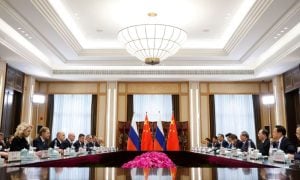
Iran and the United States are holding talks in the Pakistani capital under heavy security, as part of efforts to build on a fragile two-week ceasefire.
The Iranian delegation, headed by parliamentary speaker Mohammad Bagher Ghalibaf, arrived first in Islamabad.
Other members include Foreign Minister Abbas Araghchi, Secretary of the Supreme National Security Council Ali Akbar Ahmadian, Central Bank Governor Abdolnaser Hemmati, and former IRGC commander Mohammad Bagher Zolghadr.
A United States delegation led by Vice President JD Vance also arrived on Saturday to participate in the negotiations.
The US delegation, which includes Donald Trump’s son-in-law Jared Kushner and special envoy Steve Witkoff, reached Islamabad under tight security arrangements.
Pakistan’s Ministry of Foreign Affairs said the high-powered delegation was received by Deputy Prime Minister and Foreign Minister Ishaq Dar, Chief of Army Staff Field Marshal Syed Asim Munir, and Interior Minister Mohsin Naqvi.
Arrival of the delegation of the Islamic Republic of Iran for Islamabad Talks pic.twitter.com/aJYU9cx5t2
— Ministry of Foreign Affairs – Pakistan (@ForeignOfficePk) April 10, 2026
Difficult phase of negotiations
The talks come at a critical juncture, with both sides holding firm to key demands.
Iran is seeking a ceasefire in Lebanon, sanctions relief, access to its frozen assets, control over the Strait of Hormuz, and compensation for war damage.
While the United States wants Iran to scale back its missile programme, a demand that Tehran has ruled out.
Washington has indicated it may be open to easing sanctions, but only if Iran makes significant concessions on nuclear enrichment.
Pakistan, which played a key mediating role in securing the temporary truce, has cautioned that the next phase will be difficult.
“A temporary ceasefire has been announced, but now an even more difficult stage lies ahead: the stage of achieving a lasting ceasefire, of resolving complicated issues through negotiations,” Prime Minister Shehbaz Sharif said.
“This is that stage which, in English, is called the equivalent of ‘make or break.’”
Sharif said leaders from both countries were attending at Pakistan’s invitation and pledged that his government would “make every possible effort to make these talks successful”.
“In response to my sincere invitation, the leaders of both countries are coming to Islamabad. There, negotiations will be held for the establishment of peace,” he said in an address to the nation.
“ان نازک ترین لمحات میں پاکستان کی قیادت نے انتہائی محتاط انداز میں مگر بڑے اعتماد کے ساتھ دونوں فریقین کو عارضی جنگ بندی پر نا صرف راضی کیا بلکہ اسلام آباد آنے کے لیے پُرخلوص دعوت بھی دی، اس کے لیے میں ڈپٹی پرائم منسٹر اسحاق ڈار صاحب اور ان کی ٹیم کو دن رات کی محنت اور خلوصِ دل… pic.twitter.com/OeRz6wBjjl
— Government of Pakistan (@GovtofPakistan) April 10, 2026
Trump optimistic about US-Iran talks
In Washington, President Donald Trump expressed optimism about the outcome of the talks, telling NBC News he was “very optimistic” about a peace deal following the Pakistan-brokered ceasefire.
He said Iran’s leadership appeared “much more reasonable” in private, but warned that failure to reach an agreement would have serious consequences. “If they don’t make a deal, it’s going to be very painful,” he said.
Trump has also linked the continuation of the ceasefire to the reopening of the Strait of Hormuz, a strategic waterway through which roughly one-fifth of the world’s crude oil passes.
While the ceasefire has enabled the talks to proceed, the strait has yet to return to normal traffic.
Trump said he would ensure it is reopened soon “with or without” Iran’s cooperation.
.@POTUS on talks in Islamabad: “We’ll find out what’s going on. They’re militarily defeated and now we’re going to open up the [Strait]… You have a good team and they meet tomorrow. We’ll see how it all works out.” pic.twitter.com/5Ol1SHZCKi
— Rapid Response 47 (@RapidResponse47) April 10, 2026
He added that his primary objective at the talks was to prevent Iran from acquiring nuclear weapons. “No nuclear weapon. That’s 99 percent of it,” he said.
The negotiations mark a pivotal moment in efforts to de-escalate tensions that had threatened to engulf the wider Middle East, placing Pakistan at the centre of global diplomacy.
In Islamabad, extraordinary security arrangements have been put in place, with the Red Zone effectively sealed and key routes, including D-Chowk, Constitution Avenue, and roads leading to the Serena Hotel — the expected venue — closed or heavily restricted.
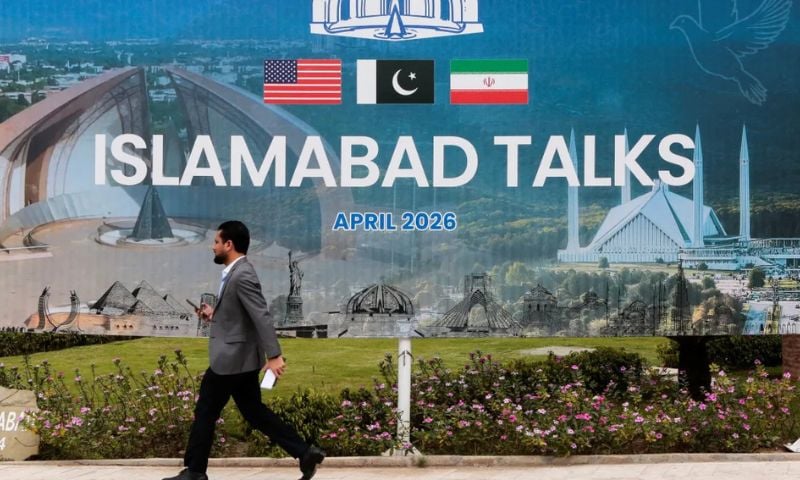
Only authorised vehicles are being allowed entry, while thousands of security personnel have been deployed across sensitive areas. Large banners and digital displays across the capital are marking the “Islamabad Talks”.
Pakistan has also introduced exceptional facilitation measures for international participants, allowing travellers to board flights without visas and receive visas on arrival.
The talks are widely seen as a “make or break” opportunity to transform a temporary ceasefire into a lasting agreement and resolve a complex set of disputes continuing to destabilise the region.