ISLAMABAD: Islamabad is set to host high-stakes negotiations between the United States and Iran on Friday, as a two-week ceasefire holds following weeks of escalating conflict.
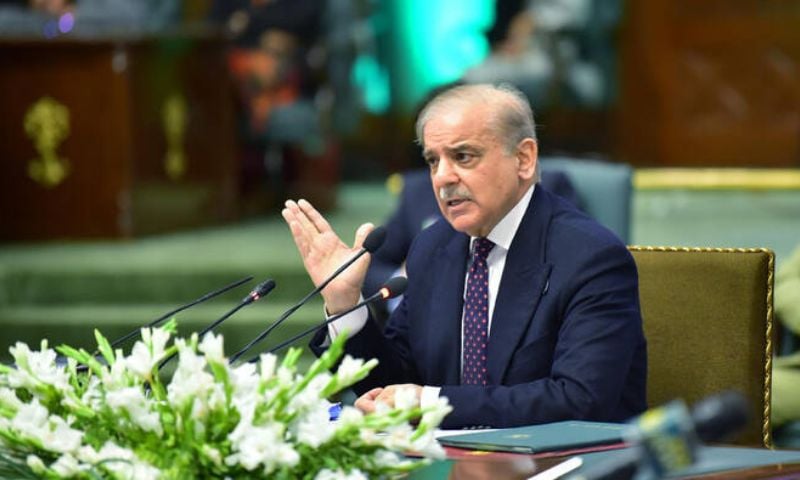
Pakistan’s Prime Minister Shehbaz Sharif said Islamabad would host delegations from the United States and Iran following the Middle East ceasefire announcement.
The talks, being facilitated by Pakistan, are expected to focus on reaching a comprehensive agreement to end hostilities and stabilise the region.
Sharif said that the United States, its allies, and Iran had agreed to a ceasefire “everywhere”, including Lebanon, following mediation by his government to stop weeks of fighting.
“I warmly welcome the sagacious gesture and extend deepest gratitude to the leadership of both the countries and invite their delegations to Islamabad on Friday, 10th April 2026, to further negotiate for a conclusive agreement to settle all disputes. Sahrif wrote on X,
With the greatest humility, I am pleased to announce that the Islamic Republic of Iran and the United States of America, along with their allies, have agreed to an immediate ceasefire everywhere including Lebanon and elsewhere, EFFECTIVE IMMEDIATELY.
I warmly welcome the…— Shehbaz Sharif (@CMShehbaz) April 7, 2026
Pakistan has in recent weeks emerged as a key negotiator, playing a central role in bridging communication between Washington and Tehran and helping secure the ceasefire through sustained diplomatic engagement.
Its efforts have drawn widespread international praise, with world leaders and organisations — including the United Nations chief — welcoming Islamabad’s role in facilitating dialogue and supporting moves towards de-escalation and lasting peace in the Middle East.
“We earnestly hope that the ‘Islamabad Talks’ succeed in achieving sustainable peace and wish to share more good news in the coming days,” Sharif said.
Both Tehran and Washington announced they had agreed to a two-week ceasefire barely an hour before President Donald Trump’s deadline to obliterate Iran was set to expire.
Accepting Pakistan’s suggestion of a two-week ceasefire, US President Donald Trump announced a two-week suspension of military action against Iran following discussions with Pakistan’s leadership.
The negotiations come after US President Donald Trump agreed to suspend military action against Iran for two weeks following direct engagement with Pakistan’s leadership, including Prime Minister Shehbaz Sharif and Army Chief Field Marshal Asim Munir.
OFFICIAL STATEMENT OF IRAN: pic.twitter.com/IZ9qoGpgK8
— The White House (@WhiteHouse) April 7, 2026
Islamabad has in recent weeks emerged as a key intermediary, maintaining communication channels with both sides amid intensifying hostilities.
Trump said that after speaking with Prime Minister Shehbaz Sharif and Army Chief Field Marshal Asim Munir, he agreed to pause planned strikes, contingent on Iran reopening the Strait of Hormuz “completely, immediately, and safely”.
“I agree to suspend the bombing and attack of Iran for a period of two weeks. This will be a double-sided ceasefire!” he wrote on his Truth Social platform.
He added that US military objectives had already been achieved and that the pause would allow both sides to finalise a comprehensive agreement.
Following the US President’s post on his Truth Social, Iran also issued a reciprocal statement instantly confirming the ceasefire brokered by Pakistan.
Thanking Pakistan’s civil and military leadership by name, as did the US President, Iran’s Foreign Minister, Syed Abbas Araghchi, confirmed a ceasefire from the Iranian forces.
Statement on behalf of the Supreme National Security Council of the Islamic Republic of Iran: pic.twitter.com/cEtBNCLnWT
— Seyed Abbas Araghchi (@araghchi) April 7, 2026
The war began when Israel and the United States launched strikes on Iran that killed its supreme leader on February 28, sparking retaliatory attacks from Tehran on Gulf nations and Israel.
The ceasefire, which also includes Israel according to US officials, has paused a conflict that began on February 28 and quickly spread across multiple fronts, including Lebanon and parts of the Gulf.
Analysts say the Islamabad talks represent a crucial test of whether diplomatic efforts can succeed where military escalation risked a wider regional war.
Pakistan has expressed hope that the negotiations will lead to a “conclusive agreement” and durable peace, positioning itself as a central player in efforts to de-escalate tensions in the Middle East.