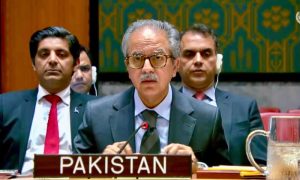
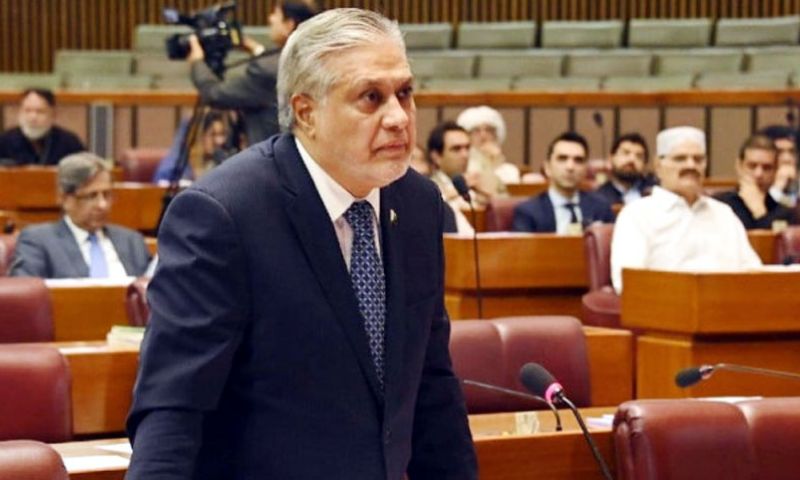
ISLAMABAD: Pakistan’s Deputy Prime Minister and Foreign Minister Ishaq Dar on Tuesday reaffirmed the country’s resolve to continue diplomatic efforts to bring peace in the Middle East region through dialogue and diplomacy.
The Deputy PM made the remarks while briefing the Senate, the upper house of the Parliament, about Pakistan’s efforts to end the war, involving the US, Israel, and Iran.
He said Islamabad is pursuing efforts to secure a dignified and peaceful resolution to the ongoing situation.
He emphasised that Pakistan has been making consistent, all-out efforts since the outset to help end the conflict, noting that its role as a mediator and facilitator requires careful and measured actions.
However, he added that recent attacks on Iran and Saudi Arabia have further complicated the regional crisis.
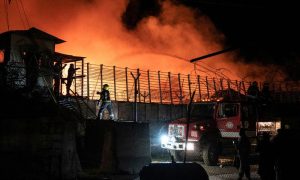
Pakistan has strongly condemned Iranian missile and drone attacks on Saudi Arabia’s energy infrastructure in the eastern region.
“Pakistan mourns the loss of life resulting from these attacks and strongly deplores the damage inflicted on vital infrastructure,” the Foreign Office said in a statement.
“The Government of Pakistan considers these attacks a serious violation of Saudi Arabia’s sovereignty and territorial integrity and a dangerous escalation that undermines regional peace and stability, it said.
Dar blamed Israel for trying to spoil Islamabad’s efforts to facilitate ceasefire talks between the US and Iran by attacking Tehran when “both sides were in a stage to sit down”.
“We were very optimistic [about talks] before [Monday] night,” Dar told lawmakers, adding that Iran and the US had agreed on Pakistan’s facilitation, with both sides accepting talks to be held in Islamabad.
Pakistan, he further said, handed the US’s 15-point conditions to Iran and also handed Tehran’s five-point conditions to Washington.
It is pertinent to mention that the war between the United States, Israel, and Iran that began on February 28 has plunged the Middle East into deep turmoil.
Iran has been carrying out attacks on Israel and also targeting neighbouring Gulf countries that are not part of the conflict.
Iran has also closed the Strait of Hormuz, a vital waterway through which nearly 20 percent of the world’s oil supply passes.
US President Donald Trump has set a Tuesday deadline for Iran to reopen the Strait of Hormuz, warning of sweeping military action against the country’s infrastructure if it fails to comply, as tensions across the Middle East continue to escalate.
Islamabad also hosted foreign ministers from Saudi Arabia, Turkiye, and Egypt, while also facilitating the exchange of messages between Washington and Tehran.
Earlier, Pakistan shared proposals for an immediate ceasefire with Washington and Tehran in an attempt to halt the five-week-old war between Iran and the United States.
The proposed Islamabad Accord is structured in two phases. The immediate phase calls for a ceasefire to begin straight away and the reopening of the Strait of Hormuz without delay.