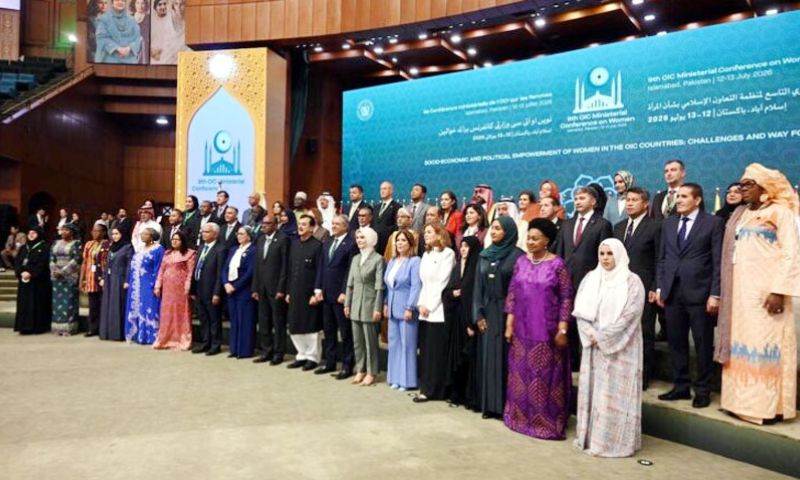



ISLAMABAD: The Ninth Ministerial Conference on Women of the Organisation of Islamic Cooperation (OIC) has adopted the Islamabad Declaration expressing solidarity with women of Indian Illegally Occupied Jammu and Kashmir and Palestine, while urging the international community to help them.
The declaration called on the international community to provide legal, humanitarian, economic, educational, and psychological support to help alleviate their suffering.
The conference, hosted by the Ministry of Human Rights in Islamabad, brought together Ministers and senior representatives from OIC Member States to advance the socio-economic and political empowerment of women.
The declaration also introduced a new initiative aimed at promoting digital inclusion for women across the Muslim world.
According to the Islamabad Declaration, ministers and heads of delegations pledged to strengthen policies and institutional frameworks to ensure women’s effective and meaningful participation in political, economic, and public spheres.
The Ninth Session of the Ministerial Conference on Women concluded with the adoption of an omnibus resolution and the adoption of the “Islamabad Declaration.” To view the text of the declaration, please click on the following link:https://t.co/mPZpY1H5im pic.twitter.com/sAxw2T4s0P
— OIC (@OIC_OCI) July 13, 2026
The declaration called on member states to address barriers hindering women’s access to education and employment, expand opportunities for quality education, technical and vocational training, and leadership development, and enhance women’s economic empowerment through improved access to employment, financial resources, entrepreneurship support and social protection systems.
It also highlighted the importance of inclusive financial systems, including Islamic finance, microfinance and digital financial services, while encouraging greater access to capital, innovation, and trade opportunities for women-led small and medium-sized enterprises (SMEs).
The declaration recognised women’s participation in science, technology, engineering and mathematics (STEM), artificial intelligence (AI) and other emerging technologies as essential to future development. It urged member states to bridge the digital gender gap, particularly in rural communities, by expanding affordable digital infrastructure, internet connectivity, access to digital devices and digital literacy programmes.
OIC Ministerial Conference Begins in Pakistan, Focuses on Women Empowerment
During the conference, the Islamabad Initiative for Women’s Digital Inclusion was launched as a voluntary OIC platform to promote digital literacy, digital entrepreneurship, STEM education, AI skills, cybersecurity awareness and equal access to advanced technologies for women and girls.
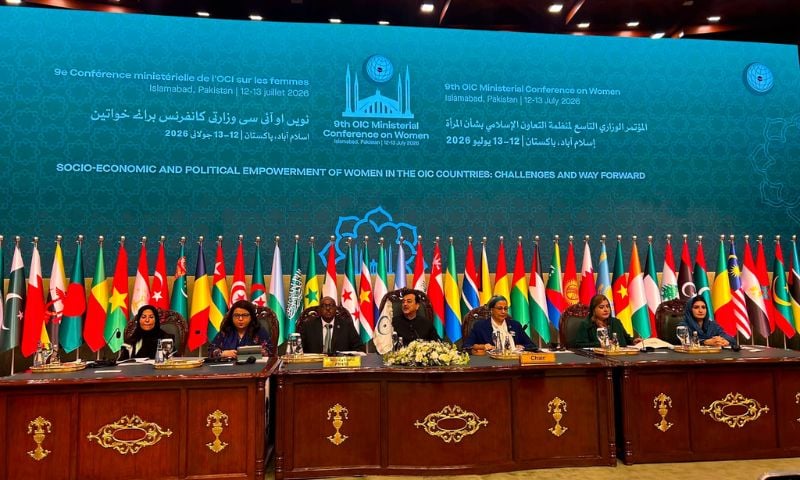
The initiative encourages interested member states, OIC institutions and development partners to contribute to its implementation through training programmes, scholarships, mentorship opportunities, skills exchanges and the sharing of best practices.
The declaration also called for stronger efforts to eliminate all forms of violence against women and girls, including cyber harassment, online abuse, exploitation and technology-enabled threats.
It further urged enhanced international cooperation to combat Islamophobia, racism, discrimination and hate speech targeting Muslim women and girls.
The Government of Pakistan, Ministry of Human Rights hosted a Pakistan Night in honour of the distinguished delegates attending the 9th OIC Ministerial Conference on Women.
The event was graced by Senator Mohammad Ishaq Dar, Deputy Prime Minister and Minister for Foreign… pic.twitter.com/vX76uoEGCv
— Ministry of Human Rights (@mohrpakistan) July 14, 2026
The declaration reaffirmed that empowering women and girls through education, skills development, leadership opportunities and meaningful participation in economic activities is vital for the development, stability and prosperity of OIC societies.
Addressing the closing session, OIC Assistant Secretary General Ambassador Dr Tarig Ali Bakheet said the deliberations had demonstrated that OIC member states regarded women’s development as a fundamental pillar of sustainable development and the prosperity of the Muslim Ummah.
He urged member states, OIC institutions, international partners, and other relevant stakeholders to work closely to ensure the effective implementation of the conference’s resolutions and recommendations.
He said sustained cooperation, coordinated action, and the sharing of successful experiences among member states would help transform shared commitments into meaningful improvements in the lives of women and girls.