Key Points
- Monthly support ranges from Rs 35,000 to Rs 100,000, depending on vehicle category
- Government relief package totals Rs 129 billion over recent weeks
- Petroleum levy reduced by Rs 80 per litre to ease public burden
ISLAMABAD: The disbursement of recently announced subsidies for goods and public transport operators has officially commenced, with the government rolling out a digital wallet-based system to ensure direct and transparent transfers.
Prime Minister Shehbaz Sharif earlier announced targeted subsidies after the fuel price hike in Pakistan, which is already linked to international crude.
The government in Pakistan is striving to shield its consumers from the skyrocketing global oil price and consequent increase in domestic fuel costs amid regional economic uncertainty.
The development was disclosed during a high-level meeting chaired by the Prime Minister in Lahore.
The meeting reviewed the implementation status of the petroleum-linked public relief package and other subsidy measures introduced in response to recent increases in fuel prices and regional tensions.
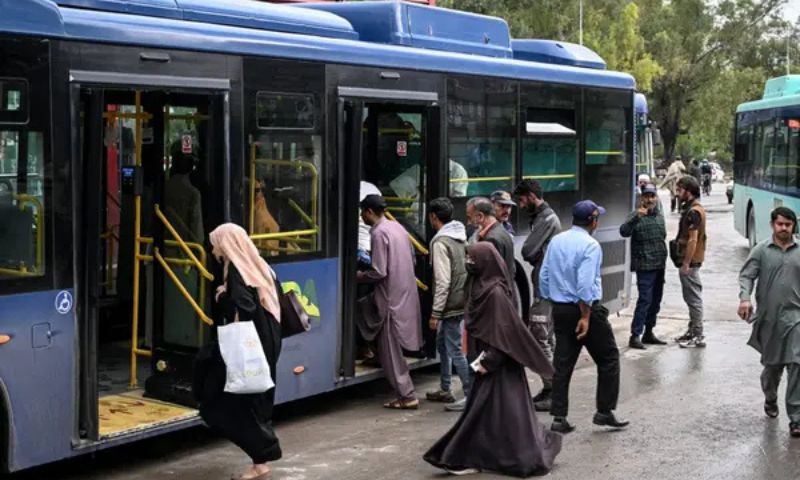
According to official details, the subsidy framework provides Rs 100,000 per month for passenger buses, Rs 40,000 for minibuses and vans, Rs 70,000 for trucks, Rs 80,000 for large goods vehicles, and Rs 35,000 for delivery vans.
The support aims to prevent fare hikes and curb inflationary pressure on the transport of essential goods, the officials added.
Transparency in digital transfer system
The prime minister said subsidies are being disbursed through digital wallets, a mechanism designed to reduce leakages and improve transparency in public spending.
He added that provincial governments have submitted detailed registration data of transport vehicles, including trucks, buses, and goods carriers, enabling targeted distribution of funds.
Officials briefed the meeting that the system has already been activated and that eligible transport operators are beginning to receive payments under the new framework.
Fiscal relief and petroleum measures
Prime Minister Shehbaz Sharif said the government has provided a Rs 129 billion relief package over the past three weeks. The subsidy was meant to cushion the impact of rising energy costs on households and businesses.
He further noted that immediate relief has been extended through a reduction in the petroleum levy by Rs 80 per litre, a step intended to stabilise transport costs and prevent a sharp increase in consumer prices.
The prime minister also highlighted that Pakistan Railways is contributing to relief efforts through a subsidy worth Rs 6 billion, ensuring that passenger and freight train fares remain unchanged.
In addition, the recently announced 25 per cent quarterly increase in toll tax has been withdrawn to ease logistical costs.
Provincial contributions and implementation status
During the meeting, the prime minister appreciated the Government of Balochistan for depositing its allocated share for the national subsidy programme and urged other provinces to follow suit promptly to ensure smooth implementation across the country.
Officials informed the meeting that adequate petroleum reserves are available nationwide to meet domestic demand, despite recent fluctuations in global energy markets.
An Intelligence Bureau report on austerity measures and government expenditure controls was also presented, outlining ongoing monitoring of implementation across departments.
Public relief and economic pressures
Prime Minister Shehbaz Sharif reiterated that the government’s priority is to ensure timely relief for vulnerable segments of society. , particularly in the face of rising fuel prices and external economic pressures.
He stated that savings generated through austerity measures are being redirected toward public welfare initiatives.
He added that the administration remains committed to ensuring that “relief reaches the common man without delay,” emphasising that transport and logistics sectors are central to controlling inflation in essential commodities.
What lies ahead
Officials indicated that the subsidy mechanism will continue to be expanded and refined based on provincial coordination and real-time verification systems.
The government is expected to monitor its impact on transport fares and inflation trends in the coming weeks, particularly as fuel price volatility persists in regional and global markets.