


ISLAMABAD: The United States is preparing to deploy a large share of its global inventory of advanced stealth cruise missiles in the next phase of its military campaign against Iran, according to a Bloomberg report.
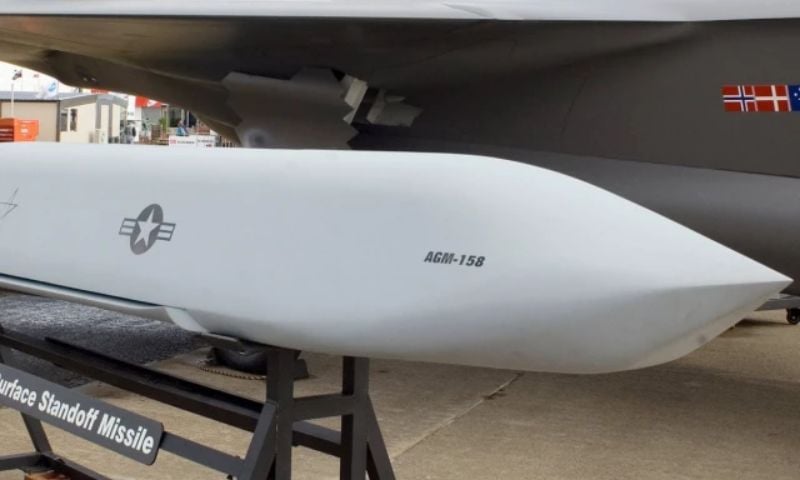
Citing a source familiar with the matter, the report said an order was issued in late March to divert Joint Air-to-Surface Standoff Missiles-Extended Range (JASSM-ER) from US Pacific Command stockpiles to the Middle East.
Additional missiles from within the continental United States and other overseas bases are also being redirected to facilities under US Central Command, as well as RAF Fairford in the United Kingdom, highlighting the growing scale of the air campaign.
Each JASSM-ER missile, valued at approximately $1.5 million, is a long-range precision weapon designed to strike heavily defended targets while allowing launch aircraft to remain outside enemy air defence zones. With a range of more than 600 miles, it is considered a critical component of modern US strike capabilities.
The large-scale redeployment reflects increasing operational demands as the conflict intensifies, raising concerns about the sustainability of US munitions stockpiles and the potential impact on other strategic theatres.
Reports indicate that hundreds of such missiles have already been used in the early stages of the conflict, underlining the high tempo of operations and the reliance on advanced long-range weapons.
Meanwhile, US President Donald Trump has renewed pressure on Tehran, warning that time is running out for a deal to end the war.
“Remember when I gave Iran ten days to MAKE A DEAL or OPEN UP THE HORMUZ STRAIT. Time is running out – 48 hours before all Hell will reign (sic) down on them. Glory be to GOD!” he said in a post on Truth Social.
In parallel, an Israeli defence official said preparations were under way for potential strikes on Iranian energy infrastructure, pending approval from Washington.
The conflict has already resulted in thousands of deaths, triggered an energy crisis and disrupted global markets, particularly as Iran has effectively closed the Strait of Hormuz — a key route for global oil and gas supplies.