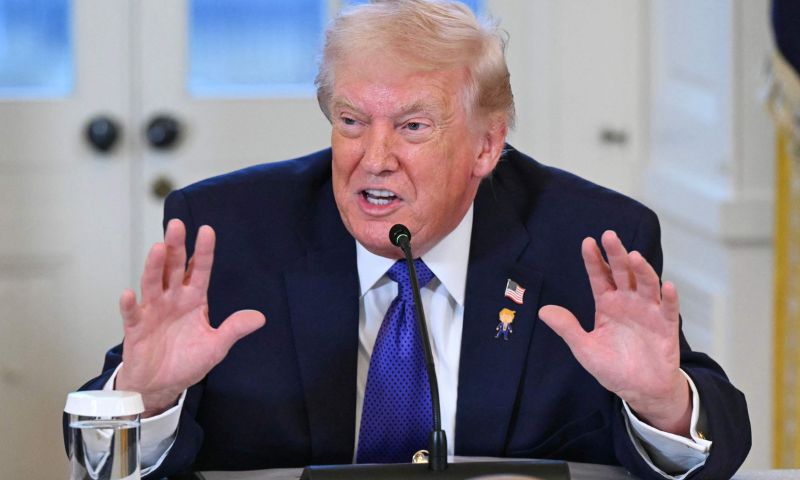
WASHINGTON: US President Donald Trump on Saturday said Iran had 48 hours left to make a deal on opening the vital Strait of Hormuz, warning that “all hell” would break loose if Tehran fails to comply.
“Remember when I gave Iran ten days to MAKE A DEAL or OPEN UP THE HORMUZ STRAIT,” Trump wrote on his Truth Social platform.
“Time is running out – 48 hours before all Hell will reign (sic) down on them,” the president said Saturday, adding: “Glory be to GOD!”
Trump had initially threatened on March 21 to “obliterate” Iran’s power plants, beginning with the country’s biggest, “if Iran doesn’t FULLY OPEN, WITHOUT THREAT, the Strait of Hormuz, within 48 HOURS.”
Two days later, however, he said “very good and productive conversations” were being held with Iranian authorities, and that he had postponed any strikes on power plants for five days.
On March 26, Trump stated that he is extending the pause on strikes targeting Iran’s energy infrastructure for an additional 10 days, until Monday, April 6, 2026, as part of the ongoing diplomatic talks between the two sides.
In a post on Truth Social, the US President claimed that the announcement comes as per a “request” from the Iranian Government and further stated that the negotiations with Tehran were “going very well”.
“As per Iranian Government request, please let this statement serve to represent that I am pausing the period of Energy Plant destruction by 10 Days to Monday, April 6, 2026, at 8 P.M., Eastern Time. Talks are ongoing and, despite erroneous statements to the contrary by the Fake News Media, and others, they are going very well,” Trump stated.
This was a continuation of Trump’s warning to Iran to open the Strait of Hormuz.
He earlier instructed the US Department of War to delay any military action against Iranian power plants and energy sites for five days, citing ongoing diplomatic engagements with Tehran amid escalating tensions in West Asia.
His latest 48-hour ultimatum is a reminder of his 10-day deadline given to Tehran last month.
The war between the United States, Israel, and Iran that began on February 28 has plunged the Middle East into deep turmoil.
Iran has been carrying out attacks on Israeli and Gulf countries.
Strait of Hormuz disruption
Since February, Iran has greatly slowed the flow of oil through the Strait of Hormuz, sending fuel prices skyrocketing.
Earlier, Trump had told other countries to go to the Strait of Hormuz and “get your own oil.”
The US President made his comment as he remained at the White House on Saturday morning.
The Trump administration hasn’t made an official comment on the US fighter jet shot down in Iran.
The war, now entering its sixth week, is destabilising economies around the world as Iran responds to the US and Israeli attacks by targeting the Gulf countries and tightening its grip on oil and natural gas shipments through the Strait of Hormuz.
Trump on Thursday had threatened more strikes on Iran’s bridges and electrical infrastructure, warning that the US military “hasn’t even started destroying what’s left in Iran.”
On Wednesday, the US President told the nation in a televised address that the military operation in Iran was “near completion.”
Mediators from Pakistan, Turkiye and Egypt are working to bring the United States and Iran back to the negotiating table, according to two regional officials.
Iranian Foreign Minister Abbas Araghchi on Saturday reiterated his government’s willingness to restart talks in Pakistan, but said they seek a “conclusive and lasting” end to the conflict.
Pakistan’s diplomatic outreach
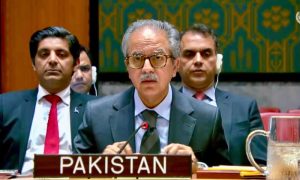
Pakistan has intensified its diplomatic efforts to bring an end to the US-Israel war involving Iran.
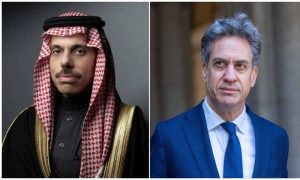
Last week, Islamabad hosted key regional ministers from Saudi Arabia, Turkiye, and Egypt, while also facilitating the exchange of messages between Washington and Tehran.
On Tuesday, Pakistan and China jointly called on the United States, Israel, and Iran to halt ongoing strikes and begin “peace talks as soon as possible.”
The appeal followed a high-level meeting in Beijing between Deputy Prime Minister and Foreign Minister Ishaq Dar and Chinese Foreign Minister Wang Yi.
Pakistan-China peace initiative to end the Iran war
It may be recalled that Pakistan and China have agreed on a comprehensive five-point framework aimed at restoring peace and stability in the Gulf and Middle East, following high-level talks between Pakistan’s Deputy Prime Minister Ishaq Dar and China’s Foreign Minister Wang Yi in Beijing on Tuesday.
The two sides called for an immediate cessation of hostilities, the initiation of dialogue among all parties, protection of civilians and critical infrastructure, ensuring the security of key maritime routes, including the Strait of Hormuz, and upholding the principles of the United Nations Charter to achieve lasting peace in the region, according to a statement issued by Pakistan’s Foreign Ministry.
Earlier, the Pakistan Foreign Office said the joint five-point peace initiative by Pakistan and China has received broad appreciation from across the region and beyond, with even US leadership acknowledging ongoing diplomatic efforts.
The plan is being seen as part of a wider, coordinated push for de-escalation, with officials noting strong alignment between proposals discussed in Beijing and outcomes of recent consultations held in Islamabad involving Pakistan, Saudi Arabia, Turkey, and Egypt.