


Key Points
- Asif accuses India of “threat-mongering” and manufacturing crises
- Warns of “drastic consequences” in case of miscalculation
- Reaffirms Pakistan’s commitment to peace and regional stability
- Says hostile rhetoric reflects “strategic anxiety”, not strength
- Stresses no room for war between two nuclear-armed states
- Links tensions to fallout from Pahalgam incident
- Highlights Pakistan’s offer for an independent investigation
- Emphasises military readiness and decisive response capability
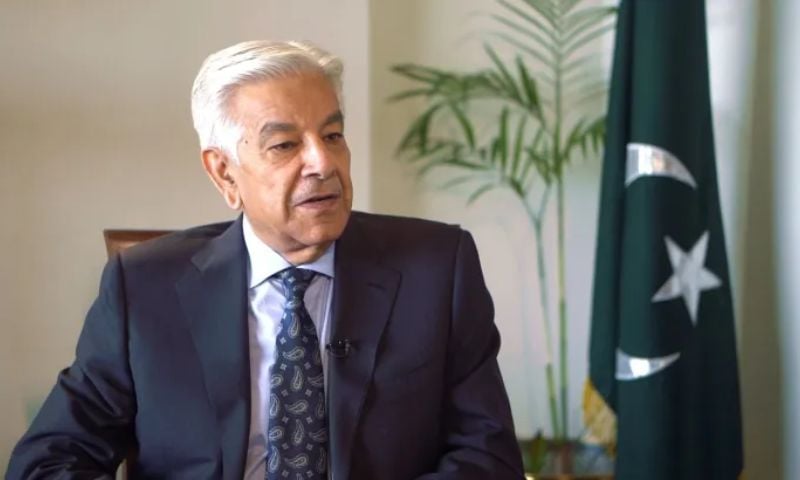
ISLAMABAD: Pakistan’s Defence Minister Khawaja Muhammad Asif on Friday delivered a strongly worded response to recent statements by his Indian counterpart Rajnath Singh, warning against what he described as “threat-mongering” and politically motivated escalation by New Delhi.
In a series of remarks and a social media post, Asif emphasised that while India is significantly larger than Pakistan and possesses vast resources, it continues to grapple with deep-rooted socioeconomic challenges.
He pointed out that millions of Indians still live in poverty, arguing that such internal issues are often overshadowed by external rhetoric aimed at projecting strength.
Asif criticised Rajnath Singh’s statements as an attempt to remain relevant internationally, asserting that Pakistan is currently receiving greater global attention. He suggested that India’s leadership is seeking to divert focus from domestic concerns by engaging in provocative narratives.
The defence minister made it clear that Pakistan remains committed to peace and regional stability, but warned that any miscalculation by India would have serious consequences.
“There should be no illusion about the space for war between two nuclear states,” Asif stated, adding that any aggression would be met with a response that is “swift, measured, and decisive.”
He further remarked that repeated hostile rhetoric reflects “strategic anxiety” rather than strength, particularly in light of what he referred to as past incidents that failed to withstand international scrutiny. According to Asif, such patterns indicate an attempt to manufacture crises for political purposes.
Referring to historical tensions, Asif underscored that previous confrontations serve as a reminder of the risks involved in escalation. He stressed that Pakistan’s armed forces are fully prepared to defend the country’s sovereignty and would respond firmly to any threat.
The latest exchange comes against the backdrop of already strained relations between the two nuclear-armed neighbours, particularly following last year’s incident in Pahalgam in Indian illegally occupied Jammu and Kashmir (IIOJ).
Pahalgam Incident
The tensions between India and Pakistan escalated after a deadly attack in the Pahalgam area of Indian Illegally Occupied Jammu and Kashmir in April last year, which claimed the lives of 26 people.
India swiftly blamed Pakistan for the attack without presenting any credible evidence. Pakistan condemned the attack and strongly rejected the Indian government’s baseless accusations.
Pakistan also offered a neutral and transparent international investigation into the incident; however, India failed to respond to Islamabad’s offer and continued with its aggressive posture, jeopardising regional peace and security.
The four-day war between the two nuclear-armed neighbours began after India conducted missile strikes inside Pakistani territory, resulting in the deaths of multiple civilians and security personnel.
Pakistan gave a swift, strong and decisive response to India. The Pakistan Air Force (PAF) shot down seven Indian aircraft, including Rafale jets, and successfully neutralised an S-400 air-defence system. The conflict ended on May 10 when both countries agreed to a ceasefire mediated by the United States.
Asif reiterated that Pakistan does not seek confrontation but will not compromise on its sovereignty. He urged India to address its internal and diplomatic challenges rather than resorting to what he termed “unverified allegations and escalatory rhetoric.”
Analysts note that such exchanges, while not uncommon, carry significant weight given the nuclear capabilities of both countries. Calls for restraint and renewed diplomatic engagement have once again emerged as regional stability remains fragile.