
Key Points
- US and Gulf states support proposal amid shipping disruptions
- Russia, China and France oppose key provisions
ISLAMABAD: Iran has warned against any escalation at the United Nations Security Council as divisions forced a delay in a planned vote on deploying a maritime protection force in the Strait of Hormuz, a critical artery for global energy supplies.
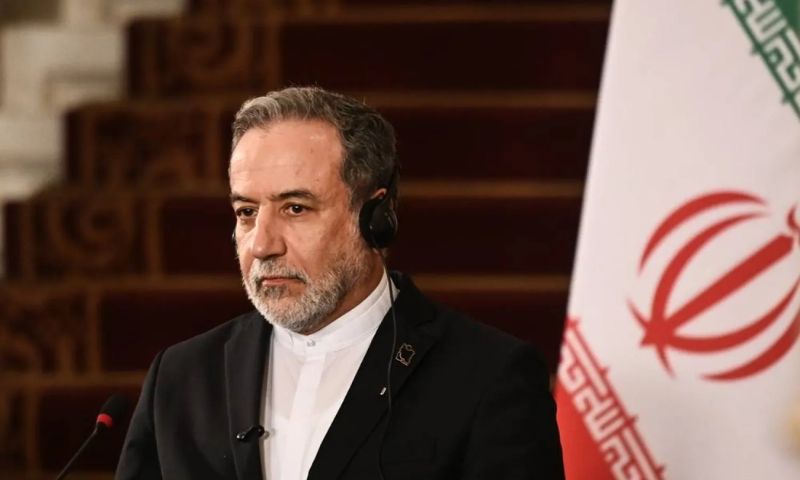
Iranian Foreign Minister Abbas Araghchi warned that “any provocative action by the aggressors and their supporters, including in the UN Security Council regarding the situation in the Strait of Hormuz, will only complicate the situation,” according to AFP
Araghchi was speaking ahead of a scheduled Security Council vote on a draft resolution mandating a force to protect shipping through the Strait of Hormuz.
The remarks came ahead of a scheduled Security Council vote on a Bahrain-backed draft resolution authorising the use of “defensive” force to protect commercial shipping transiting the strait.
Diplomats later confirmed that the vote had been postponed, with no new date announced, underscoring deep divisions within the 15-member body.
The proposed measure has been supported by the United States and several Gulf states that have been directly affected by the near-total disruption of maritime traffic through the narrow waterway.
Shipping through the strait, which carries a significant share of the world’s oil exports, has been severely curtailed since the February 28 strikes on Iran by US and Israeli forces, triggering heightened regional tensions and fears over energy security.
However, key Security Council members, including Russia, China and France, have raised objections to earlier drafts of the resolution, particularly over the scope of force and the risk of further escalation in an already volatile region.
The delay in the vote reflects the growing geopolitical rift within the council, complicating efforts to secure international consensus on safeguarding one of the world’s most strategically vital maritime routes.