
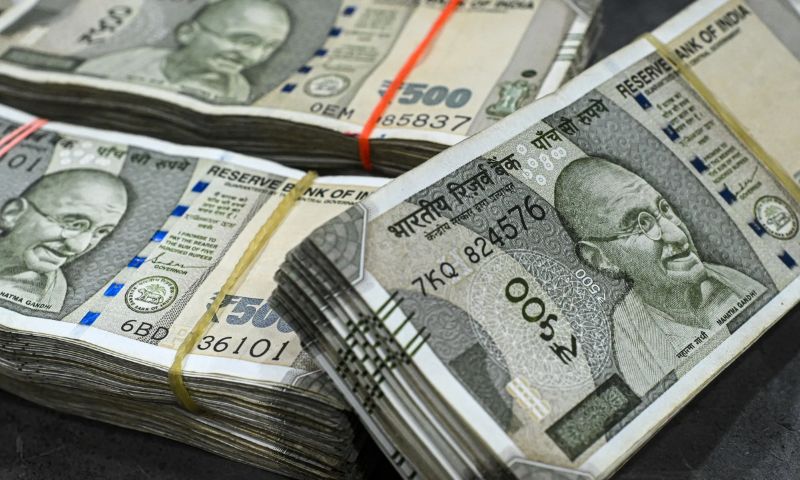



TOKYO: India is facing mounting pressure on its currency as a sharp rise in global oil prices combines with structural economic vulnerabilities, fuelling concerns of a potential currency crisis.
The Indian rupee, already Asia’s weakest-performing currency in 2025 after a 5 per cent decline, has continued its downward trajectory in early 2026. Since the start of the year, it has depreciated by a further 5.5 per cent against the US dollar, reflecting growing stress in the country’s external finances.
Analysts warn that the situation could deteriorate further if geopolitical tensions—particularly involving Iran—continue to disrupt global energy markets. With Brent crude prices holding above $100 per barrel, India’s import bill has surged significantly, adding an estimated $5 billion per month to the country’s oil expenditure.
According to Asia Times, as one of the world’s largest oil importers, India remains particularly exposed to such price shocks. The rising cost of energy imports is widening the current account deficit, placing sustained downward pressure on the rupee. Economists note that currencies of deficit-driven economies tend to be especially vulnerable during periods of elevated commodity prices.
There is increasing concern in financial markets that the rupee could weaken to 100 against the US dollar—compared with around 95 currently—if current conditions persist. Market participants view this level not as an extreme scenario but as a plausible outcome should oil prices remain elevated and capital flows weaken.
The Reserve Bank of India (RBI) has stepped up efforts to stabilise the currency. The central bank has intervened in foreign exchange markets, including selling dollars to support the rupee and imposing tighter controls on banks’ foreign exchange positions. However, these measures appear to be providing only temporary relief rather than addressing underlying structural pressures.
In 2025 alone, the RBI reportedly sold more than $50 billion in reserves to defend the currency—its largest intervention on record. At the same time, it has encouraged domestic banks to supply dollars from their own holdings, signalling a broader attempt to manage liquidity without excessively depleting reserves.
Market observers caution that such defensive measures may not be sustainable if global conditions remain unfavourable. Persistently high oil prices, coupled with capital outflows and weak export performance, could deepen financial strain in Asia’s third-largest economy.
The currency’s decline also presents a political challenge for Prime Minister Narendra Modi, whose government has emphasised economic stability and growth. With external pressures intensifying, policymakers may be forced to adopt more decisive measures to restore confidence and stabilise the rupee.
As global uncertainty continues, India’s economic resilience will be tested by its ability to manage rising import costs, stabilise its currency, and address long-standing structural imbalances.