


ISLAMABAD: A joint five-point peace initiative by Pakistan and China has received broad appreciation from across the region and beyond, with even US leadership acknowledging ongoing diplomatic efforts, the Pakistan Foreign Office said on Thursday.
The plan is being seen as part of a wider, coordinated push for de-escalation, with officials noting strong alignment between proposals discussed in Beijing and outcomes of recent consultations held in Islamabad involving Pakistan, Saudi Arabia, Turkey, and Egypt.
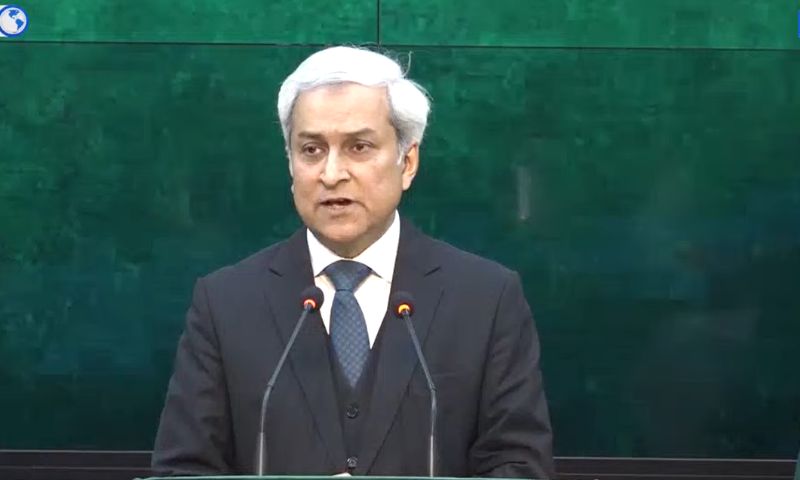
“The five points have received appreciation from across the region and beyond, —- there were statements from the U.S. leadership about appreciation of diplomatic efforts.” Foreign Office spokesperson Tahir Andrabi said in a weekly press briefing in Islamabad.
🔴LIVE: Spokesperson’s Weekly Press Briefing 02-04-2026 at Ministry of Foreign Affairs, Islamabad https://t.co/2CIL4Nphhm
— Ministry of Foreign Affairs – Pakistan (@ForeignOfficePk) April 2, 2026
The initiative reflects a broader effort to end the war, secure a cessation of hostilities, and create a sustainable pathway towards a lasting resolution of the conflict.
Andrabi said the five-point plan provides a structured framework for reducing tensions and advancing diplomatic solutions.
He said there are strong similarities across the different frameworks, adding that the initiatives — whether in Urumqi, Beijing, or Islamabad — have all been widely welcomed.
He said the plan centres on an immediate ceasefire, measures to contain the conflict, and ensuring humanitarian aid reaches those affected.
He said the plan calls for an immediate ceasefire, efforts to prevent the conflict from spreading, and unhindered humanitarian assistance for affected populations.
The initiative also stresses the protection of civilians and non-military infrastructure, alongside adherence to international humanitarian law.
Maritime security, particularly in the Strait of Hormuz, forms a key component of the proposal, given its importance to global energy supplies.
“The security of the shipping lanes was also mentioned in these five points, including the safety of passage of crew members in the Strait of Hormuz. Allow the safe passage of civilians and commercial ships and restore normal passage through the Straits as soon as possible,” he said.
The initiative comes amid rising global concern over the economic and security fallout of the conflict, particularly disruptions to energy supplies and shipping routes.
Andrabi said Prime Minister Shehbaz Sharif and Deputy Prime Minister and Foreign Minister Ishaq Dar had held extensive consultations with regional and global counterparts to promote peace and dialogue.
Pakistan’s diplomatic outreach has included a series of telephone calls between its leadership and key international figures, including Iran’s president, the UN secretary-general, and leaders from China, Turkey, Egypt, Qatar, and Kuwait. Tahir Andrabi said these engagements were aimed at reducing tensions and building consensus for negotiations.
Pakistan welcomed Iran’s decision to allow additional ships under the Pakistani flag to pass through the Strait of Hormuz, calling it a constructive step towards stability and confidence-building.
Pakistan reiterated its position that diplomacy, dialogue, and international cooperation remain essential to achieving lasting peace in the region.