


Key Points
- India’s chief economic advisor signals wider trade and current account deficits
- Strait of Hormuz disruption raises energy and freight costs
- Heavy reliance on imported crude and LPG exposes external vulnerability
ISLAMABAD: India has cautioned that its economic growth outlook for the next fiscal year faces mounting risks as the Iran war disrupts global energy flows and supply chains, pushing up import costs and widening external imbalances.
In a report cited by CNBC, Indian authorities warned that the country’s growth forecast of 7.0 per cent to 7.4 per cent for the financial year ending March 2027 faces “considerable downside” risk due to rising energy prices and supply-chain disruptions linked to the conflict.
The warning comes as the Iran war, which began in late February following US and Israeli strikes, has disrupted traffic through the Strait of Hormuz — a strategic artery handling roughly one-fifth of global oil shipments.
The disruption has driven up energy prices, freight costs and insurance premiums, compounding pressures on import-dependent economies.
India’s Chief Economic Advisor has indicated that the country’s trade deficit is expected to rise significantly under current conditions, which would in turn widen the current account deficit.
Higher import bills, particularly for energy, are likely to weigh on macroeconomic stability if global conditions remain volatile.
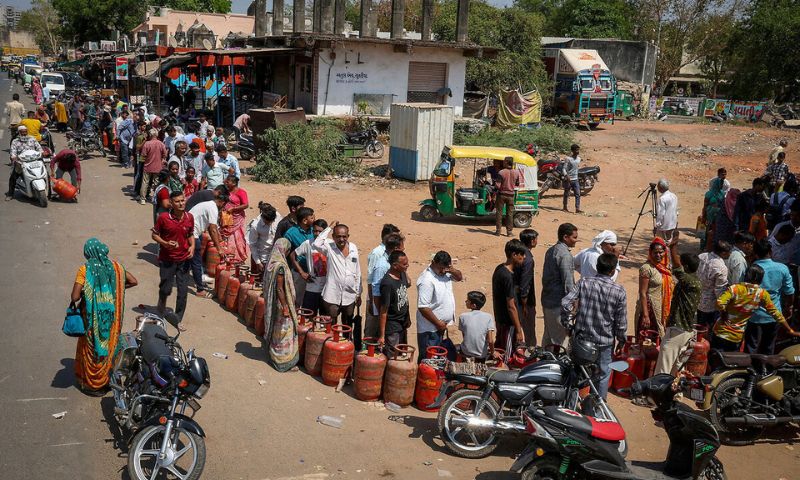
The country’s exposure is particularly acute due to its reliance on the Strait of Hormuz for around half of its crude oil imports and a large share of liquefied petroleum gas (LPG), a key household fuel.
Any sustained disruption in this corridor could have cascading effects on domestic inflation, industrial costs and household consumption.
Analysts say the combination of higher energy costs and supply bottlenecks could dampen industrial output and slow consumption growth, even as policymakers attempt to sustain economic momentum through fiscal and monetary measures.
The evolving geopolitical situation has also introduced uncertainty into global trade flows, with shipping delays and rerouting adding to logistical costs.
For India, this translates into elevated risks for both external balances and growth projections.