Key Points
- OECD says Iran war will hit all major economies through energy and trade shocks
- Advanced economies face slowdown, but some show stronger buffers
- Developing countries risk sharper inflation and external imbalances
- Energy exporters may benefit, but importers face mounting pressure
ISLAMABAD: As the Iran war sends shockwaves through global markets, a key question is emerging for policymakers and households alike: if no economy is immune, who is coping better — and why?
A new assessment by the Organisation for Economic Co-operation and Development (OECD), an international policy forum of mostly advanced economies, makes clear that the crisis is global in scope. Yet its impact is far from equal.
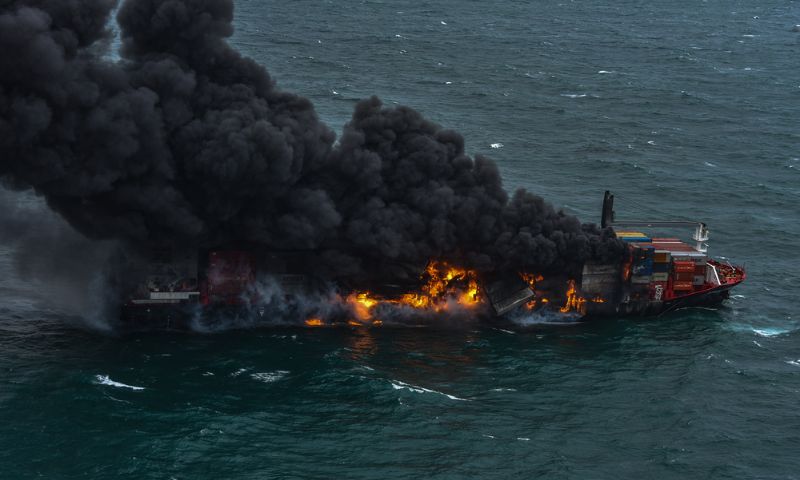
At the centre of the disruption lies energy. The conflict has unsettled supplies moving through the Strait of Hormuz, a narrow but vital maritime passage that carries a significant share of the world’s oil. The resulting surge in prices is feeding inflation across continents, raising costs for transport, food and industry.
Groth slowdown
The first casualty is the decline in global economic growth. Analysts have already started to revisit pre-war projections. The OECD now expects global growth in 2026 to slow to about 2.9 per cent, warning that a prolonged conflict could shave off even more. Inflation, which many countries had struggled to contain, is once again on the rise.
But beneath these global trends lies a more revealing story — one of divergence in the impact of war and respective manageability of contingency.
UK: The most exposed major economy
Among advanced economies, the United Kingdom stands out as particularly vulnerable. British growth forecasts have been sharply cut, reflecting a combination of structural weaknesses and exposure to swings in energy prices.
Heavy reliance on imported gas means higher global prices, which quickly translate into domestic inflation, squeezing households and businesses.
Other developed economies appear better positioned.
United States: Energy strength as a buffer
The United States, with its large domestic energy production, is relatively insulated from external supply shocks. Although inflation risks remain, its diversified economy and strong labour market provide some cushioning.
In the euro area, economies such as Germany and France face headwinds
Euro area: Industrial depth cushions
The blow from higher energy costs and weaker trade demand. However, their industrial depth and policy coordination mechanisms offer a degree of resilience that analysts say could soften the blow compared to the UK.
Japan: Stability amid dependence
Japan, another major advanced economy, faces its own vulnerabilities due to energy imports, but benefits from long-standing monetary support and stable financial systems.
If advanced economies are slowing, developing countries are facing a more complex challenge.
Developing world: Double squeeze of imports and debt
For many emerging and low-income economies, the shock is twofold: rising import bills and tightening financial conditions. Countries that depend heavily on imported fuel are seeing their trade deficits widen, putting pressure on currencies and foreign exchange reserves.
Interest rates and inflation
Higher global interest rates — set by central banks in advanced economies to control inflation — are adding to the strain by making borrowing more expensive. This is particularly challenging for countries already dealing with high debt levels.
At the same time, food prices are rising due to increased transport and input costs, compounding inflation and affecting vulnerable populations most severely.
Yet not all developing economies are losing out.
Energy exporters: Windfall gains in a crisis
Energy-exporting countries, particularly in the Middle East, Africa and parts of Latin America, are benefiting from higher oil prices. Increased revenues are strengthening fiscal positions and external balances, giving governments more room to manage domestic pressures.
For example, Gulf economies are seeing windfall gains that could support growth and investment, even as global uncertainty rises.
China and India: Scale offers partial protection
Large emerging economies such as China and India present a mixed picture. China’s vast manufacturing base and policy control provide some insulation, though weaker global demand could weigh on exports.
India, with strong domestic consumption, may sustain growth but remains exposed to imported energy costs.
Factor-based resilience
The OECD notes that resilience depends on several factors: energy self-sufficiency, economic diversification, fiscal space and institutional capacity.
In simple terms, economies that produce their own energy, maintain strong public finances and rely less on external demand are better placed to weather the storm.
Those with fragile growth, high import dependence and limited policy room are more exposed.
Markets embracing divergence
Financial markets are already reflecting this divergence. Volatility has increased, currencies in some developing countries have weakened, and consumer confidence has dipped in several advanced economies, including the UK.
Central banks on toes
Institutions that manage a country’s money supply and interest rates, the central banks, now face a renewed dilemma. They must balance the need to control inflation against the risk of choking off growth.
United we stand
The OECD emphasises that coordinated global action could help mitigate the impact. Policy measures such as targeted subsidies, energy diversification and diplomatic efforts to ease tensions could play a critical role.
Ultimately, however, the organisation underscores a simple reality: the longer the war continues, the more uneven and entrenched its economic consequences will become.
For now, the global economy is not moving in unison but fragmenting under pressure, with some countries absorbing the shock and others struggling to keep pace.