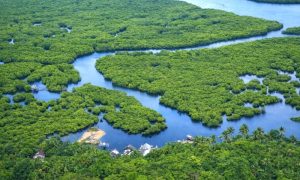



ISLAMABAD: Pakistan has reaffirmed that forests are not merely environmental assets but vital pillars of economic growth, climate resilience, and community well-being, as the world marks the International Day of Forests on March 21.
The message was conveyed by Mohammad Saleem Shaikh, spokesperson for the Ministry of Climate Change and Environmental Coordination, who underscored the growing strategic importance of forests in national and global development frameworks.
He noted that this year’s theme, “Forests and economies,” highlights the role of forests in sustaining livelihoods, driving economic activity, supporting agriculture, and safeguarding natural resources.
The International Day of Forests, proclaimed by the United Nations General Assembly in 2012, aims to raise awareness about the importance of all forest types.
According to the Food and Agriculture Organisation (FAO), forests support the livelihoods of over 1.6 billion people globally, provide renewable raw materials, enhance agricultural productivity, and maintain healthy watersheds.
Shaikh described forests as the “lungs of the Earth” and a critical national asset, particularly for Pakistan, which faces increasing risks from floods, droughts, land degradation, biodiversity loss, and climate change.
“At a time when countries are seeking low-carbon, sustainable pathways to growth, forests must be recognised as productive national assets,” he said, adding that they not only absorb carbon and protect watersheds but also sustain rural livelihoods and reduce disaster risks.
He stressed that forests should no longer be viewed solely as sources of timber, noting their broader economic value in supporting agriculture, securing water resources, creating green jobs, and enabling nature-based enterprises such as ecotourism and carbon-linked investments.
Citing FAO estimates, he said non-wood forest products and related services generate more than $9 billion annually worldwide, reflecting forests’ potential to support sustainable bioeconomies and help communities withstand economic and climate shocks.
Shaikh said Pakistan’s National Climate Change Policy 2021 recognises forests as central to mitigation and adaptation efforts, incorporating ecosystem restoration, watershed protection, mangrove rehabilitation, biodiversity conservation, and community livelihoods.
He added that the policy also emphasises improved governance, curbing illegal logging, restoring degraded lands, promoting farm forestry, and utilising climate finance mechanisms such as REDD+ and carbon markets.
“Protecting, restoring, and sustainably managing forests is not only an environmental obligation; it is also an economic necessity and a national security imperative,” he said.
He stressed the need to integrate forests into mainstream development planning, warning that their loss leads to declining incomes, weakened agriculture, biodiversity loss, and greater climate vulnerability.
Pakistan’s latest climate commitment under the Paris Agreement — its Nationally Determined Contribution (NDC) 3.0 submitted in September 2025 — places forests at the centre of efforts to enhance mitigation, adaptation, and ecosystem resilience through nature-based solutions and sustainable land management.
The NDC builds on earlier targets to increase forest cover from 5.4 percent to 6.5 percent by 2030, reflecting a shift towards recognising forests as multifunctional climate assets.
Shaikh said the International Day of Forests should serve as a moment for renewed national commitment.
“Forests drive economies and support people’s well-being, yet they remain undervalued and underfinanced,” he said, calling for greater investment in governance, science-based planning, and community engagement.
He added that real progress would depend on sustained protection and enforcement.
“The future of Pakistan’s climate resilience depends on how seriously we protect our forests, watersheds, and mangroves today,” he said.