Key Points
- Iran war reaches day 11 with both sides hardening positions
- Energy markets and regional security rattled by widening confrontation
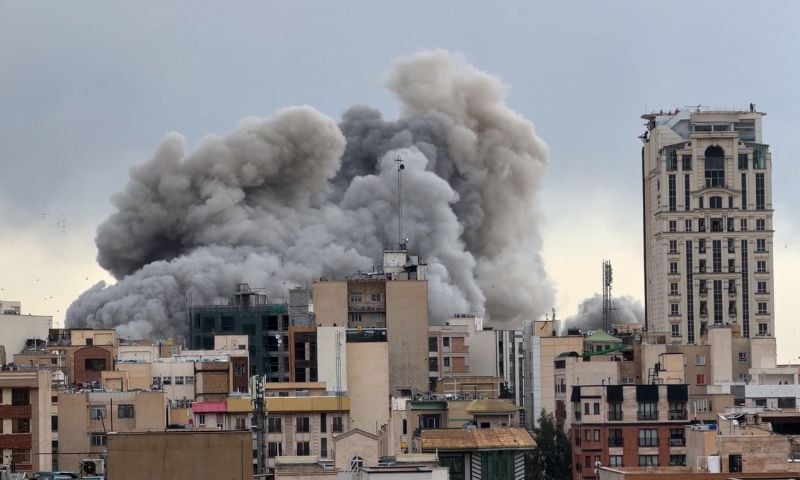
ISLAMABAD: The United States has stepped up its military campaign in the Iran war, with Defence Secretary Pete Hegseth announcing escalation in strikes as Iranian leaders stated they were ‘not seeking a ceasefire’.
“Today will be yet again our most intense day of strikes inside Iran — the most fighters, the most bombers, the most strikes, intelligence more refined and better than ever,” Hegseth told a Pentagon briefing on day 11 of the war.
Iran’s parliament speaker, Mohammad Bagher Ghalibaf, said Tehran was not seeking a ceasefire and warned that the country would continue responding to what it describes as aggression.
The statements from both sides contrasted with expectations of de-escalation, especially after energy markets pulled back from a three-year peak after US President Donald Trump’s suggestion that the war could end soon.
The Pentagon says the campaign is designed to degrade Iran’s missile, naval and drone capabilities and to neutralise what Washington describes as threats to regional security and global shipping routes.
US military officials say thousands of targets linked to Iranian military infrastructure have been struck since the start of the war, including missile facilities, drone factories and naval assets.
American officials insist the operations are focused on military objectives and are not intended to evolve into a prolonged ground conflict, presenting the campaign as a decisive effort to weaken Iran’s strategic capabilities and limit its ability to strike regional partners and US forces.
Iranian leaders, however, have expressed no hurry for negotiations and insist the country will continue retaliating against what they describe as unlawful aggression. Ghalibaf said halting retaliations under current conditions would only embolden Iran’s adversaries.
Iran’s government maintains that its missile and drone attacks against Israeli targets and US-linked facilities in the region are acts of self-defence in response to the US-Israeli military campaign.
Iranian officials have also warned that continued strikes could prompt wider retaliation against American bases and interests across the Middle East.
The Iran war has already spread across several theatres, including missile exchanges involving Israel, attacks on Iranian military installations, and strikes linked to Iran-aligned groups elsewhere in the region.
Energy markets have been particularly sensitive to the fighting, with Iran threatening to keep disrupting oil shipments through the Strait of Hormuz, a vital corridor for global crude supplies.
Analysts say any prolonged disruption in the waterway could have far‑reaching economic consequences worldwide.
Diplomatic efforts to halt the fighting have so far produced little progress. Several countries, including Russia, China, Pakistan and European powers, have urged restraint and called for de‑escalation, warning that continued escalation could trigger a broader regional war.
With both Washington and Tehran determined to pursue their military and strategic objectives, analysts say the prospect of an immediate ceasefire appears remote as the Iran war is in its second week with no clear sign of de‑escalation.