Key Points
- Beijing expected to unveil 2026–2030 five-year development blueprint
- Growth target likely around 4.5% amid structural economic challenges
- Technology self-reliance and fiscal policy to dominate agenda
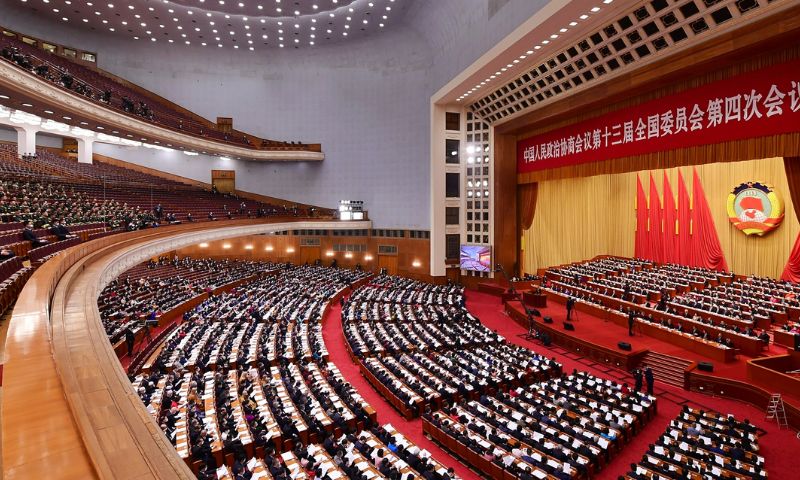
BEIJING: China is set to chalk out its economic course for the coming year and beyond as the annual “Two Sessions” — the meetings of the National People’s Congress (NPC) and the Chinese People’s Political Consultative Conference (CPPCC) — open in Beijing ton Wednesday, with major policy signals expected on growth targets, fiscal priorities and long-term development strategy.
The high-profile gatherings, held concurrently each March, serve as China’s most important political event, where authorities review the past year’s performance, set economic targets, approve budgets and outline strategic direction.
This year’s session carries added weight as Beijing prepares to introduce its next five-year development blueprint for 2026–2030 amid mounting domestic and geopolitical pressures.
At the centre of attention will be the government work report to be delivered by Premier Li Qiang.
Analysts expect the report to announce a GDP growth target of around 4.5%, reflecting a continued shift from rapid expansion toward what officials describe as “high-quality” and sustainable development.
Policymakers are expected to prioritise fiscal support, employment stability and industrial upgrading as the world’s second-largest economy faces structural headwinds, including a struggling property sector, weak domestic consumption and demographic decline.
Innovation and technological self-sufficiency are likely to feature prominently, particularly in semiconductors, artificial intelligence and advanced manufacturing, as Beijing seeks to reduce reliance on foreign technology and counter external pressures, especially from the United States.
During the session, the NPC will deliberate on legislation, budgets and institutional reforms, as well as review reports from the Supreme People’s Court and the Supreme People’s Procuratorate.
While the legislature largely formalises decisions taken by the ruling Communist Party of China.
The CPPCC, an advisory body representing various sectors of society, will convene to provide policy recommendations on economic reform, social welfare and governance.
Although consultative in nature, it functions as an important platform for consensus-building within China’s political system.
Defence spending and internal discipline are also expected to draw attention, particularly amid an ongoing anti-corruption campaign within the military that has seen numerous senior officers removed from key posts.
Analysts say this year’s defence-related announcements may focus as much on institutional reform as on external strategy.
Demographic challenges are likely to remain high on the agenda, with policymakers under pressure to address falling birth rates, youth unemployment and inequality.
Measures to support families, improve healthcare and boost education access may be discussed as part of broader social policy adjustments.
The outcomes of the Two Sessions are closely watched by global investors and governments, as decisions on trade, technology, fiscal policy and defence can significantly influence international markets and geopolitical dynamics.
As Beijing navigates economic transition and intensifying global competition, the 2026 meetings are expected to play a defining role in shaping China’s near- and long-term trajectory.