


TEHRAN, Iran: Israeli and US strikes hit the Tehran building of a body responsible for appointing Iran’s next supreme leader, Iranian media reported on Tuesday evening, as Washington ordered non-emergency staff of embassies to leave six Middle Eastern countries amid widening conflict.
The escalation followed joint US-Israeli strikes on Saturday that killed Iran’s Supreme Leader Ayatollah Ali Khamenei, triggering retaliatory missile and drone attacks by Tehran across Israel and the Gulf.
Assembly of Experts building struck
“The American-Zionist criminals attacked the Assembly of Experts building in Qom,” the Tasnim news agency reported, referring to the body tasked with electing a new supreme leader.
Footage carried by local media showed severe damage to the building south of Tehran.
The Israeli military said it had launched a ninth wave of strikes on Tehran.
“The Air Force has now begun a large-scale wave of strikes targeting Iran’s infrastructure in Tehran,” it said in a statement.
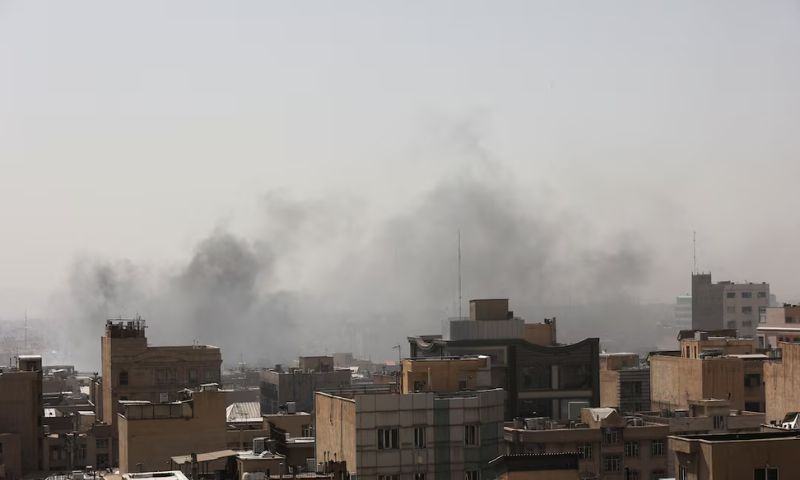
Loud explosions were heard in central Tehran, according to AFP. Shortly afterwards, Israel said it had hit a high-ranking Iranian commander in the capital. It gave no further details.
Iranian President Masoud Pezeshkian says that Iran has “not come to a halt” amid attacks by the US and Israel, and that political leadership is in touch with governors across the country.
“By delegating the necessary authorities to the provinces, decision-making is carried out swiftly and in proportion to local conditions,” the Iranian president has said on X.
در ارتباط مستقیم با استانداران هستیم. شرایط خاص است، اما کشور متوقف نشده است. در سراسر کشور فعالیتهای جاری برقرار است. با تفویض اختیارات لازم به استانها، تصمیمگیریها سریع و متناسب با شرایط محلی انجام میشود.
انسجام ملی سرمایه اصلی ماست.#دولت_پای_کار_مردم— Masoud Pezeshkian (@drpezeshkian) March 3, 2026
Israel also said it had struck and “dismantled” the headquarters of the Islamic Republic of Iran Broadcasting (IRIB).
IRIB confirmed explosions near its premises but said broadcasting had not been disrupted.
Iran’s Red Crescent said more than 780 people had been killed nationwide since the US and Israeli strikes began.
The International Atomic Energy Agency (IAEA) said satellite imagery confirmed “recent damage” to entrance buildings at Iran’s underground Natanz Fuel Enrichment Plant.
“No radiological consequence expected,” the UN watchdog said on X.
Based on the latest available satellite imagery, IAEA can now confirm some recent damage to entrance buildings of Iran’s underground Natanz Fuel Enrichment Plant (FEP). No radiological consequence expected and no additional impact detected at FEP itself, which was severely… pic.twitter.com/7CS7BRZo1s
— IAEA – International Atomic Energy Agency ⚛️ (@iaeaorg) March 3, 2026
Iranian attack across Israel and Gulf
Meanwhile, missiles fired from Iran triggered air raid sirens and explosions over Jerusalem and central Israel.
Israel’s military said it was intercepting the incoming barrage. Israel’s Magen David Adom emergency service said seven people were injured.
Iran’s Revolutionary Guards warned of further attacks.
“The gates of hell will open more and more, moment by moment, upon the United States and Israel,” spokesman Ali Mohammad Naini told state television.
The Guards said they had targeted a US air base in Bahrain.
They later claimed to have destroyed the “main command building and headquarters” of a US base in the Sheikh Isa area during the 14th wave of what they called “Operation Promise of the Truth 4”.
Explosions were also heard in Manama and Doha, according to AFP. Qatar’s defence ministry said it had intercepted two ballistic missiles.
In the United Arab Emirates, debris from an intercepted drone caused a fire at an oil storage zone in Fujairah.
Authorities said the blaze was contained and operations resumed.
Saudi Arabia confirmed that two drones struck the Embassy of the United States in Riyadh, causing a limited fire and minor material damage.
#BREAKING: The US Embassy in Riyadh was targeted by two drones, resulting in a limited fire and minor material damage to the building — Saudi Defense Ministry
pic.twitter.com/WZO66roK7H— Saudi Gazette (@Saudi_Gazette) March 3, 2026
A Saudi defence ministry spokesman said eight drones were intercepted near Riyadh and Al-Kharj. No injuries were reported.
Official Spokesperson for the Ministry of Defense of the Kingdom of #SaudiArabia, Major General Turki Al-Maliki: Interception and destruction of 8 drones near the cities of Riyadh and Al-Kharj.🇸🇦🇸🇦🇸🇦 https://t.co/593ACF180w
— Khalid A Alorair (@alorair) March 3, 2026
US strikes and regional fallout
US Central Command said American forces had destroyed Islamic Revolutionary Guard Corps facilities, air defences, missile and drone launch sites and military airfields during sustained operations.
Washington said it had struck more than 1,250 targets in Iran in the first 48 hours and destroyed 11 Iranian ships.
U.S. forces have destroyed Islamic Revolutionary Guard Corps command and control facilities, Iranian air defense capabilities, missile and drone launch sites, and military airfields during sustained operations. We will continue to take decisive action against imminent threats… pic.twitter.com/0aHEyVHf5e
— U.S. Central Command (@CENTCOM) March 3, 2026
Six US service personnel were killed in Iranian retaliatory attacks on Kuwait, US officials said.
On Monday, US Central Command added that Kuwait mistakenly shot down three American F-15E fighter jets during the attacks. All six crew members were safely recovered.
US Secretary of State Marco Rubio said Washington acted pre-emptively after learning of Israeli plans to strike Iran.
“If we didn’t pre-emptively go after them… we would suffer higher casualties,” he said, adding that the United States was not currently postured for ground forces but that President Donald Trump had not ruled out any options.
Trump said it was “too late” for talks with Iran. “Their air defence, Air Force, Navy, and Leadership is gone. They want to talk. I said ‘Too Late!’” he wrote on Truth Social.
He earlier outlined four objectives: destroying Iran’s missile capabilities, “annihilating” its navy, preventing Tehran from obtaining a nuclear weapon and stopping it from arming groups abroad.
Iran denies seeking nuclear weapons and says the assault was unprovoked, coming during negotiations on a nuclear accord.
US orders staff to leave Middle East
The US State Department said it had ordered non-emergency personnel to leave Bahrain, Iraq, Jordan, Kuwait, Qatar and the United Arab Emirates.
Travel advisories cited an “ongoing threat of drone and missile attacks from Iran” in five countries and “security concerns” in Iraq.
In Jordan, the US embassy in Amman said it had temporarily evacuated staff due to an unspecified threat.
The US embassy in Kuwait was closed until further notice.
The State Department also urged Americans to leave much of the Middle East, covering 14 countries from Egypt eastward.
Regional tensions
Israeli air strikes hit Beirut’s southern suburbs, causing “extensive damage”, Lebanon’s National News Agency reported.
Hezbollah said it targeted an Israeli military facility at Maayan Baruch in response.
Israeli forces were operating in southern Lebanon in what they described as a “forward defence posture”.
A Lebanese official told Reuters the army had pulled back from several forward positions.
The UN refugee agency said at least 30,000 people had been displaced in Lebanon.
Energy markets and global alarm
Oil prices surged, with Brent crude jumping above $85 a barrel, its highest level since July 2024.
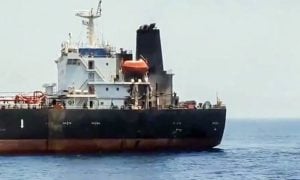
The Strait of Hormuz was effectively closed, disrupting a fifth of global oil trade.
Iranian commander Sardar Jabbari warned Tehran could target maritime traffic in the strait.
“We will not allow a single drop of oil to leave the region,” he said on Telegram.
Shipping rates soared and major Gulf airports, including Dubai, remained closed for a fourth day, stranding tens of thousands of passengers.
Amazon said two of its data centres in the UAE were directly struck by drones, disrupting cloud services. A facility in Bahrain was also damaged.
International calls for negotiations
China said it opposed military strikes on Iran. Foreign Minister Wang Yi told Israeli counterpart Gideon Saar that “force cannot truly solve problems”, according to Xinhua.
Chinese foreign ministry spokeswoman Mao Ning said the strikes violated international law and urged a return to negotiations.
She said China would take necessary measures to ensure energy security.
Russian Foreign Minister Sergei Lavrov said Moscow had seen no evidence that Iran was developing nuclear weapons.
The head of Russia’s Rosatom nuclear corporation warned of a threat to Iran’s Bushehr nuclear plant, although it was not directly targeted.
Kremlin spokesman Dmitry Peskov said President Vladimir Putin would convey to Iran concerns expressed by Arab leaders over strikes on oil infrastructure.
Dmitry Medvedev, deputy chairman of Russia’s Security Council, warned that “World War III” could break out if Washington continued what he described as regime-change efforts.
France said it had deployed Rafale jets over the UAE to protect its bases.
Israeli Prime Minister Benjamin Netanyahu said the war “may take some time” but would not last years. “It’s not an endless war,” he told Fox News.
Trump initially projected a campaign lasting four to five weeks but signalled it could extend.